
By: Fatou Krubally
The Gambia continues to grapple with challenges in reclaiming assets linked to the former president, Yahya Jammeh, as procedural and administrative gaps hinder the enforcement of the government’s asset forfeiture directives.
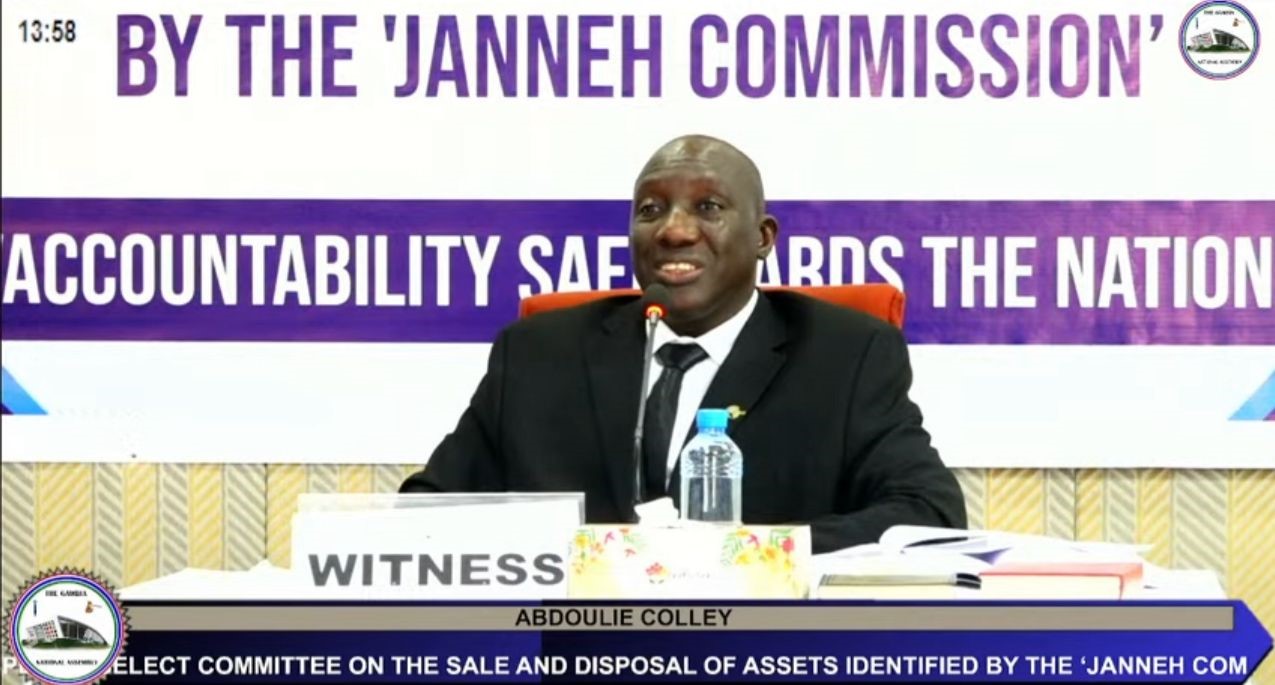
Registrar General, Mr. Abdoulie Colley, reappeared before the Special Select Committee on the Sale and Disposal of Assets Identified by the Janneh Commission on Thursday, providing critical insight into the complexities of asset management in the post-Jammeh era.
Mr. Colley explained that while a government white paper had accepted recommendations from the Janneh Commission to forfeit or sell certain properties, the document alone was insufficient to cancel ownership titles. Legal and administrative action was required from the Director of Lands and Survey or the Solicitor General to execute the directives effectively.
“Someone needs to act upon the white paper,” Mr. Colley stated, emphasizing that the issuance of the white paper does not automatically transfer ownership to the state. He acknowledged that in 2020, he encumbered certain titles based on a memo from a government official, but clarified that this did not constitute a formal cancellation of ownership.
The Registrar General revealed that by the time he acted, many properties were still legally registered in the names of Jammeh, his associates, or related companies. In some cases, sales and assignments were being processed while the original titles remained in the former president’s name, highlighting inconsistencies between legal ownership and registry records.
Colley also stressed the importance of maintaining continuity in property records. “Even if properties are registered for sale, there must be a clear sequence in ownership,” he said. “You cannot sell what you do not legally own.”
The testimony shed light on systemic challenges, including incomplete handovers between successive officeholders, unclear delegation of responsibilities, and a lack of formal communication between government offices. According to Mr. Colley, these gaps contributed to delays and confusion in enforcing the white paper’s directives.
While the state has moved to reclaim Jammeh-era assets, the complexity of legal and administrative processes underscores the need for tighter coordination between ministries and enforcement bodies. The situation raises broader questions about institutional capacity in managing high-value state assets and preventing lapses that could compromise government accountability.