


By Kemo Kanyi
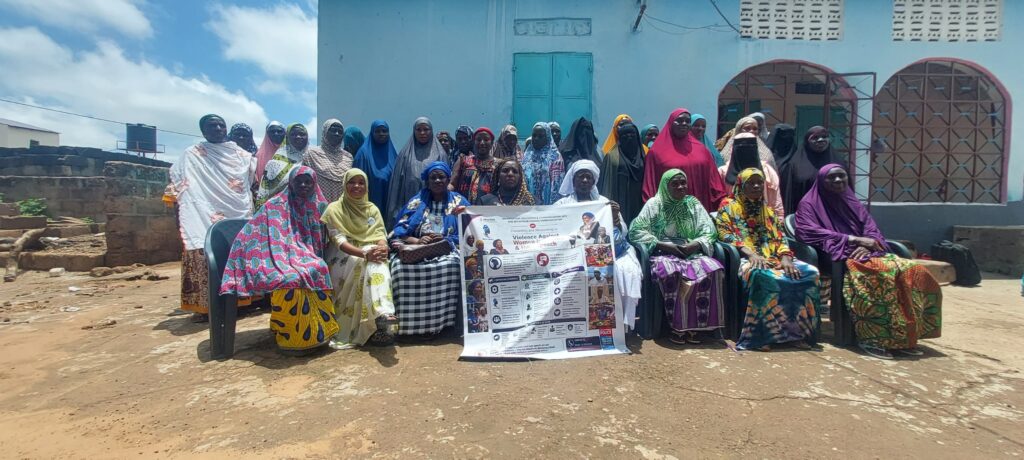
The Women’s Association for Women and Victims Empowerment (WAVE) has trained 300 women across six communities in Fulladu District, Central River Region, as part of efforts to combat violence and hate speech targeting women in politics.
The initiative, supported by the Canadian Fund for Local Initiatives (CFLI), aims to raise awareness, promote behavioral change and strengthen women’s participation in political and public life through information and civic education.
The outreach covered the communities of Fula Bantang, Brikamaba, Taifa, Kerewan Samba Sira, Madina Nfally and Jahally Madina, where 50 women from each community participated in interactive discussions on their experiences of political violence and discrimination.
Participants acknowledged that violence and hate speech against women seeking political office remain widespread, particularly during election periods. Many said women must unite, support one another and strengthen collaboration to overcome the challenges they face.
Speaking during the engagements, women leader Dado Jallow stressed the need for greater solidarity among women aspiring to leadership positions.
She said women should demonstrate determination, resilience and mutual support to break the cycle of marginalization and increase their representation in decision-making.
“We must be strong with determination, resilience and be supportive of our common goal. If we stand together, we will build a stronger and unbreakable bond,” Jallow said.
Another community leader, Fanta Touray, said meaningful women’s empowerment cannot be achieved without the active participation of women themselves.
She urged participants to rally behind women leaders and advocate for their inclusion in decision-making processes at all levels.
WAVE said violence against women in politics often manifests through online harassment, public intimidation, exclusion and social stigma, discouraging many women from seeking elective office.
The organization encouraged victims to report incidents to the police, WAVE, community leaders or civil society organizations for support and redress.
At the end of the community dialogues, participants recommended sustained public awareness campaigns, capacity building, legal reforms, stronger community solidarity and improved digital safety measures as key strategies for addressing violence and hate speech against women in politics.