


By Fatoumatta B. Jallow
The newly formed Team Gambia Grand Coalition 2026 has promised to pursue constitutional, institutional and economic reforms, including the introduction of a presidential term limit and measures aimed at reducing extreme poverty if it assumes power.
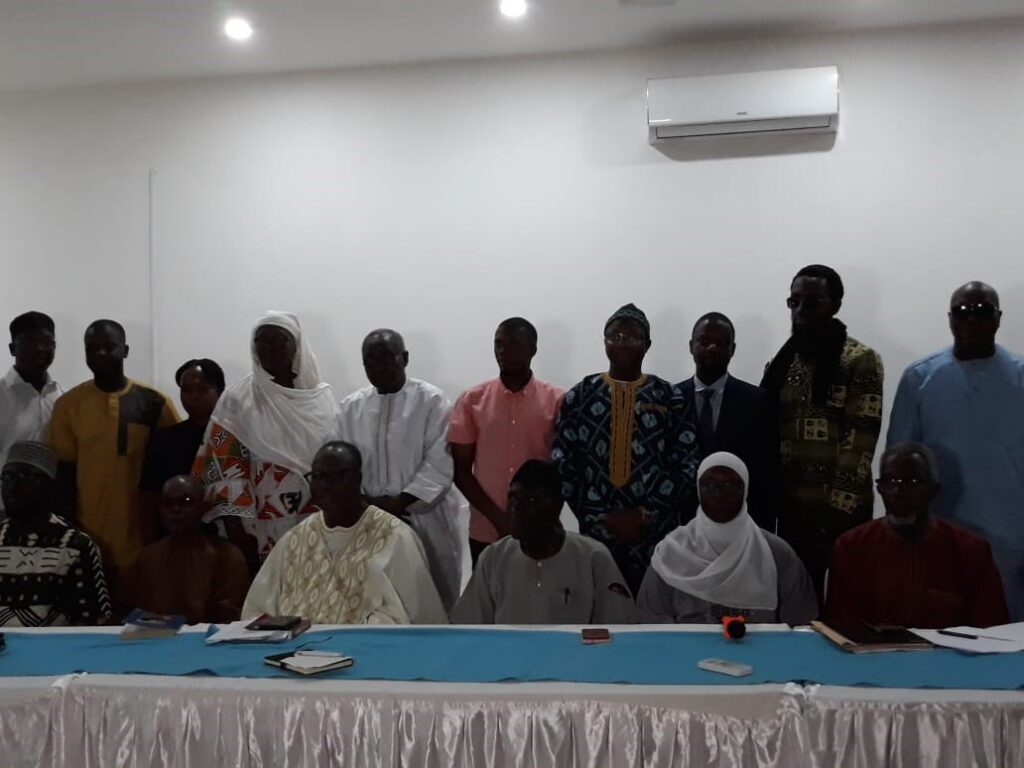
Speaking at a press conference, Hon. Halifa Sallah said the coalition was formed following consultations involving five political parties, eight political movements, two independent presidential aspirants, two brokers, four civil society organisations and eight prominent personalities.
Sallah clarified that he was not the leader or spokesperson of the coalition but had been mandated by its members to address the gathering on their behalf.
He said the groups engaged in consultations between March and August 2026 before agreeing to establish what they called the Team Gambia Grand Coalition 2026.
According to Sallah, the coalition’s central theme is to “hand Gambia back to her people”, which he said reflects the group’s commitment to ensuring that citizens play a greater role in determining how the country is governed and how its resources are managed.
He said the coalition had identified the absence of a presidential term limit and the current electoral system as issues requiring constitutional attention.
“We agree that there is a need to hand over power back to the people, hand over resources back to the people of The Gambia,” Sallah said.
He says the coalition will seek to introduce a presidential term limit and ensure that constitutional arrangements reflect the principle that sovereignty resides with the people.
Sallah said the coalition would focus on leading the country through consultation rather than concentrating power in the hands of one individual.
He disclosed that, if elected, the coalition would aim to deliver a new constitution within 18 months.
“If it fails after this coalition assumes office, then you should indict all of us for that failure,” he remarked.
Sallah said the coalition had sought to avoid what he described as the shortcomings of the 2016 political transition by creating a broader platform involving political parties, movements, civil society organizations, workers, farmers, women and young people.
He pointed out that the coalition’s agenda would extend beyond political and constitutional reforms to economic issues, particularly poverty reduction.
“The change we seek is not only political, it is also economic,” he said, adding that the coalition had made the eradication of extreme poverty one of its primary objectives.
Sallah said the coalition would seek to ensure that national resources contributed to improving housing, food security, infrastructure, healthcare and other basic needs.
He noted that the coalition was deliberately taking time to establish its structures and policies before selecting a presidential flag bearer.
“We agreed that before we talk about a flag bearer, let us assemble the minds of the country, the will of the country,” he emphasized.
According to Sallah, potential presidential candidates would be allowed to work with one another before a candidate is selected, while the coalition would maintain a team-based approach to governance.
He said the coalition also intended to prepare candidates for National Assembly, mayoral, chairperson and councilor elections.
Sallah disclosed that prospective candidates would return to their constituencies and communities to build support before the coalition eventually selected candidates to contest under its platform.
He said those elected under the coalition’s platform would be expected to implement the coalition’s program rather than serve solely as representatives of individual political parties or movements.
The coalition, he continues intends to strengthen political participation at grassroots level and create opportunities for political forces to compete on a more level playing field after a coalition administration.
Sallah said the coalition would also establish specialised committees dealing with democracy and the rule of law, justice and human rights, voter education and reconciliation, planning and finance, media, and economic and social affairs.
Sallah said one of the coalition’s proposed early actions would be to apologize for injustices committed since The Gambia attained independence and take measures to address outstanding grievances.
On voter education, he said the coalition would seek to promote greater understanding of the importance of voting and civic responsibility.
“The vote is what manifests your sovereignty,” he argues, stressing that citizens should regard their votes as an expression of their equality and political rights.
Sallah also highlighted the proposed media committee, saying the media should remain central to democratic governance and public access to information.
He pointed out that another committee would examine economic and social issues, including the management of national assets and natural resources.
“The concessions we are making in terms of the resources we own, the minerals we own, the ocean we own, the ports we own, all the assets which are national assets, sovereign national assets of the country,” he remarked.
Sallah said the coalition’s agreement would be made available to the public, urging citizens to read it and take ownership of its objectives.
He said the coalition’s broader objective was to build a political structure capable of governing collectively and ensuring that national development remained the responsibility of citizens and institutions rather than an individual leader.