


By: Cecilia E.L. Mendy
The Supreme Court of The Gambia has dismissed a constitutional challenge to the Commission of Inquiry (Amendment) Act 2023, ruling that the National Assembly acted within its constitutional powers when it enacted the legislation.
A five-member panel of the apex court unanimously upheld the amendment on Wednesday, finding that parliament did not violate the constitution in passing the law.
The case was filed by the Coalition of Progressive Gambians and journalist Kemeseng Sanneh, popularly known as Kexx Sanneh, against the Attorney General and the Clerk of the National Assembly.
The Commission of Inquiry (Amendment) Act 2023, passed by the National Assembly on 2 September 2023, introduced provisions allowing the president to grant amnesty to individuals barred from holding public office following findings by a Commission of Inquiry.
Before the amendment, individuals prohibited from holding public office as a result of commission findings faced permanent restrictions.
The amendment changed that legal position by empowering the President to grant amnesty, thereby allowing such consequences to be reduced or removed.
The applicants challenged Sections 19, 20 and 21 of the amendment, arguing that they were inconsistent with Sections 200 to 206 of the 1997 Constitution, which provide the legal framework for commissions of inquiry and define presidential powers.
They argued that the National Assembly had exceeded its legislative authority by introducing provisions that weakened the binding nature and integrity of commission findings.
However, the Supreme Court rejected the arguments, holding that Parliament has the constitutional authority to determine and modify the legal consequences arising from commissions of inquiry.
The Court’s decision effectively confirms the validity of the amendment, allowing the law to remain in force.
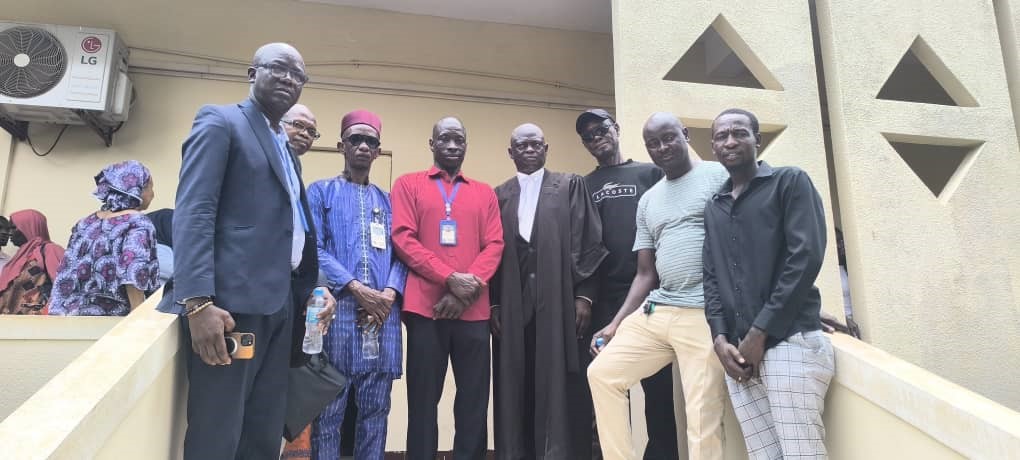
Speaking to journalists after the ruling, Senior Counsel Lamin J. Darboe, who represented the applicants, said he respected the decision but disagreed with the Court’s conclusion.
“I respect the decision of the Supreme Court. But I disagree with the decision,” Darboe said.
He noted that since the judgment was unanimous, seeking a review by the same court would not be practical.
Darboe added that he would consult his clients on the possibility of taking the matter to the ECOWAS Court of Justice.