


By Isatou Sarr
The Executive Director of the Centre for Good Governance (CGG), Alasan Sowe, has urged Gambians to use the Access to Information Act, 2021, to seek answers from public institutions rather than rely on rumours, speculation and unverified claims.
In a press statement, Sowe encouraged citizens to use the law to obtain information, verify claims before sharing them and hold public officials accountable for their decisions and actions.
“Do not speculate when you can seek the facts. Do not spread misinformation when you can verify the truth. And do not surrender your right to know when the law provides you with a means to seek information,” he said.
Sowe described access to information as more than a legal right, saying it was a practical tool for empowering citizens, strengthening accountability and building public trust in government.
He noted that access to credible information enables citizens to make informed decisions, participate in public affairs and hold public institutions accountable.
The CGG executive director also warned that the rapid spread of information on social media had increased the risk of misinformation, disinformation and speculation, which could undermine public confidence, distort public debate and create tensions within communities.
He urged citizens to seek clarification from public institutions on matters of public interest rather than rely on assumptions or circulate claims they could not substantiate.
“Accountability begins when citizens are willing to ask questions, and transparency becomes meaningful when public institutions respond in accordance with the law,” he stated.
Sowe stressed that demanding accountability should not be interpreted as hostility towards the government or public officials. Rather, he said, it was an essential element of democratic governance that promotes responsible leadership, strengthens institutions and subjects decisions affecting citizens to public scrutiny.
He also called on public institutions to promote openness by fulfilling their obligations under the Act and responding to legitimate information requests in accordance with the law.
The CGG executive director particularly encouraged young people to embrace responsible information-sharing, evidence-based advocacy and constructive civic engagement, urging them to seek reliable information before forming or sharing opinions on national issues.
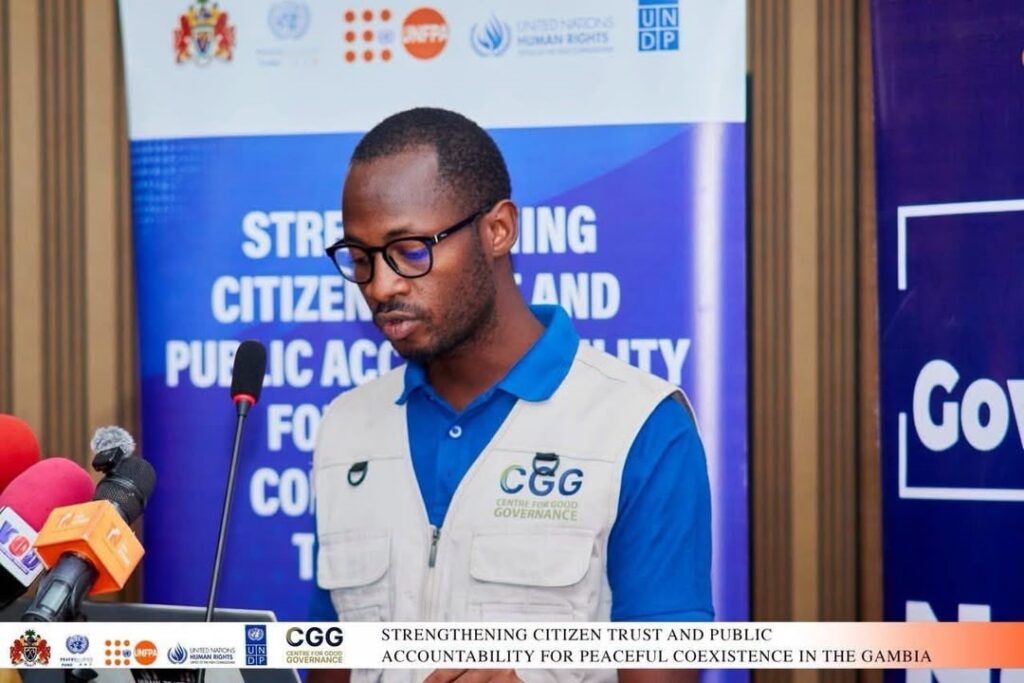
The initiative forms part of CGG’s project, Strengthening Citizen Trust and Public Accountability for Peaceful Coexistence in The Gambia, implemented in partnership with the United Nations Development Programme (UNDP) The Gambia, the United Nations Population Fund (UNFPA) The Gambia and the Office of the United Nations High Commissioner for Human Rights, with support from the United Nations Peacebuilding Fund.
Sowe further called on journalists, civil society organisations, youth groups, community leaders and citizens to intensify public education on access to information.
He maintained that the law’s contribution to improved governance would depend on public awareness, effective implementation and citizens’ willingness to exercise their rights responsibly.