


By Fatoumatta B. Jallow
Safe Space, a Gambian organization providing support to women and girls affected by gender-based violence and other challenges, has marked its fifth anniversary with a renewed commitment to strengthening protection, psychosocial support and advocacy services.
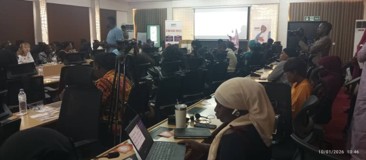
The anniversary event, held at the Badaji Hotel, brought together representatives of civil society organisations, development partners, government institutions and other stakeholders to reflect on the organisation’s achievements and outline its priorities for the next five years.
Speaking at the event, Safe Space Founder and Executive Director, Sophia Manneh, said the organisation was established in response to gaps in mental health and psychosocial support services, particularly for women and girls in rural communities and survivors of violence.
She recalled that the initiative began on 11 September 2021 with its first Sister Circle, bringing together 10 young women in a single room without funding or a formal strategic plan.
Manneh said the initiative was founded on the need to create a confidential and supportive environment where women and girls could share their experiences without fear of judgment and access the assistance they needed.
She explained that her experiences during clinical training, combined with community engagement and advocacy against violence against women and girls, exposed significant gaps in access to mental health services and survivor support.
According to her, many victims and survivors of violence lacked safe spaces where they could report their experiences, receive psychosocial assistance and begin the healing process.
She said the organisation subsequently expanded its activities to include women’s retreats, school-based interventions, mental health education, violence prevention and community engagement.
Manneh noted that its beneficiaries include survivors of gender-based violence, girls at risk of exploitation and harmful practices, migrant returnees, school-going adolescents and young women navigating trauma and social inequalities.
She said Safe Space had directly supported more than 500 young women over the past five years through psychosocial care, referrals, learning opportunities and empowerment initiatives.
The Executive Director also highlighted the establishment of the GBV Survivors Advocacy Network, which provides a platform for young women affected by female genital mutilation (FGM) and other forms of gender-based violence to participate in advocacy and community action.
She also spoke about the formation of Feminist Bankaba, a network of women-led organisations established to strengthen collaboration and collective action in protecting the rights of women and girls.
Manneh recalled that in 2024, women-led and survivor-led organisations mobilised to defend the country’s law prohibiting FGM when attempts were made to repeal it.
She said the experience demonstrated the importance of solidarity among organisations working to protect women’s and girls’ rights.
Looking ahead, Manneh said Safe Space would focus on expanding its reach, strengthening safe spaces in schools and communities and improving survivor-centred services.
She emphasised that the organisation’s work should be measured not only by the number of people reached but also by the changes in their lives, including improved safety, access to support and confidence to speak out.
Earlier, Chairperson of the Board of Trustees, Mrs Mam Lisa Camara, said the board would provide strategic direction and oversight while allowing the executive director and management team to handle the organisation’s daily operations.
She said the board would pay particular attention to safeguarding, financial accountability, institutional priorities, organisational sustainability and the responsible use of resources.
Camara stressed that the organisation’s strategic plan should serve as a practical guide for decision-making, partnerships and measurable improvements in the lives of women and girls.
She also announced that the organisation would unveil a new identity reflecting its growth and the broader community of women and girls it serves.
She said the new identity did not represent a departure from the organisation’s original mission but rather an expansion of its commitment to providing support to women and girls of different ages and circumstances.
Camara acknowledged the contributions of development partners, civil society organisations, government institutions, diplomatic missions, United Nations agencies and community partners to the organisation’s work.
She encouraged stakeholders to maintain their support as Safe Space enters its next phase of development.
The fifth anniversary celebration also provided an opportunity for the organisation to present its strategic plan for the next five years, outlining its priorities for strengthening institutional capacity, expanding services and promoting the rights and wellbeing of women and girls.