


By Binta Jaiteh
The Edward Francis Small Centre for Rights and Justice (EFSCRJ) has warned that The Gambia continues to face governance, accountability and human rights challenges a decade after the end of authoritarian rule.
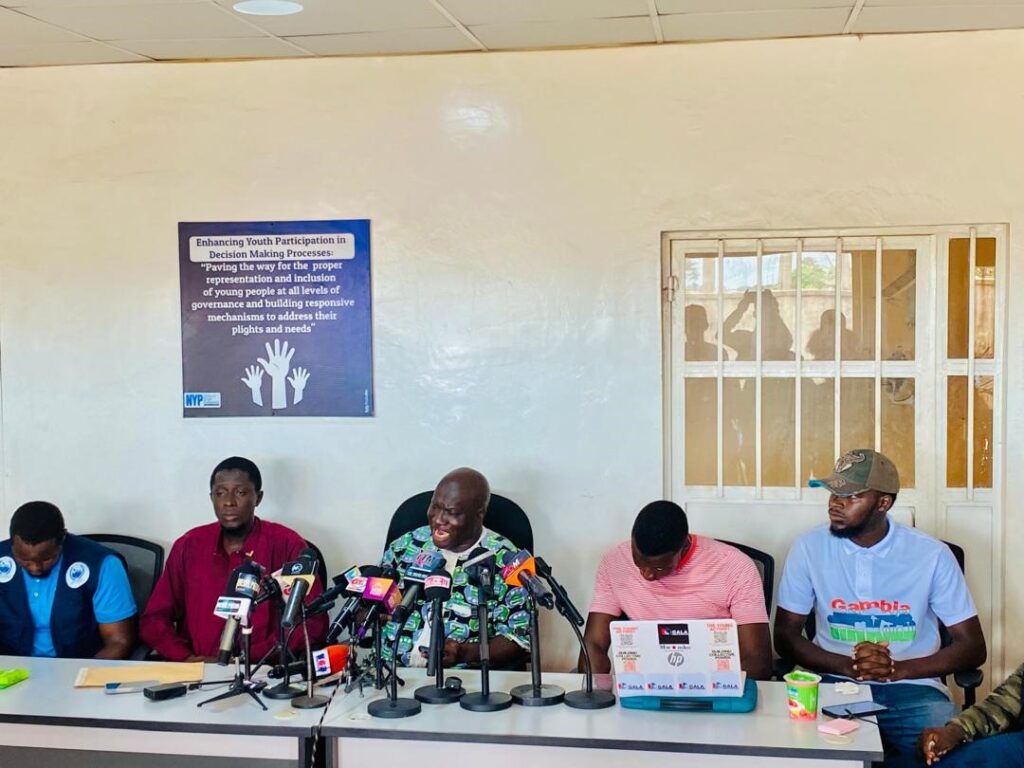
The rights body came up with the warning during a joint press conference with Gambians Against Looted Assets (GALA) held Tuesday at the National Youth Parliament in Banjul.
While acknowledging progress made since the end of dictatorship, EFSCRJ said persistent weaknesses in governance and accountability continued to undermine public confidence in state institutions.
The organization cited concerns over healthcare, education, water and electricity services, corruption and what it described as the politicization of law enforcement.
It said poor public services, unemployment, rising living costs and poverty were placing additional pressure on Gambians, particularly young people.
According to EFSCRJ, the main challenge was not necessarily the absence of laws and policies but weaknesses in their implementation, including what it described as negligence, incompetence and misconduct without adequate consequences.
The rights body also expressed concern over delays in implementing recommendations of the Truth, Reconciliation and Reparations Commission (TRRC) and the Janneh Commission.
It further questioned the continued absence of government White Papers on the National Assembly’s inquiry into the sale of former President Yahya Jammeh’s assets and the Local Government Commission of Inquiry.
EFSCRJ said the two inquiries had raised concerns relating to alleged corruption, abuse of office, mismanagement and institutional weaknesses that required appropriate government action.
On corruption, the rights body emphasized that reports by the Auditor General, the National Assembly, law enforcement agencies, journalists and civil society organizations continued to highlight financial irregularities, alleged abuse of office and other breaches of the law.
EFSCRJ also expressed concern over the application of law enforcement, warning that selective enforcement and the targeting of critics, journalists, activists and citizens exercising their rights could undermine the principle of equality before the law.
It called for stronger protection of constitutional rights, including freedom of expression, peaceful assembly and association.
It also urged the authorities to investigate alleged violations and ensure that appropriate remedies were provided where rights had been breached.
EFSCRJ paid tribute to Ebrima Gassama, whom it described as a committed supporter of justice and democracy, and called for the circumstances surrounding his death to be fully examined.
As The Gambia prepares for the 2026 presidential election, EFSCRJ urged citizens to defend their constitutional rights, demand transparency in the management of public resources and reject corruption and political violence.
It also called for meaningful constitutional and institutional reforms, stressing that The Gambia belonged to all its citizens.
The rights body urged Gambians to engage in peaceful, informed and active civic participation to safeguard the country’s democratic gains.