


By Yunus S. Saliu
Permanent Secretary at the Ministry of Tourism, Arts and Culture (MOTAC), Amie Njie, has called for stronger collaboration among tourism stakeholders to transform the country’s cultural, historical and natural resources into sustainable tourism opportunities that create jobs and improve local livelihoods.
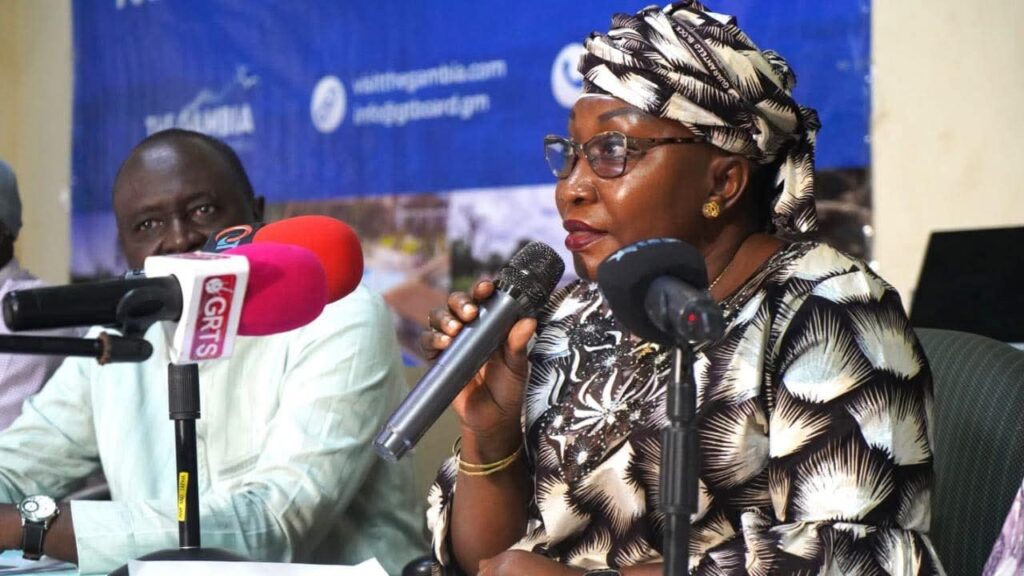
Njie made the call while speaking at a stakeholder forum on tourism development, where she highlighted the potential of inland tourism to diversify the country’s tourism products and generate greater economic benefits for communities.
She said The Gambia possessed a wide range of tourism assets, including wildlife, traditional communities, cultural festivals, historical sites, traditional camps and other cultural activities.
She said the challenge was to develop these resources into viable tourism products while ensuring that the country’s cultural heritage and natural environment were protected.
“The challenge for us is how to transform these resources into something that generates employment, supports local businesses, preserves heritage and improves the livelihoods of our people,” she said.
Njie said the stakeholder forum provided an opportunity to identify challenges, explore innovative solutions and develop a coordinated approach to tourism development.
She said expanding tourism beyond the traditional coastal areas could diversify the country’s tourism offering while creating additional employment and income opportunities for local communities.
According to Njie, stronger stakeholder engagement could also encourage entrepreneurship among young people and women, strengthen local value chains and promote the country’s cultural and natural heritage.
She stressed that the objective should not simply be to increase the number of visitors travelling inland, but to ensure that tourism generated tangible economic benefits for communities.
“Rather, we must ensure that tourism development creates meaningful economic benefits for local communities while protecting the resources on which tourism depends,” she said.
Njie said sustainable tourism development required strong partnerships among government institutions, traditional authorities, communities, development partners and private-sector operators.
She said the government remained committed to promoting sustainable tourism through collaborative initiatives and partnerships with relevant institutions.
Such efforts, she added, would focus on improving coordination, strengthening capacity and promoting environmentally responsible tourism practices that protect natural resources while empowering local communities.
Njie called on tourism stakeholders and development partners to strengthen collaboration and develop practical initiatives capable of positioning tourism as a key driver of inclusive national development.