


By Haddy Touray
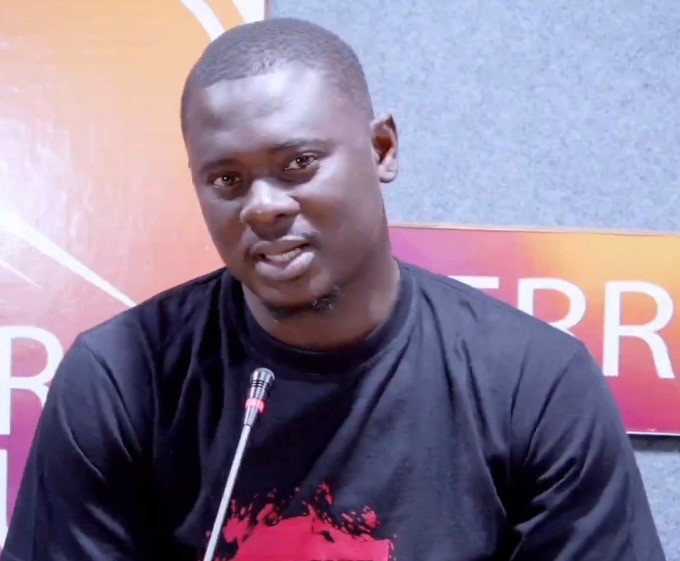
Political analyst Biran Gai has warned that the opposition’s chances of defeating President Adama Barrow in The Gambia’s 2026 presidential election remain slim unless opposition parties overcome their divisions and build a broad coalition.
Speaking in an interview with Eye Africa TV, Gai said opposition parties were spending too much time criticizing one another instead of focusing on President Barrow and his National People’s Party (NPP), which he described as their main political opponent.
“I think the chances of that happening are very slim at the moment,” Gai said. “When you analyse the opposition political landscape, or the political landscape in general, I think the opposition are misdirecting their vision to the wrong purpose.”
He said the opposition remains fragmented, with competing parties and coalition initiatives increasingly focused on their differences.
According to Gai, continued fragmentation could benefit the NPP as the election approaches by dividing the opposition vote and making it more difficult to unseat the incumbent.
He cited recent political realignments involving the United Democratic Party (UDP), Talib Bensouda and former UDP figures, but cautioned that it was too early to determine how voters associated with those political groupings would ultimately vote.
He also noted that undecided voters could significantly influence the outcome of the election.
Gai said the country’s electoral system should also be considered when assessing the opposition’s prospects, arguing that a crowded field could make it more difficult for the opposition to defeat an incumbent president.
He said the strongest option for the opposition would be to establish a broad alliance similar to the coalition that defeated former President Yahya Jammeh in the 2016 election.
Gai further warned that continued political fragmentation could discourage undecided voters from participating, with some potentially concluding that supporting a divided opposition would amount to wasting their votes.
He urged opposition parties to focus on presenting voters with a clear alternative and explaining how a change of government would improve their daily lives.
UDP support crucial to opposition victory
Gai also said the UDP’s established voter base would be critical to any opposition coalition seeking to defeat the NPP in 2026.
He argued that the UDP has maintained a significant and relatively consistent bloc of voters over successive elections.
“Any coalition without the UDP, I don’t think they will be able to win in 2026 because you need the numbers of the UDP,” he said.
“Historically, they have proven that they have fixed numbers. UDP numbers do exist, and therefore any political organisation will need their numbers.”
Despite the importance he attaches to the UDP, Gai expressed doubts about the prospects of an alliance between the party and the UNITE-led Coalition 2026.
He said the two camps currently have different positions and competing demands that could complicate efforts to reach an agreement.
According to Gai, some of the differences are linked to the circumstances surrounding the departure of some UNITE members from the UDP and their concerns over the party’s ability to win a presidential election.
He also referred to the UDP’s previous coalition negotiations, saying the party had withdrawn from talks on occasions when its conditions were not accepted.
Gai said similar tensions appeared to be resurfacing as opposition parties position themselves ahead of the 2026 election.
However, he cautioned against treating the UDP as the only force capable of delivering an opposition victory.
Need for compromise to build a broad electoral coalition
He said other parties and political movements also command important constituencies and that all sides would need to compromise to build a broad electoral coalition.
While acknowledging the UDP’s claim to being the country’s largest political party based on its electoral record, Gai said its ability to work with other opposition groups would be as important as its own voter base.
He argued that neither the UDP nor the other opposition groups could easily win without the support of the other.
“Likewise, they too will need the remaining numbers of the others in order to get this in,” he said.
Gai’s assessment comes as Gambian opposition parties continue to negotiate alliances ahead of the December 2026 presidential election, with the ability to consolidate their respective voter bases likely to be a key factor in determining whether they can mount a credible challenge to President Barrow.