


By Binta Jaiteh
A recent survey by the Centre for Policy, Research and Strategic Studies (CepRas) has predicted ruling National People’s Party (NPP) as winner of the 2026 presidential election.
The opinion poll, which was funded by the National Endowment for Democracy (NED) had seen the United Democratic Party (UDP) following NPP in the presidential race.
The National Opinion Poll aimed to assess public perceptions on governance, electoral integrity, voter behaviour, and broader democratic trends in The Gambia.
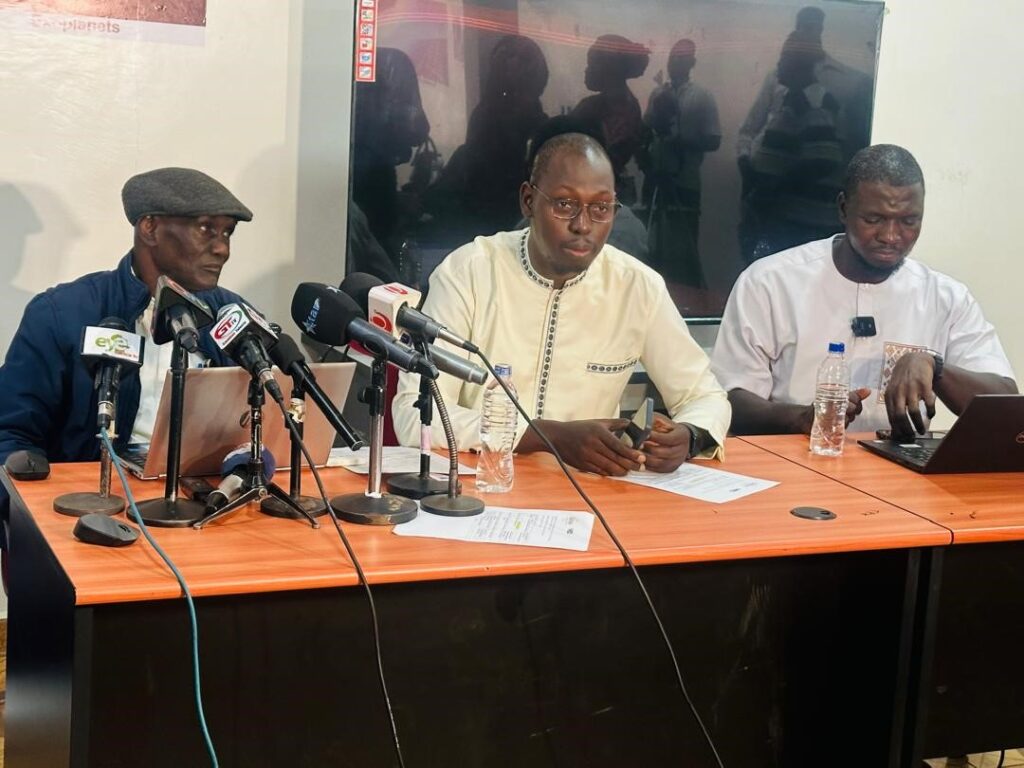
Addressing journalists on Thursday, Dr. Mustapha Jobarteh, presenting the survey findings, said the NPP Alliance led in public perception as the likely winner, while UDP emerged second. He noted that a significant proportion of respondents either refused to state a preference or were undecided.
On opposition support, Jobarteh says UDP leads, followed by the Alliance for Patriotic Reorientation and Construction (APRC), then People’s Democratic Organisation for Independence and Socialism (PDOIS), and the United Movement for Change (UMC). Around 25 percent of respondents did not indicate a preference among the listed parties.
Meanwhile, the survey also examined public trust in information on social media and confidence in the electoral commission. Jobarteh described social media trust as “guarded and conditional,” while only a quarter of respondents expressed high confidence in the electoral commission, highlighting a potential trust gap that could influence election perceptions.
While the majority of Gambians view past elections as free and fair, a notable minority, particularly among youth, certain regions, and educated groups, expressed doubts over electoral integrity.
Dr. Jobarteh urged political actors to engage undecided voters—including women, young people, and urban residents—through policy-focused strategies rather than rhetoric. He stressed that the findings offer crucial insights into voters’ concerns and expectations regarding governance and leadership.
The survey further indicates that many undecided voters are seeking more concrete policy positions and genuine reform commitments, particularly from major opposition parties. “The incumbent faces a challenge of legitimacy, stemming more from performance assessment than political alignment,” Jobarteh said.
The study highlights the need for renewed focus on governance reforms, particularly in national unity, institutional efficiency, economic governance, employment generation, and public security. It also recommends stronger measures to fight corruption, including bolstering autonomous anti-corruption bodies, implementing relevant laws, and increasing transparency in public decision-making and expenditures.