


By Fatou Krubally
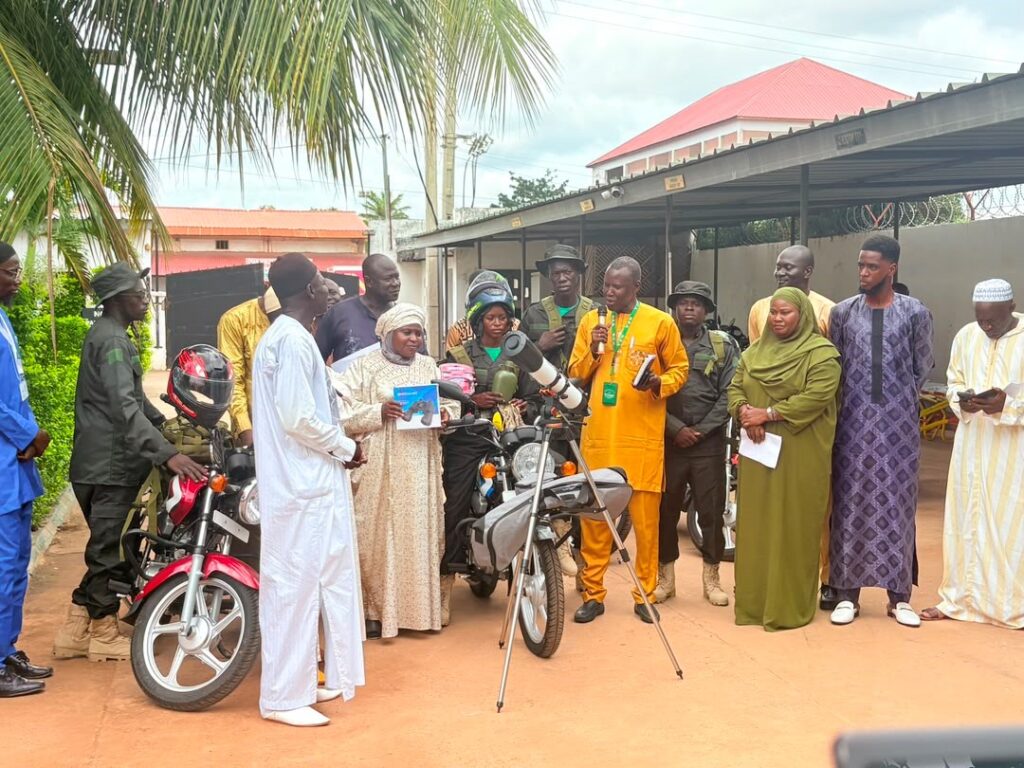
The National Environment Agency (NEA) on Friday handed over surveillance equipment worth more than D5.8 million to personnel serving Indigenous and Community Conserved Areas (ICCAs).
This move is aimed at strengthening community-based wildlife conservation and biodiversity protection in The Gambia.
The equipment, supplied under the GEF-6 Land and Seascape Planning and Ecosystem Restoration Project, was presented during a ceremony at the agency’s headquarters.
The package comprises 35 motorcycles, ranger uniforms, binoculars, telescopes, digital cameras and field guidebooks to enhance monitoring, surveillance and conservation activities in community-protected areas in the Central River Region and Kartong.
Providing an overview of the project, GEF-6 Project Coordinator Ousainou Touray said the initiative was launched by the Gambian government with funding from the Global Environment Facility (GEF) and support from the United Nations Environment Program (UNEP).
He says the five-year project, valued at US$5.6 million seeks to improve ecosystem services and livelihoods, restore degraded landscapes and seascapes, strengthen biodiversity conservation, and promote sustainable management of land and marine resources.
Touray says the project has supported protected areas, community conservation initiatives, ecosystem restoration programs, biodiversity conservation activities and livelihood projects, including beekeeping and community capacity-building programs.
He disclosed that the surveillance equipment handed over to beneficiaries was procured at a total cost of D5,839,823.
“The materials are meant to support the staff of the ICCAs and other conservation areas in carrying out their responsibilities more effectively,” Touray said.
Speaking at the ceremony, NEA Executive Director Dr. Dawda Badjie described the handover as part of the agency’s continuing efforts to strengthen environmental protection and conservation across the country.
He said the equipment would enhance the operational capacity of field personnel responsible for protecting wildlife habitats and conserving natural resources within community conservation areas.
Dr. Badjie urged beneficiaries to ensure the equipment is properly maintained and used for its intended purpose to achieve the project’s conservation objectives.
Central River Region Governor Alhaji Ousman Bah commended the NEA and the GEF-6 Project for supporting communities through conservation and capacity-building initiatives.
He recalled that local authorities and community representatives from the region had earlier participated in a study tour to Kenya, where they acquired practical knowledge on community-led conservation and protected area management.
Governor Bah stressed the importance of safeguarding the environment, noting that the sustainable management of natural resources was essential for the well-being of both present and future generations.
Officials say the equipment is expected to strengthen community-based conservation efforts, improve biodiversity protection and enhance the management of Indigenous and Community Conserved Areas, which play a vital role in preserving wildlife and ecosystems in The Gambia.