


By Yunus S Saliu
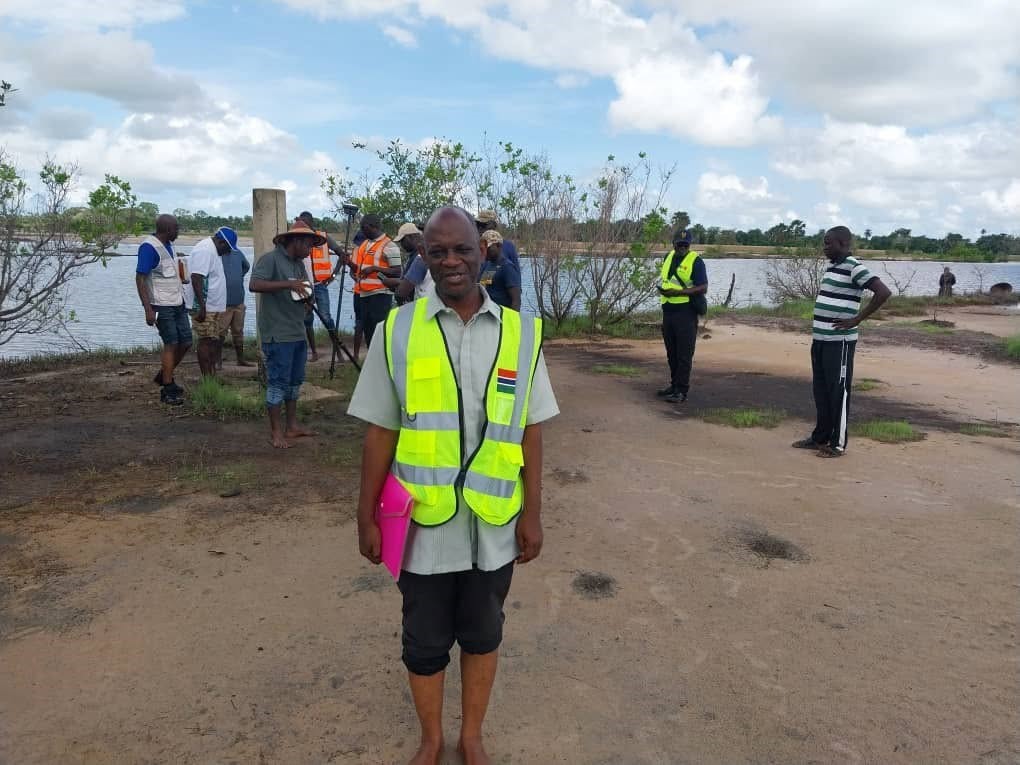
The National Centre for Arts and Culture (NCAC) is supporting the ongoing Gambia-Senegal border demarcation exercise by providing historical and archival records to help clarify the location of the international boundary.
The joint exercise began on Aug. 15, 2026, following an agreement between The Gambia and Senegal to resume efforts to reaffirm and demarcate the southern section of their common border.
The exercise covers the stretch from Touba Tranquil-Dar Salam to Saré Yoro Guèye-Jahanka.
As part of The Gambia’s contribution, NCAC Director General Hassoum Ceesay, ORG, FBA, is providing historical and documentary expertise to the process.
A historian and documentalist, Ceesay is supporting the exercise through archival materials, including historical maps and other documents that could help establish and clarify the locations of colonial-era boundary lines.
The NCAC’s involvement highlights the role of historical and archival records in contemporary governance and nation-building.
Historical documents can provide valuable evidence on how territorial boundaries were established during the colonial period and assist technical teams in interpreting existing boundary descriptions, agreements and markers.
The present Gambia-Senegal boundary has its origins in agreements concluded between Britain and France during the colonial period. Subsequent demarcation exercises further defined the frontier, making historical documentation an important resource in understanding its original configuration.
For the NCAC, participation in the exercise represents a practical application of its mandate to preserve, document and utilise The Gambia’s historical heritage in the national interest.
The Centre’s contribution also demonstrates the practical value of historical research beyond museums, monuments and academic publications.
Properly preserved archival records can provide important information for territorial administration, governance and the protection of national interests.
The renewed border demarcation exercise comes amid broader efforts by The Gambia and Senegal to strengthen bilateral cooperation and address issues relating to their common frontier.
The exercise is expected to help establish and maintain clearly recognised border markers, providing greater certainty for communities, farmers, pastoralists and traders living and operating along the border.
Through the participation of the NCAC and its Director General, historical knowledge is being incorporated into a contemporary national undertaking, highlighting the role of archival preservation in supporting territorial clarity, good-neighborly relations and nation-building.