


By Yunus S. Saliu
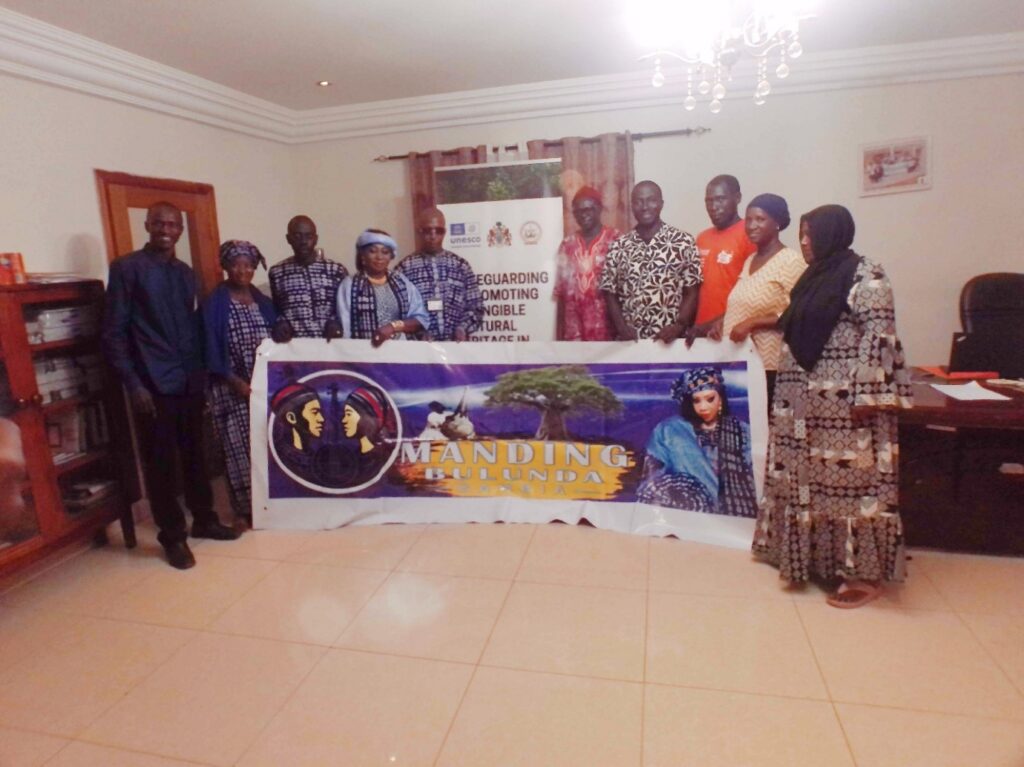
The National Centre for Arts and Culture (NCAC) and the Manding Bulunda Association Gambia on Thursday signed a three-year Memorandum of Understanding (MoU) aimed at preserving, promoting and documenting Manding cultural heritage in The Gambia.
The agreement was signed at the Research and Documentation Department of the NCAC in Fajara.
The MoU, which is renewable upon mutual consent, seeks to strengthen collaboration between the two organisations in cultural preservation, education, language development, research, documentation, capacity building and community empowerment.
The Manding Bulunda Association is a national organisation committed to preserving and promoting Mandinka and Mandingo cultural heritage, including language, history and traditional practices.
Speaking at the ceremony, Sanna B. Jarju, Director of Performing Arts at the NCAC, acknowledged the association’s broad areas of intervention but noted that culture, particularly language, remained one of its key areas of focus.
Fatoumata Darboe, President of the Manding Bulunda Association, stressed that the organisation was not established exclusively for Mandinkas and that its activities were not based on tribal considerations.
“The organisation is like any other organisation in the country, meant for the promotion of our culture while we fight against tribal issues. It is not for politics but for the interest of the country,” she said.
Darboe described the signing as a historic occasion for the association and expressed appreciation to the NCAC for agreeing to collaborate with the organisation.
Other representatives of the association also welcomed the agreement, saying the signing had been anticipated for a long time.
They stressed that collaboration and commitment would be essential to achieving the organisations’ objectives, including promoting Gambian culture, contributing to the preservation of African heritage and combating tribalism and division.
Under the agreement, the two parties will jointly develop programmes to document, revitalise and disseminate Mandinka cultural practices, language and history.
They will also support community-led initiatives aimed at safeguarding intangible cultural heritage, including oral traditions and traditional crafts.
The MoU provides for the development of educational materials and the promotion of the Mandinka language, including N’Ko, as well as culture and history. It will also support language-learning and literacy programmes within Manding communities.
In the area of capacity building, the parties will organise training workshops for community leaders, educators and cultural practitioners. Exchange visits and study tours to other African countries will also be encouraged to facilitate knowledge sharing.
The agreement further provides for awareness and advocacy programmes, including cultural events, campaigns and media outreach aimed at increasing public awareness of Mandinka cultural heritage and issues affecting Manding communities.
The two organisations will also undertake joint research on Mandinka history, social structures and cultural expressions, while exploring the development of digital archives and repositories for cultural materials.
The partnership is intended to preserve and promote cultural heritage and ensure that it remains accessible to future generations while fostering greater understanding and appreciation of traditional values and practices.
A joint coordination committee comprising representatives from the NCAC and the Manding Bulunda Association will be established to oversee implementation of the MoU.
The committee will monitor progress, coordinate activities and facilitate communication between the two parties.
Under the agreement, the Manding Bulunda Association will facilitate community participation and engagement, coordinate local activities, provide relevant documentation and support capacity-building initiatives.
The NCAC, for its part, will provide technical expertise, support capacity building, training and resource development, facilitate international cooperation and assist in the dissemination of cultural information.
Both parties also agreed to maintain the confidentiality of shared information and respect ownership and intellectual property rights relating to materials and resources developed through their collaboration.