


By Yunus S. Saliu
NCAC Promotes Reading Culture Through Heritage-Based Learning Programme
The Director General of the National Centre for Arts and Culture (NCAC), Hassoum Ceesay, has called for stronger reading habits among Gambian students through increased exposure to quality literature and the country’s cultural heritage sites.
Ceesay made the remarks during a reading promotion activity held at the Mungo Park Memorial Obelisk in Sami Karantaba and the Kerr Batch Stone Circle in Niani District, Central River Region.
He said the initiative was designed to use heritage locations as learning spaces to improve students’ reading skills and encourage them to engage with professionally produced books rather than relying mainly on brief social media content and informal publications.
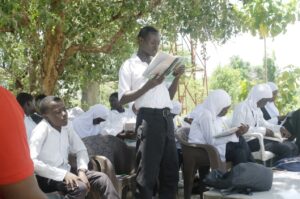

“We are using the heritage sites to promote reading and improve students’ ability to engage with quality texts. Reading is extremely important, especially in an era where many young people spend much of their time reading short messages on Facebook, WhatsApp and other social media platforms,” Ceesay said.
He said the programme aimed to expose students to serious reading materials through well-edited and structured publications.
The featured book for the reading sessions was Sweat Is Invisible In The Rain: A Memoir by Cherno Jallow Njie, which Ceesay described as a valuable source of information on contemporary Gambian history and culture.
He said the memoir provides insights into the country’s political development, the struggle for independence, the emergence of early political parties, the role of women in national development, the contributions of traditional leaders and the importance of Banjul as a centre of political and cultural life.
According to the NCAC Director General, the book also reflects important aspects of Gambian society, including family structures, community support systems and traditional values of cooperation.
“These themes make the book particularly suitable for students. We want them not only to read but also to appreciate the value of quality publications,” he said.
The reading sessions, which brought together more than 40 students at the two heritage sites, included guided reading, discussions, question-and-answer sessions and comprehension exercises.
Participating students were awarded books, exercise materials and other learning resources as part of efforts to encourage continued reading.
Ceesay commended author Cherno Jallow Njie for supporting the initiative, describing his contribution as important to promoting quality education and a stronger reading culture in The Gambia.
“Reading is key to educational attainment. The ability of our students to read and understand texts is paramount,” he said.
The NCAC Director General disclosed that similar activities would continue as part of the centre’s educational outreach programmes.
“This will not be a one-off event. It could be monthly, yearly, or even weekly. Heritage sites are not only places for entertainment and tourism; they are also centres of learning and education,” he added.
He explained that NCAC’s exhibitions at heritage sites include interpretive materials designed to encourage students to read, take notes and deepen their understanding of Gambian history and culture.