


By: Fatou Krubally
The National Audit Office (NAO) has cautioned media practitioners against interpreting audit findings as evidence of fraud or deliberate wrongdoing without sufficient supporting evidence, urging journalists to report audit matters accurately and in their proper context.
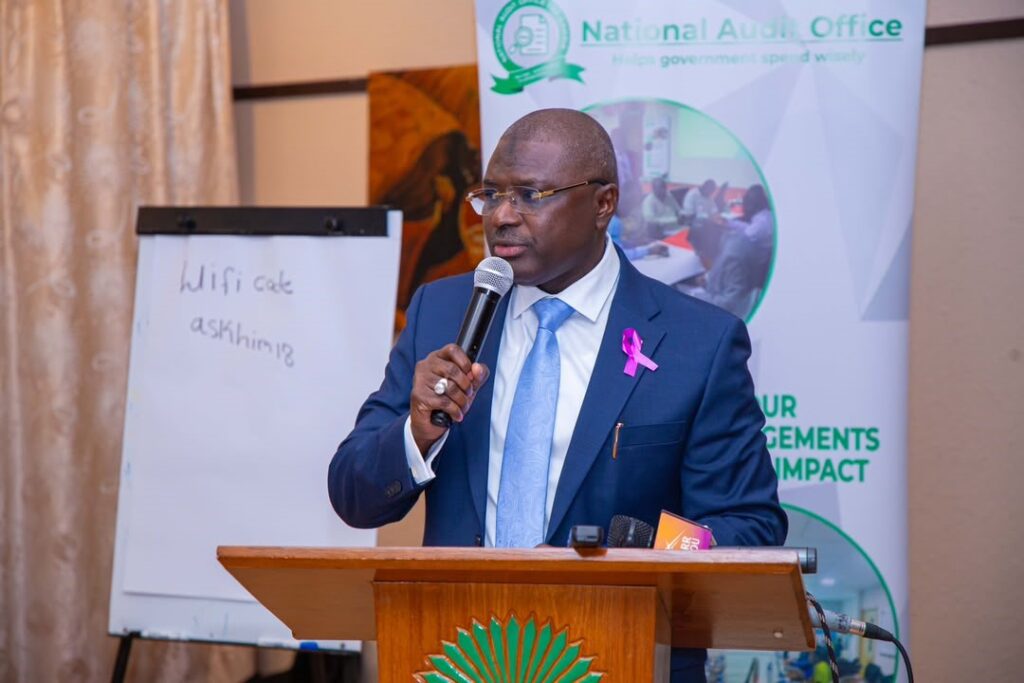
Auditor General Cherno Amadou Sowe issued the caution on Wednesday during the NAO’s annual engagement with media reporters and editors at Senegambia Beach Hotel, where he called for stronger collaboration between the audit institution and the media to improve public understanding of public sector auditing.
The engagement, held under the theme “Promoting Accurate Audit Reporting and Greater Understanding of Public Sector Auditing,” brought together media practitioners and NAO officials to discuss audit reporting, clarify technical terminologies and examine challenges associated with reporting audit findings.
Mr Sowe said the initiative was intended to strengthen relations between the NAO and media organizations while providing an opportunity for knowledge sharing, constructive dialogue and feedback on published stories about audit findings.
He explains that public sector auditing involves technical processes, standards and reporting requirements, making it important for journalists to understand the evidence behind audit observations and the conclusions drawn from them.
“An identified weakness does not automatically establish fraud or deliberate wrongdoing,” the Auditor General said, emphasizing the need to distinguish between audit findings, conclusions and recommendations.
He added that audit observations should be understood in relation to the evidence examined, the applicable criteria, the institution’s response where relevant, and the scope and purpose of the audit.
Mr Sowe, however, stressed that the call for accurate reporting was not intended to discourage journalists from scrutinizing audit reports or asking difficult questions. Instead, he said the NAO welcomed independent scrutiny, critical questions and legitimate public interest in its work.
The Auditor General noted that the media played an important role in informing citizens about the management of public resources and ensuring that public officials were held accountable for their stewardship.
He says the NAO conducts different categories of audits, including financial, compliance, performance and information technology audits, to assess how public funds are managed and whether transactions comply with applicable laws and regulations.
According to him, the office submits its audit reports to the National Assembly to support parliamentary oversight and promote accountability. The reports contain findings, conclusions and recommendations aimed at addressing weaknesses and improving public financial management.
Mr. Sowe also acknowledged that some audit findings had been misunderstood or reported without sufficient context, potentially leading to public misconceptions. He called for sustained engagement to address these challenges while encouraging the media to follow up on actions taken to implement audit recommendations.
The programme included presentations on the NAO’s mandate, financial and compliance audits, and performance auditing, alongside question-and-answer sessions. Participants were also scheduled to examine case studies on turning audit findings into news stories and discuss challenges in audit reporting.
The engagement is expected to strengthen understanding between the NAO and media practitioners and encourage reporting that supports transparency, accountability and informed public debate on the use of public resources.