


By Kemo Kanyi
The National Nutrition Agency (NaNA) has called on parents to adhere to exclusive breastfeeding for infants during the first six months of life, warning that replacing breastmilk with infant formula could negatively affect child growth and development.
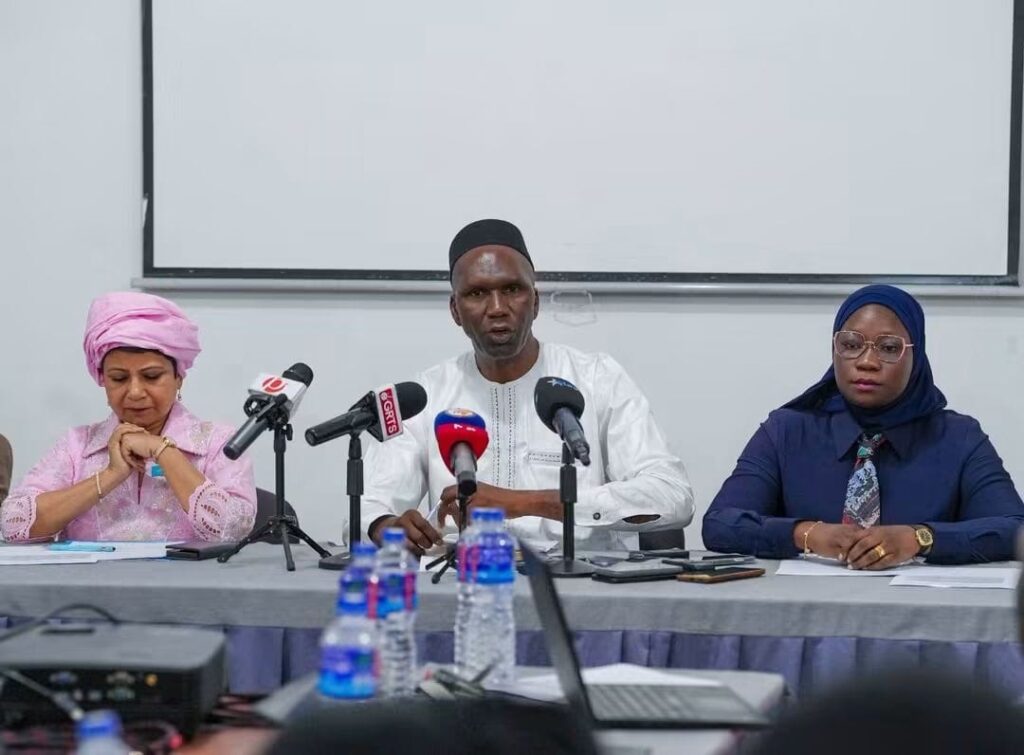
NaNA Director General Malang N. Fofana made the call during a press briefing held on Monday to mark World Breastfeeding Week, where he highlighted the importance of breastfeeding in protecting child health and improving nutrition outcomes.
Fofana said evidence supporting exclusive breastfeeding was clear, describing breastmilk as a child’s first vaccine, first food and first form of food security.
He said infants who are breastfed immediately after birth, or within the first hour of life, and exclusively breastfed for the first six months, are better protected against infections, malnutrition and child mortality.
The NaNA Director General added that breastfeeding also provides health benefits for mothers by reducing the risk of breast and ovarian cancers.
“Globally, scaling up breastfeeding could prevent almost 400,000 child deaths and around 140,000 maternal deaths each year,” he said.
Citing the Global Breastfeeding Scorecard 2024, Fofana said optimal breastfeeding practices for children under two years could prevent approximately 600,000 child deaths annually.
He said the figures demonstrate the importance of breastfeeding as one of the most effective and affordable interventions for improving child health, nutrition and survival.
According to Fofana, about 54 per cent of Gambian infants are exclusively breastfed, a figure above the global average of 48 per cent, due to sustained efforts by the government, health workers and communities.
However, he cautioned against complacency, noting that early initiation of breastfeeding within the first hour after birth remains low at 36 per cent.
Dr Rohey Njie, representing the Ministry of Health through the Directorate of Health Promotion and Education, said this year’s World Breastfeeding Week theme, “Breastfeeding for a Sustainable Start in Life: Strengthen What Works,” highlights the need to strengthen proven interventions that support mothers to breastfeed successfully.
She said continued efforts were required to ensure that every mother receives the necessary support to practise and sustain breastfeeding.
UNICEF Gambia Representative Nafisa Binte Shafique also reiterated the importance of breastfeeding in supporting newborn survival, growth and development.