


By: Dawda M. Jallow
The Ministry of Higher Education, Research, Science and Technology (MoHERST) has acknowledged significant implementation challenges under The Gambia’s previous Science, Technology and Innovation (STI) Policy, as the government moves to validate a new framework covering 2027–2035.
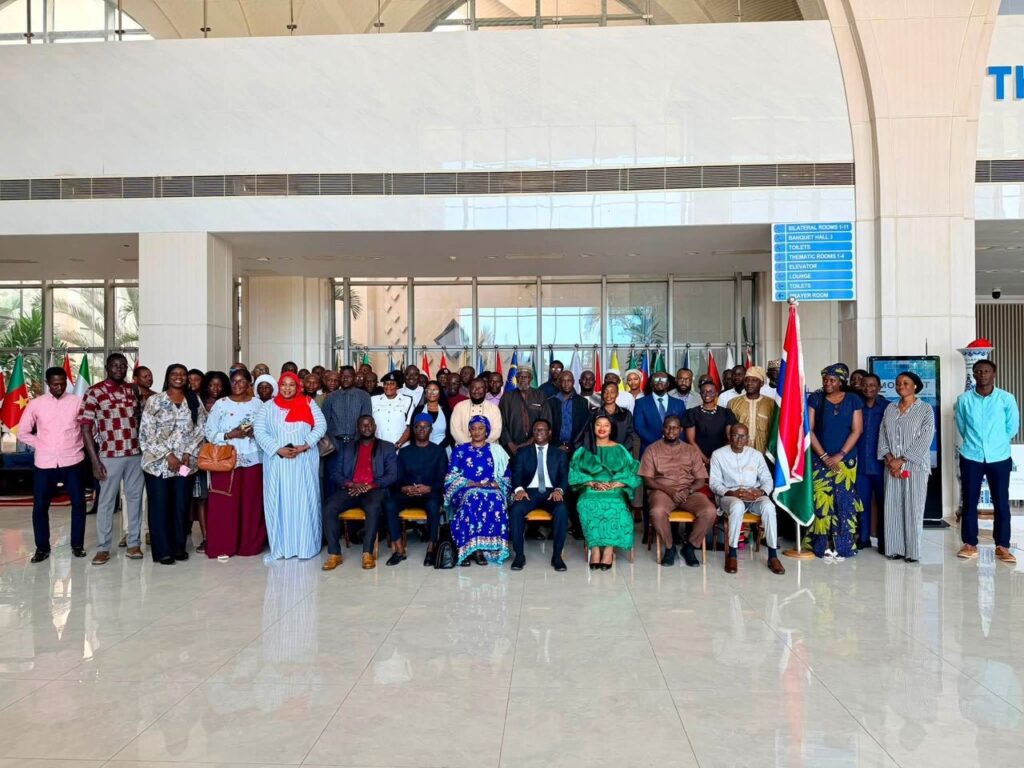
MoHERST, in collaboration with stakeholders, on Monday held a national validation workshop to review and finalise the National Science, Technology and Innovation Policy (NSTIP) 2027–2035.
Speaking at the opening of the workshop, Minister of Higher Education, Research, Science and Technology, Prof. Pierre Gomez, said the previous STI Policy, covering 2015–2024, provided an important foundation for the country’s STI agenda but faced serious implementation challenges.
“None of its twelve core objectives was fully achieved,” Prof. Gomez said.
He attributed the shortcomings to inadequate financing, weak institutional and legal foundations, limited coordination and insufficient STI data.
The minister said proposed governance bodies under the previous policy were not constituted, while the national STI database was never operationalised to support coordination and monitoring.
Prof. Gomez said lessons drawn from the implementation of the previous policy had informed the development of the new NSTIP, which is aligned with the Recovery-Focused National Development Plan, Yirriwa 2023–2027.
The new policy is also aligned with regional and international frameworks, including ECOWAS Vision 2050, the ECOWAS Science, Technology and Innovation Policy (ECOPOST), the African Union’s Science, Technology and Innovation Strategy for Africa 2034 (STISA-2034), and relevant United Nations Sustainable Development Goals.
According to Prof. Gomez, the new policy seeks to address weaknesses identified under the previous framework by establishing a stronger legal and institutional foundation, including through a proposed STI Act and an STI Secretariat within MoHERST.
He said the proposed structures would strengthen support for research and innovation, improve coordination and accountability, and provide mechanisms for measuring progress.
The NSTIP 2027–2035 is built around 10 priority areas, including STI leadership and institutions, research financing, digital infrastructure and cybersecurity, artificial intelligence and emerging technologies, STEM skills, increased opportunities for women in STI, climate-resilient innovation, stronger university-industry linkages, improved data and measurement, and regional and international cooperation.
Permanent Secretary at MoHERST, M.S. Isatou Auber, said the policy was developed through consultations, evidence-based analysis and inter-ministerial collaboration, with contributions from a Technical Review Group.
She said the proposed framework includes a statutory governance system, a National Research and Innovation Fund to support competitive grants, and a national STI measurement system to track progress.
Auber stressed that implementation of the policy would not be the responsibility of MoHERST alone, but would require coordinated participation across different sectors.
She thanked ECOWAS for its financial support and acknowledged the contributions of UNESCO, the World Bank, UNDP, ECOWAS, AUDA-NEPAD and other development partners to the policy development process.