


By Kemo Kanyi
The International Organization for Migration (IOM) has launched a three-day foundational training for stakeholders on missing migrants along irregular migration routes.
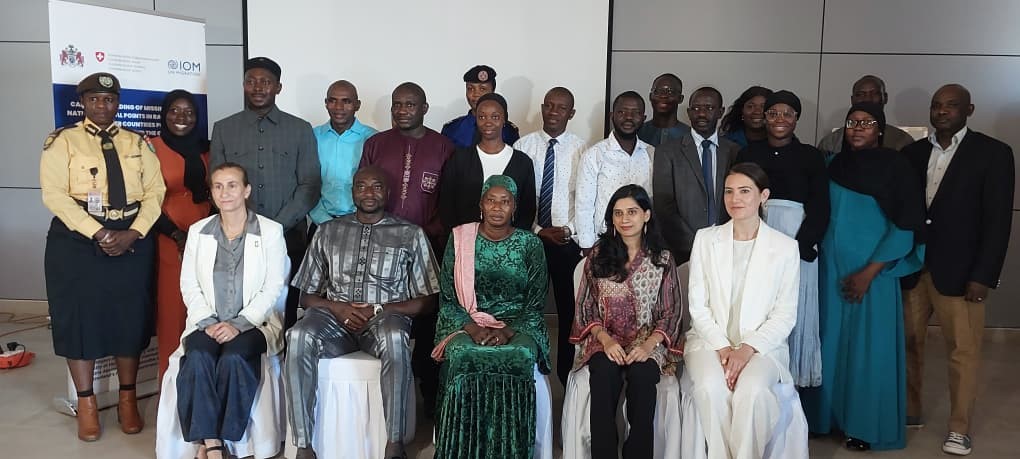
The training, held on Wednesday at the Sunset Beach Hotel, brought together stakeholders to strengthen knowledge and coordination in responding to cases of missing migrants and supporting affected families.
IOM acknowledged the commitment of the Gambian Government to addressing the issue, noting that The Gambia has increasingly positioned itself as a regional actor on missing migrants through its engagement in the Rabat Process, establishment of the National Task Force on Missing Migrants and broader efforts to strengthen migration governance and international cooperation.
Speaking at the opening ceremony, Sibgha Ajaz, Officer-in-Charge of the IOM Gambia office, said these efforts reflected the recognition that behind every missing migrant was a family searching for answers.
She said discussions on missing migrants often focused on figures, policies and coordination mechanisms, but the issue had a profound human dimension.
“At the heart of this issue are mothers who continue to wait for a phone call that never comes, fathers trying to understand what happened to their children, spouses left with uncertainty, and communities carrying stories of loss and unanswered questions,” she remarked.
Ajaz said, according to IOM’s Missing Migrants Project, at least 250 Gambians had gone missing along migration routes since 2014, adding that the actual number was likely to be higher.
She cited the incident off the coast of Jinack as another reminder of the risks faced by migrants undertaking irregular journeys.
Ajaz stressed that responding to cases of missing migrants required cooperation among government agencies, law enforcement authorities, humanitarian organisations, diplomatic missions, civil society organisations and communities.
“It requires systems, skills and coordination. But equally, it requires empathy, compassion and a commitment to supporting families during some of the most difficult moments of their lives,” she said.
She said participants would, over the three-day training, discuss the prevention of migrant deaths and disappearances, search and identification processes, case management, legal frameworks, family assistance and multi-stakeholder cooperation.
Ndumbeh Saho, Director of Diaspora at the Ministry of Foreign Affairs, said migration had significant social and economic implications and that addressing cases involving missing and deceased migrants was therefore more than an administrative responsibility.
She said it was also a matter of protecting human dignity, supporting affected families and strengthening the national response to migration-related challenges.