


By Kemo Kanyi
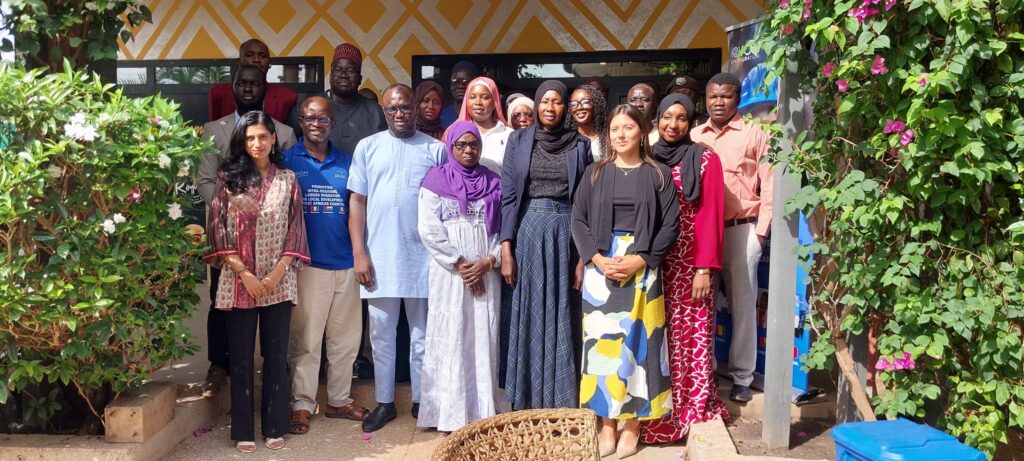
The International Organization for Migration (IOM) and the Gambian government have organized a two-day capacity-building workshop on labour migration governance at Bakadaji Hotel in Kololi.
The workshop organized by IOM in partnership with the Ministry of Trade, Industry, Regional Integration and Employment (MoTIE) aimed at strengthening labour migration governance through improved institutional capacity, ethical recruitment practices and enhanced protection of migrant workers.
It is funded by the Italian Agency for Development Cooperation (AICS) and brings together representatives of government institutions, labour migration stakeholders, private recruitment agencies, labour unions, Technical and Vocational Education and Training (TVET) institutions and civil society organisations.
IOM said migrant workers often face risks including irregular migration, unethical recruitment, labour exploitation and limited access to protection and support services.
The organisation noted that the Government of The Gambia has demonstrated its commitment to safe, orderly and well-managed labour migration through the National Migration Policy (NMP) 2020–2030 and the Labour Act 2023.
However, challenges remain, including limited awareness of migration governance frameworks, weak migration data systems, inadequate labour market matching mechanisms and gaps in the protection of migrant workers.
The workshop seeks to strengthen stakeholders’ capacity to promote safe, orderly and regular labour migration by improving labour market information systems, supporting ethical recruitment and enhancing protection and reintegration services for migrant workers.
It will also support the implementation of the National Migration Policy and Labour Migration Strategy, which prioritise stronger migration governance, migrant protection, ethical recruitment and sustainable reintegration.
Mr Mamadi Dampha, Deputy Permanent Secretary at the Ministry of Trade, Industry, Regional Integration and Employment, said migration was about people seeking opportunities and a better future, stressing that government had a responsibility to ensure that such opportunities were pursued safely and with dignity.
“Strengthening labour migration governance helps protect migrants, maximise the benefits of mobility, and contribute to The Gambia’s sustainable development,” he said.
According to IOM, the Labour Migration Strategy highlights the need to strengthen migration institutions, improve migration data and statistics, expand skills development and social protection, maximise the benefits of remittances and support the sustainable reintegration of returning migrants.
IOM The Gambia Officer-in-Charge Sibgha Ajaz said well-governed labour migration could serve as a powerful driver of development for individuals, families and communities.
“This workshop reflects our shared commitment to building systems that protect migrant workers, address labour market needs, and maximise the developmental benefits of migration,” she said.
Ndumbeh Saho, Director of Diaspora at the Ministry of Foreign Affairs, also underscored the importance of strengthening cooperation among institutions and stakeholders to ensure that Gambian migrant workers are adequately protected and able to contribute to national development.