


By: Isatou Sarr
The Ministry of Health has raised concern over the burden of breast cancer in The Gambia, with the latest IARC GLOBOCAN 2024 estimates recording 161 new cases and 77 deaths from the disease.
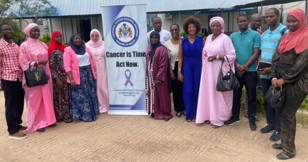
The figures were disclosed on Thursday, October 1, 2026, during a press conference organised by the National Cancer Control Programme (NCCP) of the Ministry of Health as part of activities marking World Breast Cancer Day. The briefing was held at the Central Medical Store (CMS) in Kotu.
Delivering remarks on behalf of the World Health Organization (WHO) Representative in The Gambia, Dr. Oumie Jagne said breast cancer remained the most diagnosed cancer among women worldwide and continued to pose a significant public health concern.
She says many lives can be saved when the disease is detected early and treated promptly, stressing the need for greater awareness, early detection, timely diagnosis, access to quality treatment and compassionate care.
“Today, we come together not only to raise awareness but also to inspire action through early detection, timely diagnosis, access to quality treatment, and compassionate care,” she remarked.
Dr. Jagne called on women to make breast health a priority and urged families to encourage women to seek screening and medical attention whenever they noticed unusual changes.
She also appealed to community leaders to help dispel myths and stigma surrounding breast cancer, while urging health facilities to strengthen efforts to provide accessible and quality breast cancer services.
She further reminded the public that breast cancer can also affect men, urging both men and women to seek medical attention if they noticed unusual changes.
According to her, symptoms that should not be ignored in men include a painless lump or swelling in the breast area, changes to the nipple such as inversion or discharge, skin dimpling or redness around the breast, as well as persistent pain or swelling under the armpit.
Dr. Jagne urged the media to use their platforms throughout October to provide accurate information and encourage people to seek care early.
“Together, let us know the signs, act early, seek care early and save lives,” she said.
Also speaking at the press conference, Dr. Kebba S. Bojang, Programme Manager of the National Cancer Control Programme, says this year’s theme, “Every Story Is Unique, Every Journey Matters,” highlights the fact that breast cancer does not affect everyone in the same way.
He underscores that each person’s experience is shaped by factors including their diagnosis, access to timely care, treatment options, family and community support, and personal circumstances.
Dr. Bojang said global estimates for 2024 recorded approximately 2.4 million new breast cancer cases and 694,000 deaths worldwide.
In The Gambia, he said, the latest IARC GLOBOCAN 2024 estimates placed breast cancer as the third most common cancer among women, after cervical and liver cancers.
The estimates, he said, indicated 161 new cases and 77 deaths, with 293 women living within the five-year prevalence period. Breast cancer accounts for approximately 13.5 percent of estimated cancers among women, while the estimated cumulative risk of developing the disease before the age of 75 is 1.8 percent, or approximately one in 56 women.
Dr. Bojang noted that breast cancer could affect women at different ages, with the risk generally increasing with age. He added that while having a family history or certain other risk factors might increase a person’s risk, many people diagnosed with breast cancer have no known family history.
The National Cancer Control Programme, which is tasked with reducing the burden of cancer in The Gambia to the barest minimum, works with national and international partners to strengthen cancer prevention and control in the country.
These partners include the World Health Organization, International Atomic Energy Agency, International Cancer Control Partnership, Union for International Cancer Control, National Cancer Institute and cancer-related civil society organisations, including NASO, C3G, CALG and Breast Cancer Warriors.