


By Kemo Kanyi
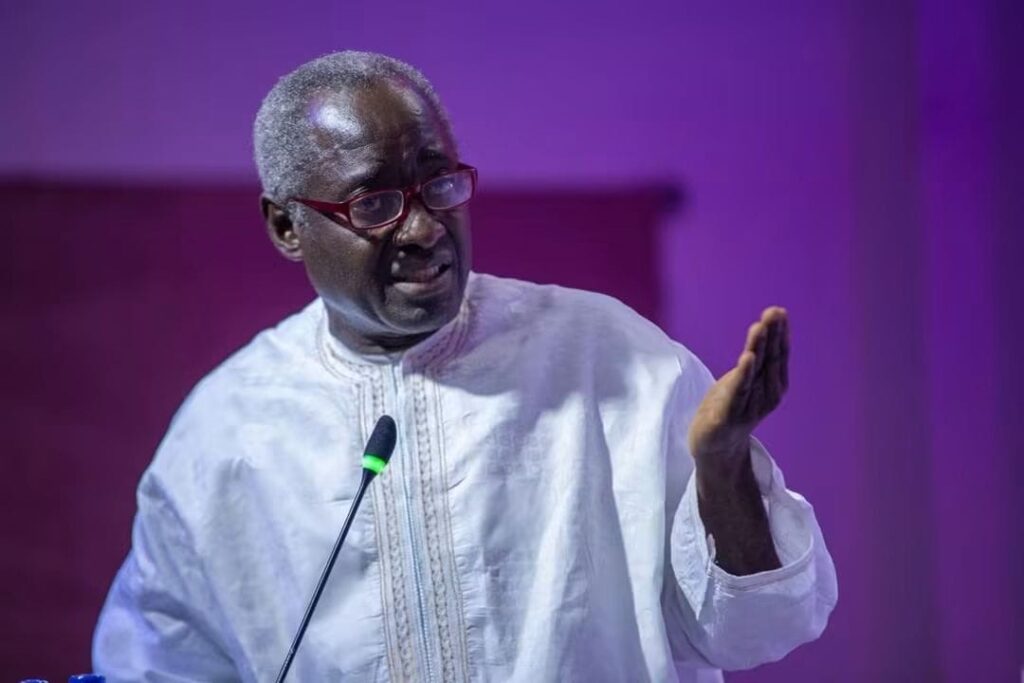
Veteran Gambian politician, Halifa Sallah has called on the governments of The Gambia and Senegal to provide a full explanation of the demolition of part of the Gambian military camp at Bulock in Foni region.
Sallah describes the incident as a serious matter that raises concerns over Gambia’s territorial integrity.
Speaking during an appearance on QTV, Sallah said the 16 July incident should serve as a wake-up call on the importance of safeguarding national sovereignty and territorial integrity.
“There can be no people without territory and there can be no state without sovereignty,” he said, arguing that protecting the country’s borders is a constitutional responsibility entrusted to the armed forces.
Sallah questioned how force could have been used against a military installation established to defend The Gambia’s territorial integrity, saying the circumstances surrounding the incident require a clear and credible explanation.
“What happened? Why was it possible for such a thing to happen? That must be explored and explained,” he said.
He added that neither the Gambian nor the Senegalese government had, in his view, provided an explanation that adequately addressed the concerns raised by the incident.
Sallah also argued that successive governments since independence had not given sufficient priority to the demarcation of the boundary between The Gambia and Senegal, describing the border as porous and vulnerable to disputes.
According to him, establishing and maintaining clearly defined national borders should have been among the first responsibilities of the Gambian state after independence, warning that failure to do so creates uncertainty over territorial ownership.
The senior People’s Democratic Organisation for Independence and Socialism (PDOIS) member further called for greater transparency regarding any bilateral agreements governing the boundary between the two countries, including whether such agreements had been ratified by the respective national legislatures.
Referring to the historical framework governing African borders, Sallah noted that the former Organisation of African Unity (OAU), now the African Union, adopted the principle that the borders inherited at independence should remain the internationally recognized boundaries of African states in order to prevent territorial disputes.
The Gambian government has previously said it is engaging Senegal through diplomatic channels following the 16 July incident at the Bulock border post, while reaffirming its commitment to resolving the matter peacefully in accordance with international law.