


By Yunus S Saliu
The Gambia Tourism Board (GTBoard) on Monday, September 21, commenced a nationwide tourism stakeholders’ engagement aimed at assessing the performance of the 2025/2026 tourism season and identifying opportunities and challenges affecting the development of the sector.
The five-day engagement, running from September 21 to 25 across the regions, brings together key tourism stakeholders to discuss the performance of the industry, share updates and concerns, and collectively explore ways of strengthening and advancing Destination Gambia.
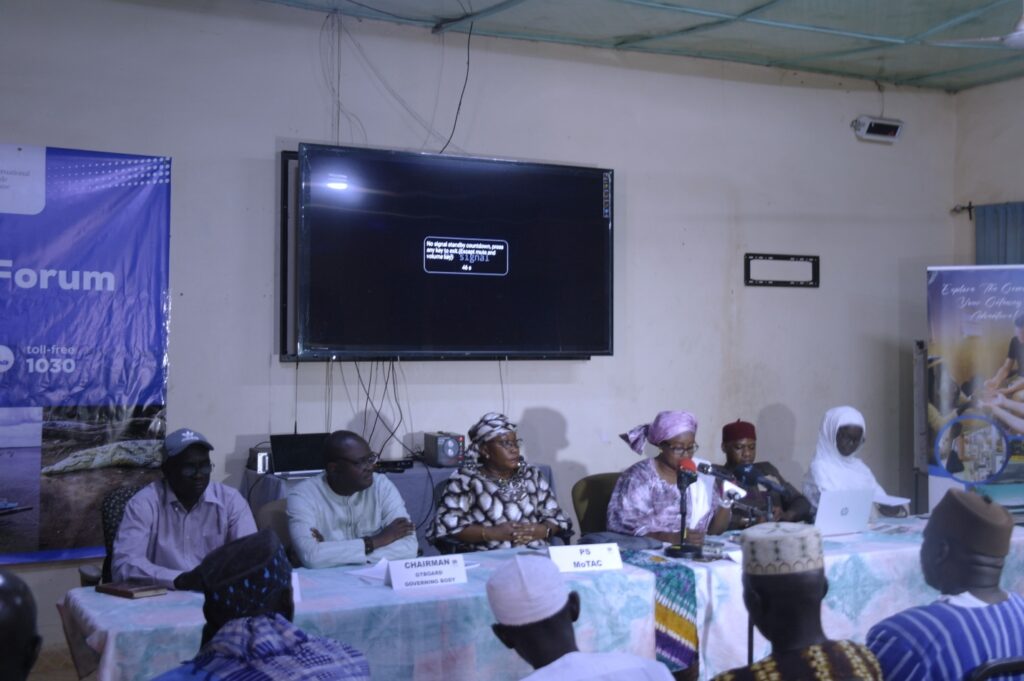
The first engagement was held at DemboFula Hall in Kerewan, North Bank Region, where government officials, tourism operators, development partners, regional authorities and community representatives discussed the need to expand tourism beyond the traditional coastal areas and ensure greater benefits for local communities.
Speaking at the forum, GTBoard Director General Ida Jeng Njie stressed that the benefits of tourism should not be measured solely by the number of visitors recorded, noting that visitor spending and its impact on local communities are equally important.
She cited visitors travelling from Banjul to the North Bank and tourists from neighbouring Senegal who visited attractions, purchased goods and spent money in communities, even where their numbers were not formally captured.
“If you have guests coming from Banjul to North Bank, it is not about the numbers,” she said, stressing that such spending represents an important contribution to the tourism economy.
DG Jeng-Njie assured the North Bank communities of the Board’s commitment to working with regional authorities, traditional leaders and other stakeholders to unlock the region’s tourism potential.
Also speaking, GTBoard Governing Body Chairperson Momodou Bamba Saho called for tourism development in the North Bank to translate into tangible benefits for communities, with greater local participation in tourism planning, ownership and economic opportunities.
He highlighted the region’s rich cultural and historical heritage, including Albreda, Jufureh, Kunta Kinteh Island and Fort Bullen, as major assets that could help diversify The Gambia’s tourism offering.
According to Saho, the region’s river landscapes, cultural traditions and hospitality, coupled with improvements in transportation and electricity infrastructure, provide opportunities to make inland attractions more accessible to visitors.
He said tourism development should create opportunities for local tour guides, boat operators, craft producers, food vendors, farmers, fishermen, women and young people.
Saho also encouraged Gambians, including those in the diaspora, to explore and appreciate the country’s tourism attractions, while urging communities to play a central role in identifying local tourism priorities and opportunities.
“We are here to listen to you,” he told participants, urging them to share their knowledge, concerns and priorities.
Meanwhile, Yusupha Keita, ITC-Gambia Country Representative, disclosed that a European Union-supported programme is implementing interventions aimed at strengthening tourism and the creative industries through product development, policy reforms, skills training, support to micro, small and medium-sized enterprises and destination marketing.
He said the EU Youth Empowerment and Employment Development Programme has six key components covering business environment and policy reforms, product development and marketing, MSME development, skills development and destination promotion.
Keita said the programme would work closely with government institutions, regional authorities, businesses and communities to identify their needs and develop practical interventions.
He particularly emphasised the importance of developing tourism products based on unique community attractions and experiences, while strengthening the skills of young people to improve the quality of tourism and hospitality services.
“We want to listen to you, tell us what you want and how you want it, and we work together,” he said.
For her part, Permanent Secretary at the Ministry of Tourism, Arts and Culture, Amie Joof Njie, called for stronger collaboration among stakeholders to transform the country’s cultural, historical and natural resources into sustainable tourism opportunities that create jobs, support local businesses and improve community livelihoods.
She said The Gambia possesses a wide range of tourism assets, including wildlife, traditional communities, cultural festivals, historical sites, traditional camps and other cultural activities.
However, she said the challenge was to transform these resources into viable tourism products while ensuring that the country’s heritage and natural environment are protected.
“The challenge for us is how to transform these resources into something that generates employment, supports local businesses, preserves heritage and improves the livelihoods of our people,” she said.
PS Njie stressed that developing tourism beyond the traditional coastal areas could diversify the country’s tourism offering while creating new income and employment opportunities for communities.
She added that sustainable tourism requires strong partnerships among government institutions, traditional authorities, communities, development partners and the private sector.
The Permanent Secretary said the government remains committed to sustainable tourism development through collaboration, capacity building and environmentally responsible practices that protect natural resources while empowering local communities.