


By: Fatou Krubally
The Commissioner General of the Gambia Revenue Authority (GRA), Yankuba Darboe, has called for stronger investment in youth empowerment, education, and skills development as key drivers of national development.
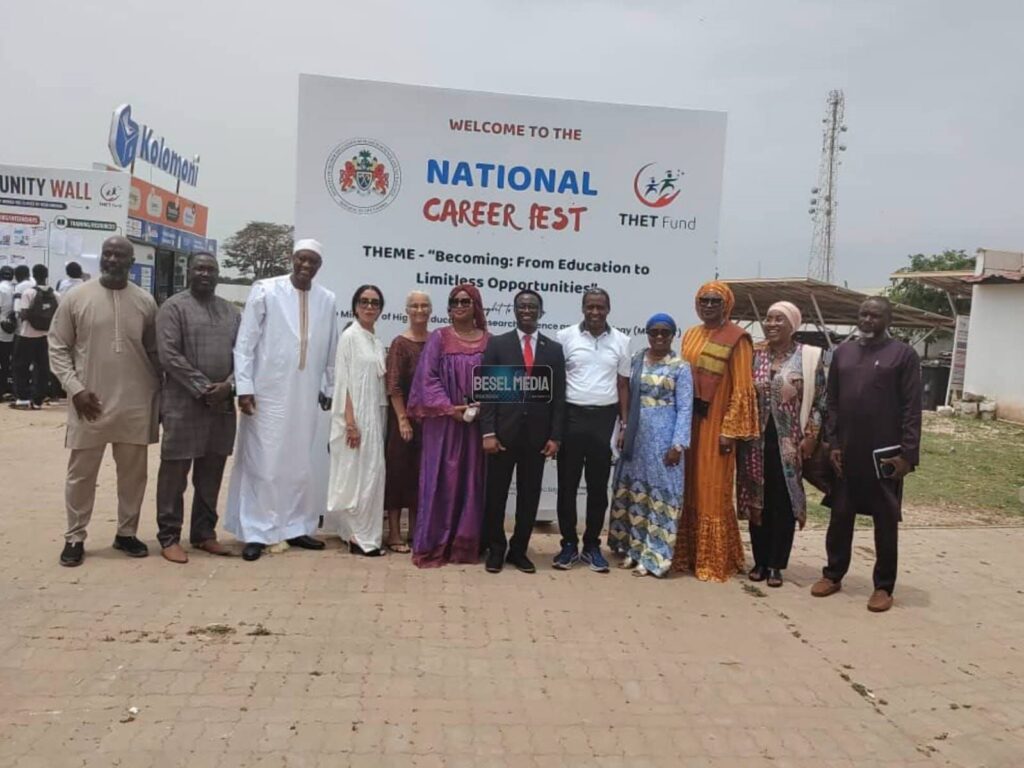
Darboe made the remarks on Saturday at the inaugural National Career Fest 2026, held under the theme “Becoming: From Education to Limitless Opportunities.”
He expressed appreciation to the Ministry of Higher Education, Research, Science and Technology and the Tertiary and Higher Education Trust Fund (THET) for inviting the GRA to participate and for organising the event, which he described as a timely platform linking education to employment and national development.
Darboe said education should be seen as the foundation of opportunity rather than an end in itself, noting that it prepares young people for innovation, entrepreneurship, and productive participation in society.
He highlighted Africa’s youthful population, noting that more than 60 per cent of the continent’s citizens are under the age of 25, describing this as a major opportunity for economic transformation if properly harnessed through education, skills training, and innovation.
According to him, effective investment in human capital could drive growth in productivity, innovation, investment, and job creation across the continent.
The GRA Commissioner General stressed that revenue mobilisation is central to national development, explaining that tax revenue funds essential public services such as education, healthcare, infrastructure, security, and social services.
He said taxation should be understood not only as a legal obligation but also as a civic responsibility and an act of nation-building.
“Every classroom built, every hospital equipped, and every road constructed is made possible through taxes collected,” he said.
Darboe added that youth empowerment and revenue mobilisation are closely linked, noting that employment, entrepreneurship, and innovation all contribute to expanding the national tax base and strengthening economic resilience.
He encouraged young people to develop skills beyond academic qualifications, emphasising critical thinking, digital literacy, communication, and adaptability in an evolving global job market shaped by technology and artificial intelligence.
He further urged students to prepare for opportunities beyond national borders, stating that global competitiveness increasingly depends on skills rather than location.
Reflecting on his personal career journey, Darboe recounted starting as a young customs officer over three decades ago and serving in remote postings across the country, experiences he said shaped his leadership, resilience, and empathy.
He cautioned young people against seeking overnight success, stressing the importance of patience, preparation, and continuous learning in achieving long-term career growth.
“You should never be in a hurry to arrive before you are ready,” he said.
In conclusion, he encouraged graduates and job seekers to explore internships, volunteering, vocational training, and entrepreneurship while actively building their skills and professional networks.
Darboe also announced that, beginning in 2027, the GRA will offer employment opportunities to top-performing graduates in Economics, Accounting, Computer Science, and Information Technology from recognised tertiary institutions, subject to recruitment requirements and procedures.
He said the initiative forms part of GRA’s long-term strategy to attract and develop skilled professionals to strengthen the institution’s capacity.
The event brought together students, government officials, employers, and development partners to discuss pathways from education to employment and innovation.