


By Fatou Krubally
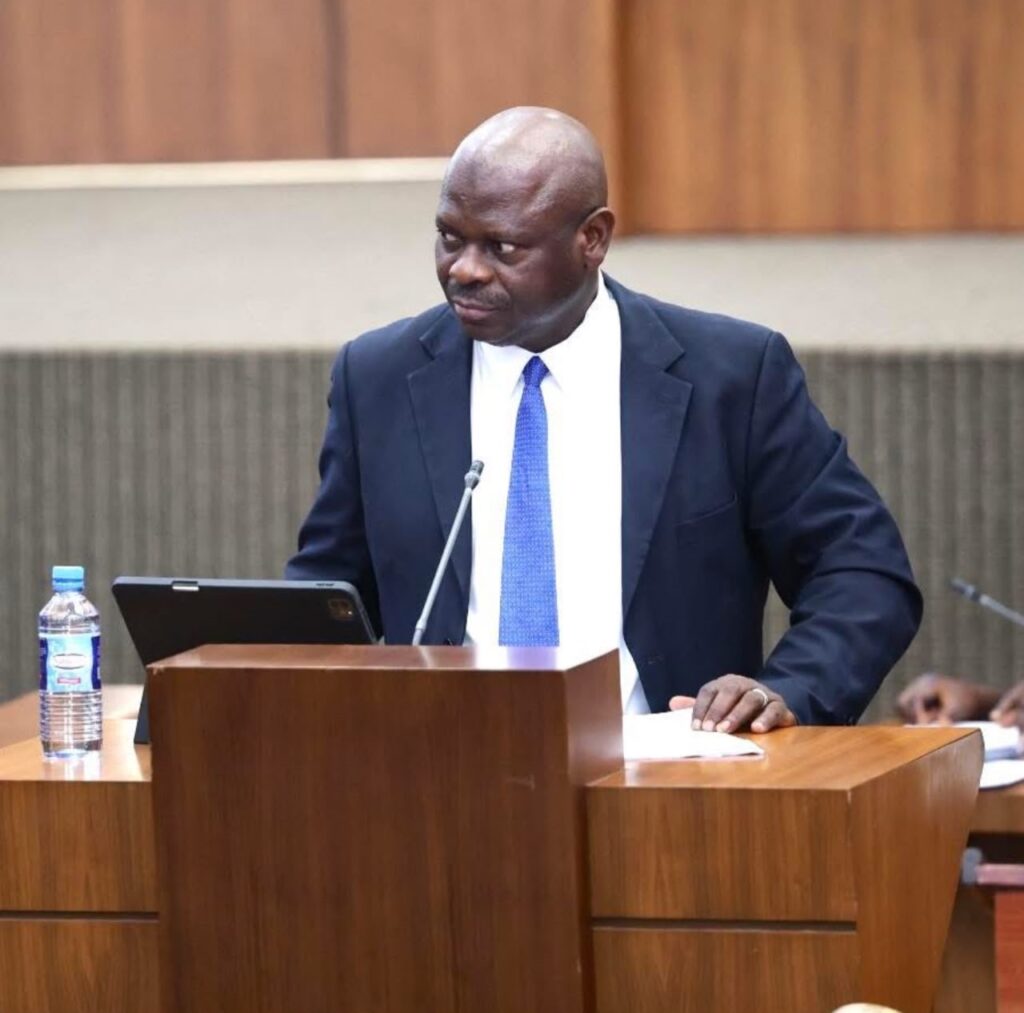
The Gambian government spent D3.1 billion on debt interest during the first six months of 2026, with D2.5 billion going towards domestic debt, Finance and Economic Affairs Minister Seedy Keita told the National Assembly on Monday.
Presenting the government’s mid-year budget implementation report for the period ending 30 June 2026, Minister Keita said debt-interest payments represented 45 percent of the annual budget allocation and increased by 18 percent compared with the same period in 2025.
He attributed the high domestic interest cost to the country’s domestic debt stock and the interest-rate environment that prevailed before the Central Bank of The Gambia began reducing its policy rate.
According to Keita, the Central Bank’s policy rate currently stands at 14 percent, down from about 17 percent previously.
He said the prevailing interest rates, applied to a domestic debt stock of more than D50 billion, had contributed significantly to the government’s interest payments.
Responding to a question from a lawmaker on measures to reduce the cost of domestic borrowing during the remaining six months of the year, Keita said the government would keep domestic borrowing to the “barest minimum possible” within the approved budget framework.
He also explained that the domestic debt stock included legacy obligations and was not solely made up of recent government borrowing.
About D7.95 billion of the domestic debt relates to a 30-year bond, while the government also has the NAWEC bond, bringing the total legacy debt portfolio to about D10 billion, he said.
“These were not necessarily new borrowings of the government,” Keita told lawmakers, explaining that the obligations had been consolidated from the previous administration and continued to attract domestic interest payments.
Revenue and expenditure
Despite the pressure from debt servicing, the government collected D15.35 billion in domestic revenue during the first half of 2026, representing an eight percent increase from the D14.24 billion collected during the corresponding period in 2025.
Tax revenue accounted for D13.36 billion, compared with D12.4 billion a year earlier.
Direct tax revenue increased to D4.29 billion, while indirect tax revenue reached D9.06 billion.
Government expenditure and net lending stood at about D15.42 billion, equivalent to 42 percent of the approved annual budget.
Personnel emoluments, subsidies and transfers, and debt servicing accounted for major areas of expenditure during the period.
Capital expenditure, however, stood at only D1 billion, representing 28 percent of the annual allocation of D3.54 billion and a 27 percent decline compared with the same period last year.
The first-half fiscal outturn resulted in a gross deficit of D68.86 million, significantly lower than the D265.41 million deficit recorded during the corresponding period in 2025.
Keita said the government’s fiscal measures for the remainder of the year would focus on containing expenditure, strengthening domestic revenue mobilisation and reducing borrowing requirements amid limited fiscal space.