


By Fatou Krubally
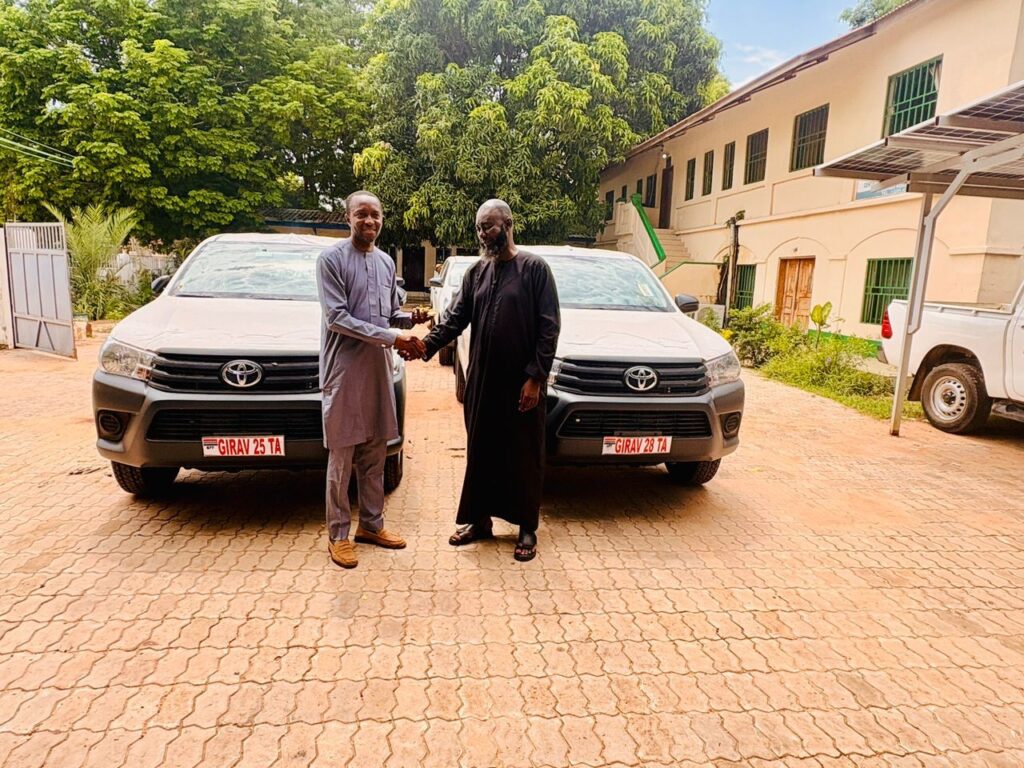
The Gambia Inclusive and Resilient Agricultural Value Chain (GIRAV) Project has given four new Toyota pickup vehicles to the National Water and Electricity Company (NAWEC) to strengthen its field operations and improve water, sanitation and hygiene (WASH) service delivery across the country.
The handover ceremony, held on Friday, formed part of efforts to enhance NAWEC’s operational capacity, particularly in rural and peri-urban communities where access to clean water and sanitation remained a challenge.
The vehicles were procured under Component 6 of the GIRAV Project which had a budget of 23 million U.S. dollars.
Speaking at the ceremony, Sarjo Marena, Financial Controller of the GIRAV Project, described the donation as “timely and strategic”, stressing NAWEC’s role as a key implementation partner in ensuring that development interventions reach communities.
Dr Mamor Alieu Jagne, Coordinator of the Central Project Coordination Unit (CPCU), described the handover as a “momentous occasion”, saying the vehicles were part of a broader collaboration between GIRAV and NAWEC.
He said the partnership also included the nationwide rollout of smart meters aimed at improving efficiency, reducing losses and enhancing accountability in water and electricity consumption.
Jagne said strengthening NAWEC’s operational capacity was essential not only for infrastructure development but also for building resilience.
“These vehicles will facilitate field operations, improve water quality monitoring, and strengthen sanitation programmes,” he said.
He added that the partnership reflected GIRAV’s efforts to support inclusive and resilient systems benefiting both urban and rural communities.
Receiving the vehicles, NAWEC Deputy Managing Director Momodou Lamin Sompo Ceesay expressed appreciation to GIRAV for its continued support.
He highlighted several milestones achieved through the partnership, including the construction of a new water treatment plant in Bansang and the introduction of smart meters in provincial communities.
Ceesay said the interventions would soon be extended to Basse, Farafenni, Soma and other parts of the country, which he said would further improve NAWEC’s operational efficiency.
“The increased mobility provided by these vehicles will directly enhance our capacity to serve the Gambian public more effectively,” he said.
According to Ceesay, the collaboration demonstrates the importance of linking agricultural value chain development with support for essential public utilities.
He said access to clean water and reliable electricity was central to agricultural productivity and community well-being.
The vehicles are expected to improve NAWEC’s mobility for field operations, including monitoring, maintenance and service delivery, particularly in areas requiring increased operational support.
The GIRAV Project is designed to support inclusive and resilient agricultural value chains while strengthening systems that contribute to improved livelihoods and access to essential services.