


By Binta Jaiteh
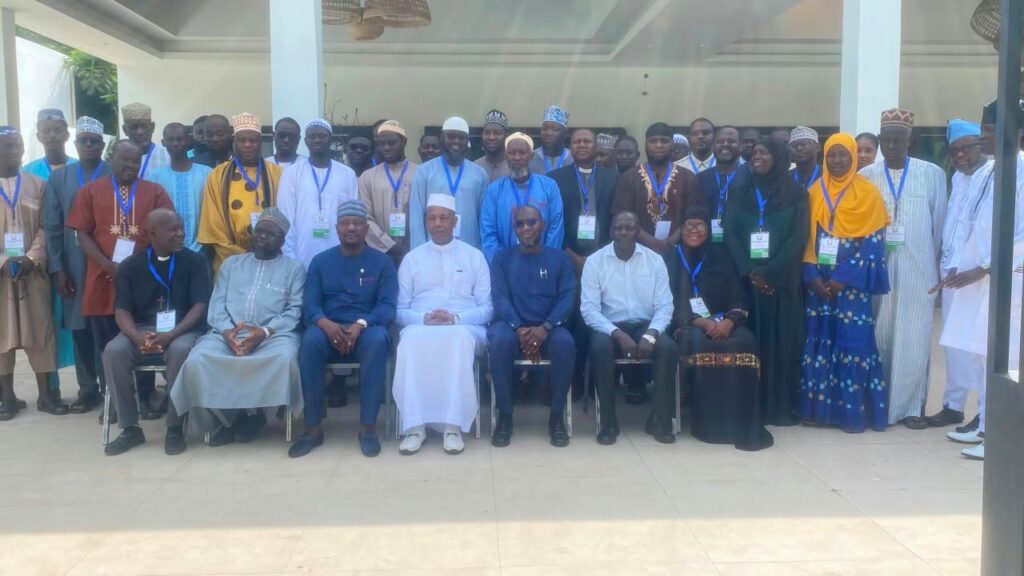
The Inter-Governmental Action Group against Money Laundering in West Africa (GIABA), in partnership with The Gambia’s Financial Intelligence Unit (FIU), has launched a two-day sensitisation seminar for religious leaders and institutions on money laundering and terrorist financing.
The seminar, held at Tamala Hotel, aims to raise awareness among religious leaders and institutions about the risks associated with money laundering, terrorist financing and proliferation financing, while strengthening their understanding of preventive measures.
Speaking at the opening, Minister of Lands and Religious Affairs Hamat Bah described the seminar as timely, saying the fight against money laundering and terrorist financing requires the active participation of all sectors of society.
He said money laundering and terrorist financing were not merely financial or law-enforcement issues, but had wider implications for the economy, national governance, social stability and the country’s reputation.
“They can facilitate corruption, organised crime and other serious offences, while terrorist financing can undermine peace and security,” Bah said.
He said religious leaders and institutions had an important role to play in promoting awareness and responsible financial practices within their congregations and communities.
According to the minister, religious leaders are trusted sources of guidance on morality, integrity, social responsibility and community wellbeing, placing them in a unique position to promote transparency and accountability.
He noted that religious institutions receive and manage various forms of financial contributions intended for legitimate and beneficial purposes.
“It is therefore important that appropriate measures are taken to ensure that these funds are managed with transparency, accountability and integrity and protected from potential misuse,” he said.
Bah stressed that the sensitisation programme was not intended to place unnecessary burdens on religious leaders or institutions, but rather to enhance awareness, improve understanding and provide practical guidance on the risks associated with money laundering and terrorist financing.
He reaffirmed the government’s commitment to strengthening The Gambia’s anti-money laundering and counter-terrorist financing framework and ensuring the country’s financial systems are adequately protected.
Representing the Director General of GIABA, Tim Melaye said the organisation is a specialised institution of the Economic Community of West African States (ECOWAS) and a Financial Action Task Force-style regional body for West Africa.
He said GIABA was established in 2000 by the ECOWAS Authority of Heads of State and Government with a mandate to protect the economies of member states from the laundering of proceeds of crime and combat terrorist financing.
“GIABA works to ensure member states comply with acceptable international standards on anti-money laundering and combating the financing of terrorism,” Melaye said.
He said the organisation’s mandate also included promoting the implementation of anti-money laundering measures by member states while taking into account regional specificities and circumstances.
The Director of the Financial Intelligence Unit said money laundering and terrorist financing should be viewed as societal issues capable of affecting the stability and development of communities.
“Our objective is to ensure that religious institutions are adequately informed and equipped to protect themselves from possible abuse,” he said.
He stressed the importance of religious leaders in the fight against financial crimes, noting that they are trusted voices within their communities and have the ability to influence attitudes, behaviour and values.
“The principles that underpin our religious teachings, including honesty, integrity and accountability, are also fundamental to the fight against financial crimes,” he said.
The FIU Director acknowledged that the introduction of anti-money laundering measures could sometimes appear technical or complex, particularly for institutions whose primary mandates are religious, charitable or community-oriented.
The seminar is expected to provide participants with a better understanding of the relevant anti-money laundering and counter-terrorist financing legal and regulatory frameworks, emerging risks and reporting obligations where applicable.
It will also highlight the importance of collaboration between religious institutions and competent authorities in safeguarding the integrity of the financial system.