


By Jankay Kujabi
The Gambia For All (GFA) Party has officially launched its manifesto, outlining a policy agenda centred on food security, economic diversification, human capital development, youth empowerment and accountable governance.
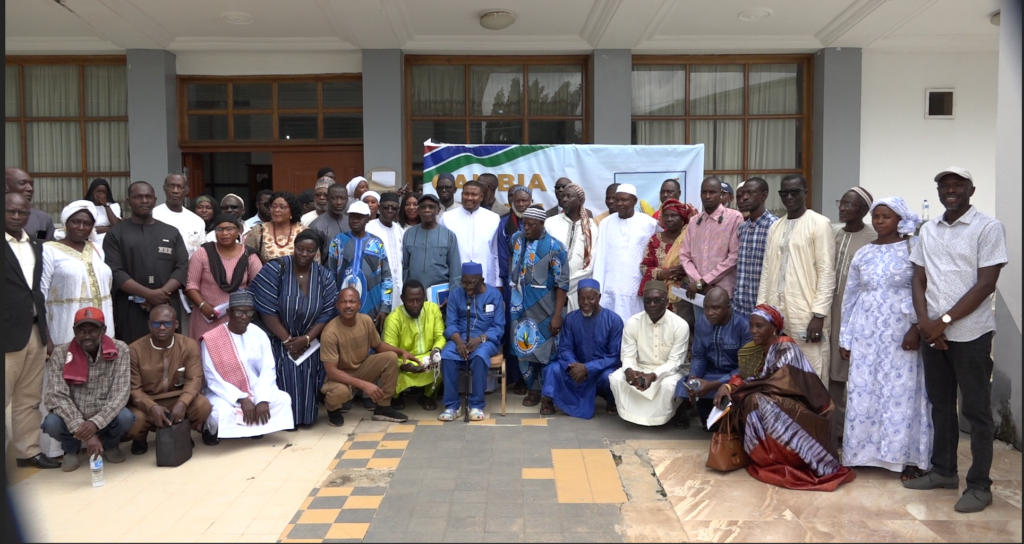
The manifesto was launched Saturday at Paradise Suites Hotel in Senegambia in the presence of party executives and supporters, representatives of political parties, civil society organisations, religious and traditional leaders, and members of the diplomatic community.
The document was presented not only as a political programme but also as a public declaration of the party’s vision, values, policy priorities and commitment to the Gambian people.
It outlines proposals in key sectors, including education, healthcare, agriculture, economic development, infrastructure, youth and women’s empowerment, good governance, national security, environmental sustainability and human capital development.
Speaking as master of ceremonies, Lamin K. Marong said the manifesto would enable Gambians to better understand the GFA’s policies and make informed decisions at the ballot box.
He said the document would also provide a framework against which the party’s performance could be assessed should it receive the mandate to govern.
“The development of a country cannot be achieved by individuals working in isolation. It requires teamwork, discipline, sacrifice, commitment and a shared sense of national purpose,” Marong said.
He noted that The Gambia continues to face challenges, including the rising cost of living, youth unemployment, concerns over democratic governance, crime and public safety, corruption, irregular migration and weaknesses in public service delivery.
He said the GFA manifesto seeks to provide concrete policy responses to these challenges while creating opportunities for a better future.
Speaking on behalf of the National Youth League, its president, Alieu Sonko, stressed the need to place young people at the centre of national development.
He noted that young people constitute a significant proportion of the country’s population and argued that their energy, creativity and resilience could serve as catalysts for national development.
Sonko highlighted four key areas of the manifesto: food security, economic development, a healthy and skilled population, and good governance.
He called for greater investment in young people through access to land, modern farming equipment, training, technology and improved agricultural practices.
“Youth-led innovation could transform subsistence farming into a thriving agricultural industry capable of feeding the country and generating exports,” he said.
On economic growth, Sonko said The Gambia must move beyond dependence on a limited number of sectors.
He identified digital technology, tourism, renewable energy and manufacturing as areas with potential to create jobs for young Gambians and strengthen the country’s economic resilience.
He also called for greater access to vocational training, higher education and digital literacy, arguing that an educated and skilled population was essential to national development.
For her part, National Women’s League President Fatou Minteh described the manifesto as a national vision founded on hope, integrity, competence, accountability and inclusive development.
She said the party was committed to building a Gambia where all citizens would have equal opportunities regardless of gender, age, ethnicity, religion or social background.
Minteh highlighted challenges affecting Gambian families, including limited access to healthcare, the rising cost of living, youth unemployment, concerns over the quality of education and weaknesses in leadership.
She said the GFA manifesto seeks to address these challenges through practical solutions aimed at restoring public confidence in governance and strengthening democratic institutions.
The launch brought together representatives of several political parties and movements, including the United Democratic Party (UDP) and UNITE.
Ousman Gajigo said the manifesto launch marked an important milestone in the GFA’s political journey and provided citizens and stakeholders with an opportunity to scrutinise its policies and proposals ahead of future political engagements.
He reaffirmed the party’s commitment to justice, discipline, accountability, national unity, sustainable development and inclusive growth, while urging Gambians to engage with the manifesto and contribute to improving its roadmap for national development.