


By: Fatou Krubally
Gambia’s health professionals Wednesday gathered for the second National Public Health Convergence, stressing the need for greater use of science, research, innovation and sustainable interventions in their work
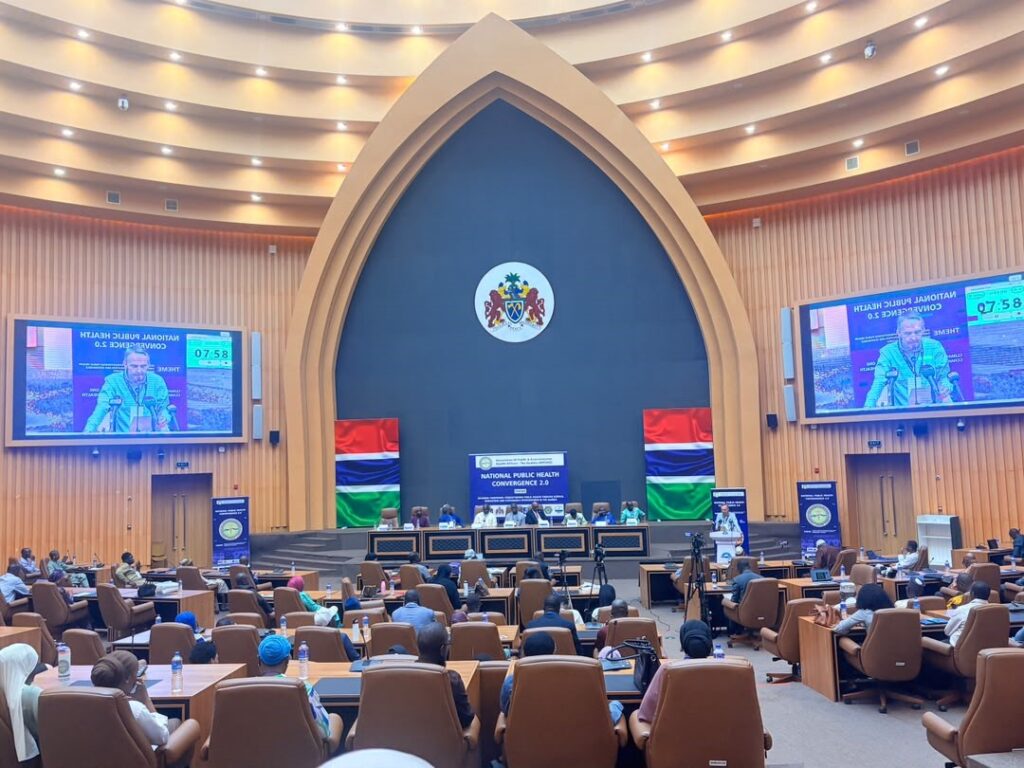
The convergence, organized under the banner of Association of Public and Environmental Health Officers of The Gambia (APEHOG), was held at the Sir Dawda Kairaba Jawara International Conference Centre under the theme, “Securing Tomorrow: Strengthening Public Health Through Science, Innovation and Sustainable Health Policy in The Gambia.”
The gathering brought together public health professionals, researchers, policymakers, development partners and other stakeholders to discuss challenges facing the country’s health sector and possible solutions.
In his remarks, APEHOG President Sarja Jarjusey said the convergence was intended to create a platform where people working across the health sector could come together to examine challenges and find practical solutions.
He said public health officers, clinicians, researchers, policymakers and development partners all have important roles to play in improving the health of the population.
Jarjusey stressed the importance of science that provides reliable evidence, innovation that responds to existing challenges and sustainable interventions that can continue beyond funding periods.
He also called for greater recognition of the contribution of young professionals, saying the country’s greatest asset remains its human resources.
Director of Public Health Services, Dr Momodou T. Nyassi, urged participants to critically examine research and presentations made during the convergence rather than looking at issues from only one perspective.
He said considering alternative perspectives could help stakeholders identify information that can be used to inform better decisions.
Public health veteran Sanna Sambou, in his address, focused on the One Health approach and antimicrobial resistance, stressing the need for closer cooperation between human, animal and environmental health sectors.
He said pathogens move between people, animals and the environment, making cooperation across sectors necessary to address emerging health threats.
Dr Metta Kongira Manneh, a Programme Analyst at the Oregon Health Authority in the United States, meanwhile highlighted the growing role of digital tools, data and artificial intelligence in public health.
She said technology should support health workers rather than replace human judgment, while warning that artificial intelligence could not compensate for poor-quality data or weak systems.
Professor Ed Clarke, Executive Director of the MRC Unit The Gambia, encouraged health professionals to conduct research into problems affecting public health, noting that research does not always have to be expensive or elaborate to produce useful findings.
The WHO representative also urged public health officers to take advantage of the country’s compact population and proximity of communities to health facilities to strengthen the collection and use of health information.
The second convergence builds on the first edition held last year, with organizers calling for stronger collaboration and practical use of research, science and innovation to improve public health in The Gambia.