


By Haddy Touray
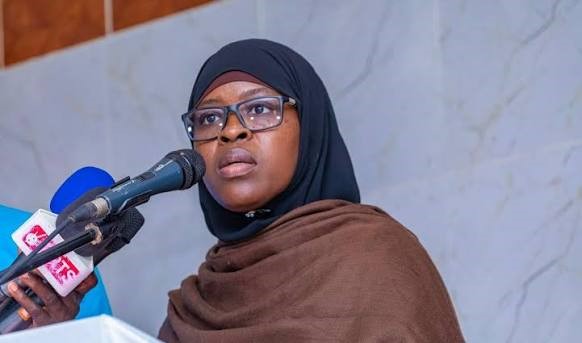
The Gambia’s Minister of Basic and Secondary Education, Dr. Habibatou Drammeh, has described the 2026 Grade 12 West African Senior School Certificate Examination (WASSCE) results as the country’s best performance in more than a decade, while acknowledging persistent weaknesses in English, Mathematics and overall student achievement.
Speaking in an interview with the Gambia Radio and Television Services (GRTS) on Monday, Dr. Drammeh said the latest results marked significant progress compared with previous years.
“Since 2015, we have not seen this kind of progress in Grade 12 WASSCE results,” the minister said.
According to Dr. Drammeh, the proportion of candidates obtaining five or more credits, including English and Mathematics, increased to 7 percent in 2026, up from 5 percent in 2016.
She added that the percentage of students earning five or more credits regardless of English and Mathematics also rose to 22.6 percent this year, compared with 19.1 percent in 2025 and 13.8 percent in 2017.
The minister said the improvement was an encouraging indication that reforms within the education sector were beginning to yield results, but warned that the figures should not obscure longstanding challenges.
She expressed concern over the number of candidates who failed to obtain a single credit despite sitting between seven and nine subjects, as well as the low proportion of students securing passes in the core subjects of English and Mathematics.
The 2026 examination also produced outstanding individual performances, with two students from Charles Jaw Memorial Academy obtaining nine straight A grades, an achievement the minister described as exceptional.
To strengthen accountability, Dr. Drammeh said the ministry had introduced a school ranking system based on candidate population. Schools were classified into three categories: large schools with more than 200 candidates, medium-sized schools with between 50 and 200 candidates, and small schools with fewer than 50 candidates.
She said the rankings revealed significant disparities in academic performance, with some schools recording consistently strong results while others continued to underperform.
The ministry will now concentrate greater support on weaker-performing schools, Dr. Drammeh said, arguing that the success achieved by top-performing institutions demonstrates that the country possesses the teachers and learning environment needed to improve educational outcomes nationwide.
“It means that the environment is there. It means we have the calibre of teachers,” she said.
The minister said the government’s priority is to ensure that the progress recorded in 2026 is sustained and expanded so that improved examination results benefit a much larger proportion of students across the country.