


By: Fatou Krubally
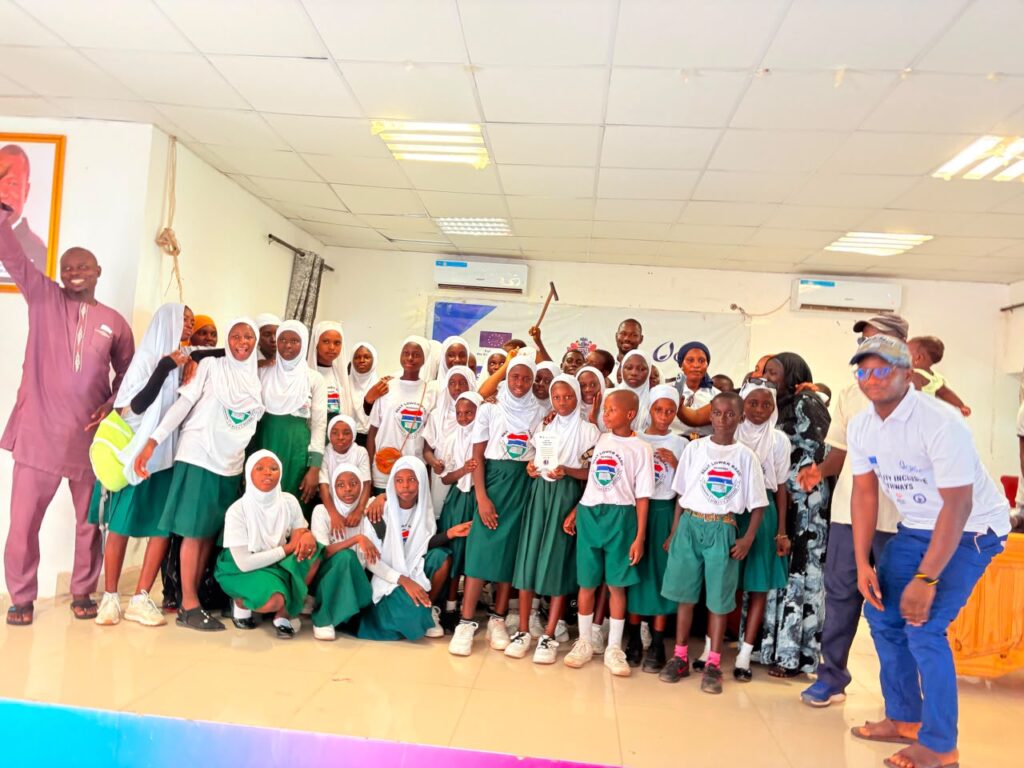
Pupils from three lower basic schools in The Gambia used drama performances on Saturday to promote disability inclusion, challenge stereotypes and encourage greater acceptance of persons with disabilities in their communities.
The competition, held at the President’s International Award grounds opposite Friendship Hostel in Bakau, marked the grand finale of a drama contest organised under the Disability Inclusive Pathways Project, a 30-month initiative funded by the European Union.
The project is being implemented by Catholic Relief Services (CRS), Special Olympics The Gambia, the Gambia Federation of the Disabled (GFD) and the National Organisation for Disabled and Orphans (NODO).
Bakau Newtown Lower Basic School, Killy Lower Basic School and Kassa Kunda Lower Basic School participated in the competition, using drama and storytelling to advocate for inclusion, equal opportunities and respect for persons with disabilities.
Speaking at the event, CRS Project Manager Saidina Alieu Jarjou said the initiative extends beyond entertainment by providing children with a platform to promote inclusion and challenge stigma.
“This is not only drama. It goes beyond performance on stage. It provides visibility, belonging and a platform where children with and without disabilities come together to demonstrate talent, challenge stigma and advocate for inclusion while proving that their stories matter,” Jarjou said.
He added that CRS, through its partnership with the European Union, remains committed to strengthening the capacities of children with disabilities and supporting them to learn, grow and realise their full potential.
Special Olympics The Gambia Programme Manager and Disability Inclusive Pathways Project Manager Catherine B. Morray said the competition forms part of wider efforts to foster inclusive education and strengthen acceptance of persons with disabilities in schools and communities.
She said the project seeks to improve children’s understanding of disability issues and encourage the use of respectful and inclusive language.
“This is the second year of the programme and we have seen significant progress. When we started, many children struggled with the correct terms to use when referring to persons with disabilities. Through these activities, we have seen positive changes in their attitudes, behaviour and understanding of inclusion,” Morray said.
She added that the project’s long-term objective is to eliminate barriers faced by persons with disabilities and promote their full participation in society.
“Our message is for every Gambian to promote inclusion and to see persons with disabilities for their abilities, not just their disabilities,” she said.
Killy Lower Basic School emerged as the overall winner of the competition.
Speaking on behalf of the winning school, student representative Nyima Jawo described the victory as a proud achievement for both pupils and teachers.
The event formed part of ongoing efforts by the project partners to promote inclusive education and create an environment in which children with and without disabilities can learn, play and thrive together.