


By Kemo Kanyi
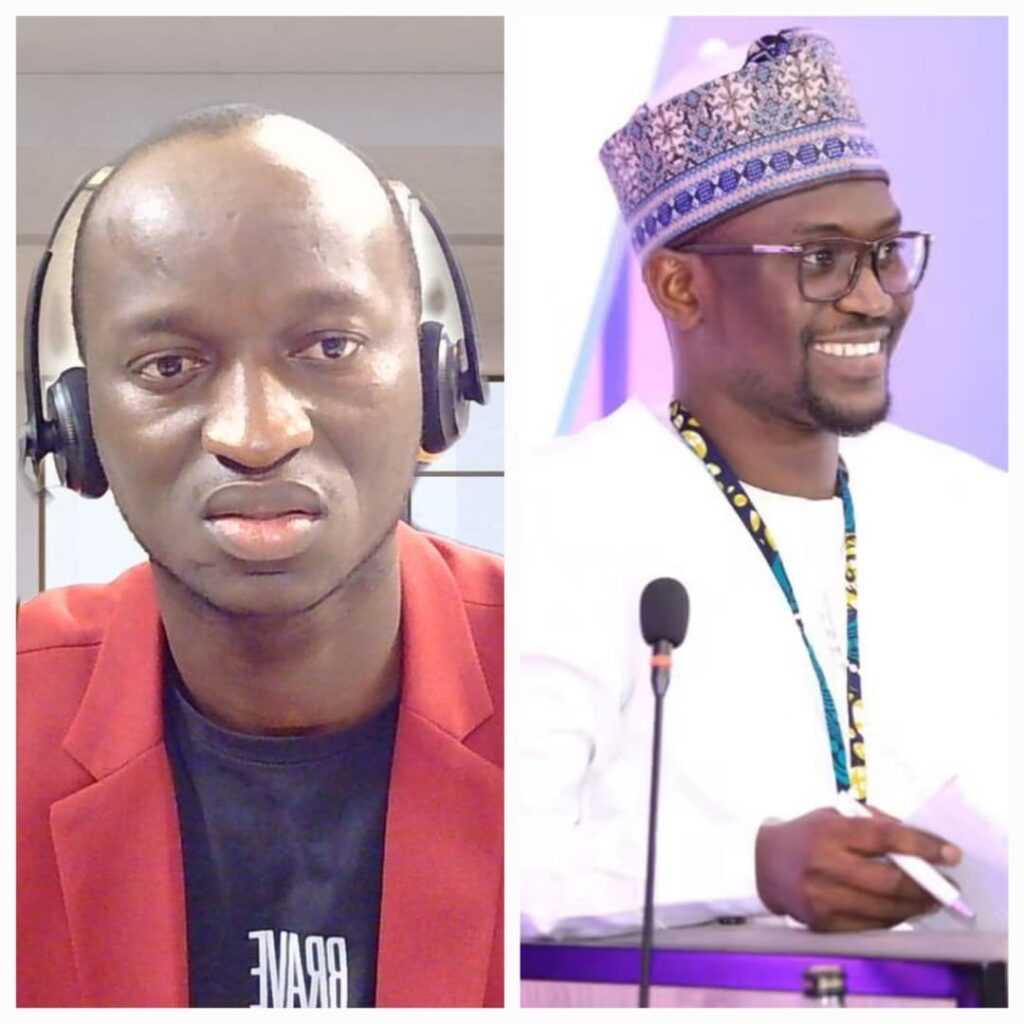
Gambian data scientist and mathematician Touba Marrie has questioned the methodology used by Gambia Participates in its second-round survey on the December 2026 presidential election.
In an article shared with The Voice, Marrie said opinion polls did not determine electoral outcomes, which ultimately depended on voters.
He acknowledged improvements in the second round of the survey, particularly the separation of the questions on “who would you vote for” and “who do you think will win”.
He also noted that Gambia Participates disclosed the number of respondents who answered each question rather than relying solely on percentages and included a warning against misinterpreting the findings.
According to Marrie, these were positive practices that could contribute to responsible polling, while stressing that a well-conducted poll should not be regarded as a prediction of the final election outcome.
However, he raised concerns about the timing of the survey and the political developments that occurred during the data-collection period.
He said the interviews were conducted between 27 July and 10 August 2026, during which respondents were asked, among other questions, whether a possible coalition involving Talib Bensouda, Essa Mbye Faal and Mama Kandeh could win the election.
Marrie pointed out that two days after the start of the data-collection period, Kandeh signed an alliance that brought his Gambia Democratic Congress (GDC) into an alliance with President Adama Barrow’s National People’s Party (NPP).
He added that by the time the survey was published on 21 August, Faal had withdrawn from the opposition coalition process, while Bensouda had emerged as the flagbearer of Coalition 2026.
He noted that the final composition of Coalition 2026 did not include either Kandeh or Faal, whose names had been tested as part of the survey question.
Marrie also questioned the geographical distribution of respondents within the eight local government areas (LGAs) covered by the survey.
“Here’s a question worth asking that hasn’t gotten enough attention: within each of those eight regions, exactly where were people interviewed?” he asked.
He cited Brikama and Kerewan as examples, arguing that LGAs encompass diverse communities, ranging from densely populated and rapidly developing settlements to rural and riverine communities.
“A region is not one place. It is dozens of very different places stitched together on a map, and they don’t always vote the same way,” he said.
Marrie said Gambia Participates had disclosed the number of people interviewed in each of the eight LGAs but had not indicated how the interviews were distributed among towns, wards and villages within each LGA.
He argued that the geographical distribution of the sample was particularly important in areas such as Brikama, where a relatively small number of interviews could potentially be concentrated in easily accessible urban settlements rather than being distributed across the wider urban and rural population.
Marrie stressed that he was not calling for the publication of respondents’ names or exact addresses, saying such disclosure would violate respondent privacy.
Instead, he proposed that Gambia Participates publish a simple ward- or district-level breakdown showing where interviews were conducted, without identifying individual respondents.
According to him, such information would allow political parties, journalists and independent researchers to assess whether the sample adequately reflected the urban-rural and political characteristics of each area.
He described this as a “fixable gap” that could strengthen future rounds of the survey and improve public confidence in election polling.
Marrie also identified what he described as another gap in both rounds of the Gambia Participates survey — the absence of a question on respondents’ political party affiliation or political preference.
“People don’t walk into a survey as blank slates; they bring existing loyalties into every question they answer, whether the question is about a candidate, a coalition, or who should lead a party they may or may not belong to,” he said.
He argued that party affiliation was not merely a demographic variable but a tool that could help researchers and readers assess the composition of the sample.
Marrie said it was therefore difficult for people outside Gambia Participates to determine how many of the 1,556 respondents identified with parties such as the NPP, United Democratic Party (UDP), GDC and APP-Sobeyaa, among others.
“This is precisely why party affiliation is normally collected in the first place, not to score political points, but to weight the results, the same basic idea already used elsewhere in this report for gender and geography,” he said.
Marrie maintained that a credible opinion poll should not only collect responses but also assess whether the sample accurately reflects the electorate.
He cautioned that if a sample contains a disproportionate number of supporters of one political party, the results could indicate stronger support for that party simply because its supporters were overrepresented in the sample, rather than because public sentiment had actually shifted.