


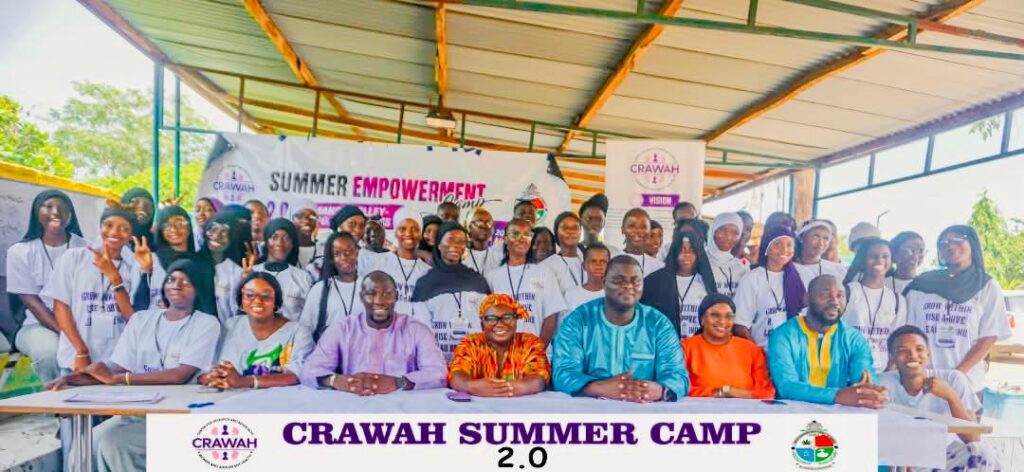
By Yunus S. Saliu
The Center for Research and Advocacy on Women and Adolescent Health (CRAWAH), in collaboration with the Drug Law Enforcement Agency, The Gambia (DLEAG), has concluded its eight-day Summer Empowerment Camp 2.0 in Jalambang.
Held from Aug. 20 to 27, 2026, at Mansa Colley-Bojang Upper Basic and Senior Secondary School, the camp brought together 45 adolescents and young people aged between 13 and 25.
The initiative provided participants with a safe and interactive environment to acquire practical knowledge, build confidence and communication skills, and develop values centred on leadership, teamwork and responsible citizenship.
The programme opened with a ceremony attended by participants, facilitators and guests, including DLEAG’s Director of Borders and Safety, who represented the agency’s Director General.
Throughout the camp, participants took part in sessions covering career development, sexual and reproductive health and rights, drug abuse prevention, life skills, malaria prevention, water, sanitation and hygiene (WASH), values and attitudes, and other issues affecting young people.
Peer-to-peer discussions enabled participants to share experiences, challenge misconceptions and ask sensitive questions in a safe and supportive environment.
The Funneh board game was also used as an interactive learning tool to promote discussions on menstrual health.
The camp featured team-building, conflict-resolution and peace-building activities designed to strengthen communication, cooperation, trust and problem-solving skills.
Daily jogging and energiser sessions also promoted discipline, teamwork and healthy living.
Creative and cultural activities formed another important component of the programme, including a Candlelight Poetry and Storytelling Night, campfire activities, Cultural Night and a Vintage Carnival in the surrounding community.
According to the organisers, these activities encouraged self-expression, strengthened friendships and promoted appreciation of cultural heritage and diversity.
They said the programme demonstrated the importance of creating safe spaces where adolescents and young people can learn, express themselves openly, build positive relationships and take active roles in their communities.
The camp concluded with a closing ceremony during which participants received certificates in recognition of their participation.