


By Lamin B. Darboe
President Adama Barrow will visit the Tanji Community Fisheries Centre on October 16th as part of his nationwide tour, with a focus on climate change adaptation initiatives in the fisheries sector.
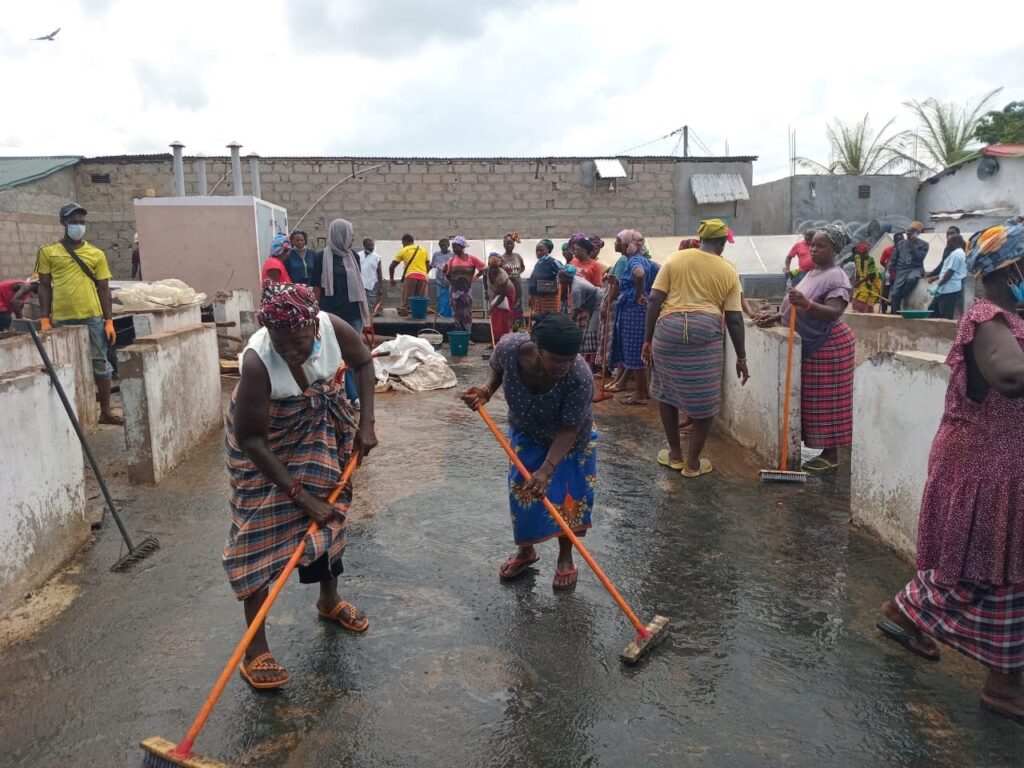
Ahead of the visit, staff of the Department of Fisheries (DoF), under the Ministry of Fisheries, Water Resources and National Assembly Matters, joined fish processors and traders at the center over the weekend for a “Set Setal” cleaning exercise.
The exercise was led by the ministry’s Permanent Secretary, Buba Sanyang, alongside Babanding Kanyi, Principal Fisheries Officer and coordinator of the United Nations Industrial Development Organization (UNIDO) GEF-6 Climate Change Adaptation (CCA) Fisheries Project; Dr Saloum Jatta, Acting Assistant Director of Fisheries; Amie Ndure, Regional Fisheries Officer for the West Coast Region; and fisheries extension staff based at Tanji.
The GEF-6 Fisheries CCA Project aims to strengthen the adaptive capacity of coastal fish-processing value chains in The Gambia and promote climate-resilient business models, with particular emphasis on improving post-harvest food systems, processing practices and waste management in vulnerable communities.
Tanji, Gunjur and Brufut have been selected as pilot communities under the project, which is implemented by UNIDO in partnership with the Ministry of Fisheries and the Department of Fisheries.
The initiative seeks to improve climate resilience among coastal fishing communities and populations dependent on the sector by addressing challenges in post-harvest fisheries activities.
During his visit, President Barrow is expected to observe fisheries development initiatives implemented by the Department of Fisheries and its partners, including UNIDO’s GEF-6 Climate Change Adaptation Fisheries Project and the Food and Agriculture Organization’s (FAO) PROREFISH Gambia project.
These initiatives include the installation of solar-powered fish and oyster dryers at the Tanji center to reduce post-harvest losses and improve hygiene in fish processing.
The dryers are expected to support processing in different weather conditions, extend the shelf life of fish and oyster products, and help preserve their quality and value.