


Written by Athi Mongezeleli Joja
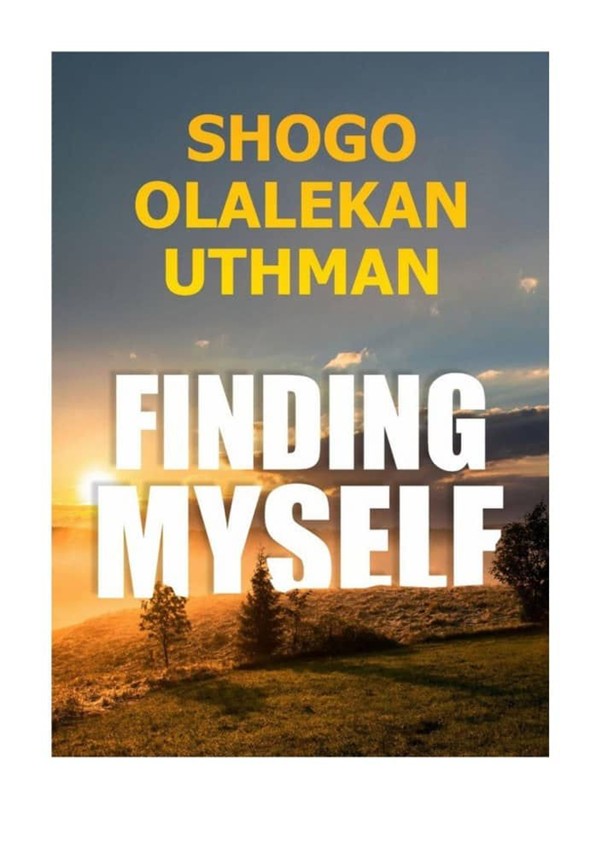
It is hard to admit when you feel lost. In his book Finding Myself, Shogo Olalekan Uthman writes about this exact feeling. His book uses short poems to show how a person can move from fear to a happier life. I paused to question myself. Who am I? Was I lost and am I yet to be found? I read through the 47-page book. It has four clear parts and feels like a long walk through a dark forest that ends in the sunlight.
The book is structured around four themes including Reflection, Anxiety, Hope, and Courage. It starts with “Reflection” on Page 4. Here, the writer talks about being stuck in his own head. In the poem “Finding Myself” on Page 5, he writes that he is lost in a sea of doubt. This poem uses very simple rhyming words. It is easy to read, but the ideas feel a bit old and common. The poem reads;
I’m lost in a sea of doubt,
My heart is filled with fear,
But I know I must find my way out,
To find myself again so clear.
I’m searching for the courage to be me,
To find the strength to stand tall,
To be the person I’m meant to be,
And answer the call.
/ Finding Myself, Page 5
The writing gets much better on Page 10 with the poem “Weakness to Strength”. In this poem, Shogo says his worries are like a tall wall. He writes that he will turn his weakness into strength. This line feels heavy and real. It shows that pain can help you grow.
“Pay attention to your inner voice.
It will lead you in the right direction.” Page 13
The center of the book, marked by the “Anxiety” on Page 15. This is where the writer fights his bad thoughts. In the poem “Trade Your Worries” on Page 23, he tells the reader to stop and take a deep breath. He speaks like a normal friend, not a professor. The best poem in this part is “Let Your Creativity Flow” on Page 33. The words move very fast. He compares new ideas to a stream, a bird, and a night fire. It feels like watching an artist paint a picture very quickly. It captures the fun of making something new.
The final section, “Courage” on Page 36. It is about fixing a broken heart. “Self Reflection” on Page 40 is a slow and quiet poem. Shogo repeats the words “I pause to” at the start of many lines. This repetition makes the reader slow down. It shows that we must be kind to ourselves. The book ends with “The Path That Lies Ahead” on Page 41. It talks about the future and chasing dreams. The poem has good energy, but the words are a bit too general. It would be better if he named real things instead of just big ideas.
However, from a purely critical perspective, the collection occasionally falls into predictable rhyming patterns and overly familiar tropes. Phrases like “lost in a sea of doubt” or comparing courage to a “sword and armor” appear frequently throughout the pages.
I stumbled upon the collection’s undeniable strength. It lies in its raw, unfiltered vulnerability. In pieces like “Hope to Rise Again, Uthman successfully employs direct, grounded language “Rise up, ye who are tired. Out of the pit of despair, Use hope as a compass.”
In my opinion, having read through the book, Finding Myself is a comforting poetry collection that anyone can understand. Shogo uses everyday words to talk about hard feelings. Some rhymes are too simple, but the book is an honest talk about staying strong. It is a good read for anyone who needs a little hope
Overall Rating: 4/5