


By Abdoulie Daffeh
The American International University West Africa (AIUWA) has unveiled a female artificial intelligence (AI)-powered robot as part of efforts to promote science, technology, engineering and mathematics (STEM) education and encourage innovation among young people in The Gambia.
The robot was launched on Thursday, 30 July, during an event at the university that showcased emerging artificial intelligence technologies and their potential applications in the education sector.
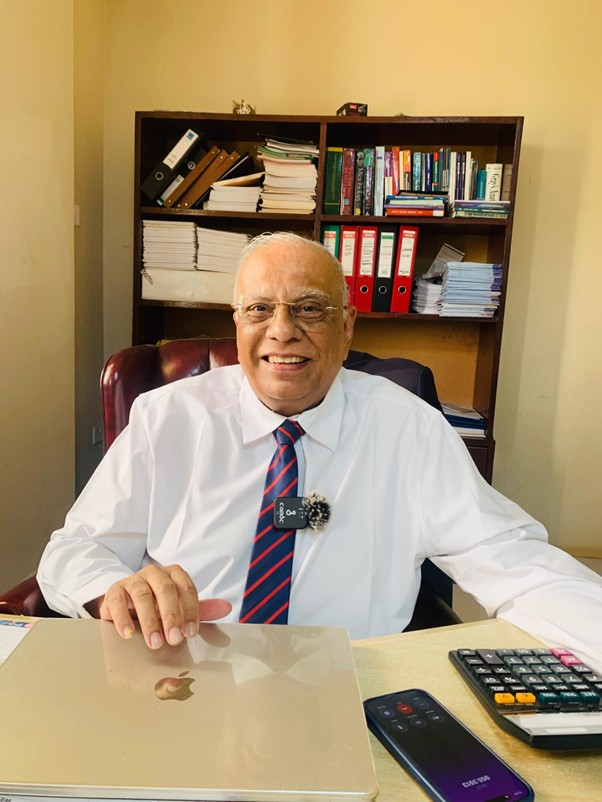
Speaking to journalists at the ceremony, Dr. Denish Shukla, President and Chancellor of AIUWA, said the university has been operating in The Gambia since 2010 with the objective of providing international-standard education, professional certifications and skills development programmes to support national human capital development.
He said the university’s focus has particularly been on health sciences, while increasingly embracing new technologies to prepare students for a rapidly changing global environment.
Dr. Shukla noted that although Africa is still developing its capacity in artificial intelligence, the continent’s youthful population provides significant opportunities for technological advancement and innovation.
“To promote and demonstrate the potential of artificial intelligence, we organised the first International Conference on Artificial Intelligence and invited professors from across Africa,” he said.
According to him, the conference attracted 214 professors from 32 universities who presented research papers covering various areas of artificial intelligence.
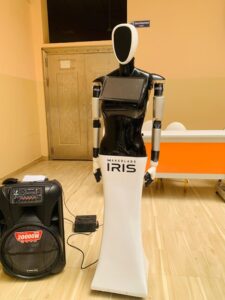

He explained that the female robot was introduced to demonstrate the practical applications of AI technology and its potential contribution to education.
“We wanted to show professors, students and the wider public what artificial intelligence can do. This full-fledged female robot can answer questions in real time and interact with users naturally,” Dr. Shukla said.
He disclosed that the project took two years to complete, involving collaboration between different partners. The robot’s physical structure was developed in Bangalore, India, while its software and artificial intelligence systems were designed by Maker Labs.
Dr. Shukla said the technology is primarily intended to support secondary school education, particularly in science and mathematics, where many schools continue to face shortages of qualified teachers.
“This initiative is aimed at addressing challenges in STEM education, especially in mathematics and science subjects. The robot has the potential to support teaching and improve learning outcomes,” he explained.
He added that the project consists of three main components: software development, artificial intelligence programming and the physical robotic model.
Despite the complexity involved in developing the technology, the AIUWA President said production has reached an advanced stage, allowing for possible large-scale manufacturing.
“We have the capacity to produce up to 50 robots per month, and the cost is being carefully considered to ensure affordability,” he said.
The launch forms part of AIUWA’s broader efforts to promote technology-driven learning, innovation and digital skills development in The Gambia, while preparing young people for opportunities in the digital economy.