


By: Fatou Krubally
Civil society and disability rights activists have blamed political interests rather than legal challenges, for delays in adopting a new Gambian constitution.
In separate interviews with the Voice Newspaper, the activists warn that partisan interests, entrenched patronage and delays in governance reforms are slowing the country’s democratic progress.
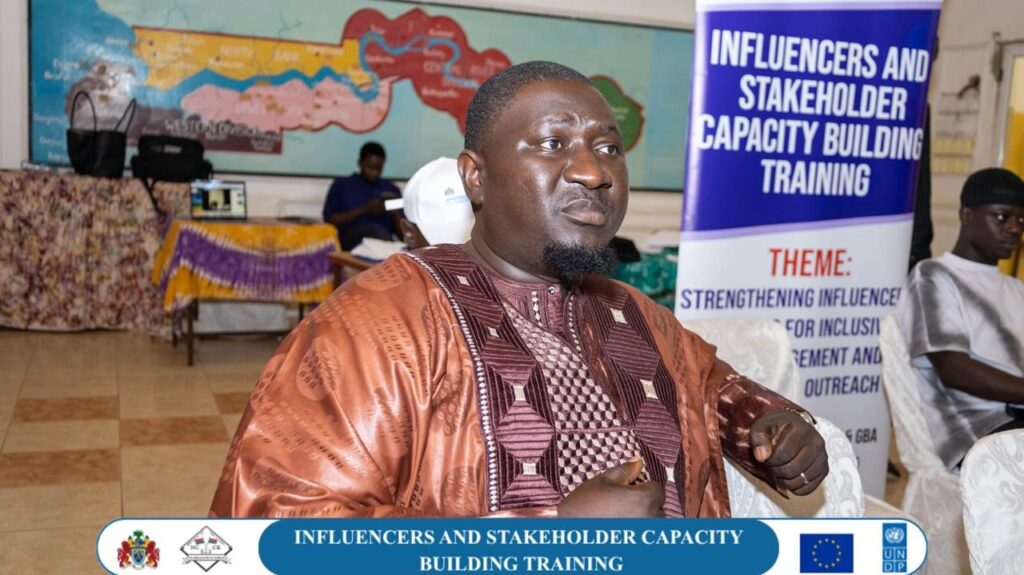
Nearly a decade after the country’s political transition, Activista Gambia National Coordinator, Ansuman Camara and Lamin Manneh, Chairman and Secretary General of the National Organization for Disabled and Orphans (NODO), say the failure to conclude constitutional reforms reflects a lack of political commitment among leaders.

Camara argues that political will remains the main obstacle to establishing a new constitutional order and advancing the country’s transition into a Third Republic.
“The issue is political will,” Camara said, accusing elected representatives of increasingly prioritizing party interests over the concerns of citizens.
He said the National Assembly has become heavily influenced by partisan considerations, with lawmakers sometimes appearing more accountable to political parties than to the electorate.
Camara also criticizes what he described as a culture of political patronage, where loyalty, family connections and party affiliation can sometimes outweigh competence and experience in accessing opportunities.
According to him, such practices have remained a challenge in Gambian politics and continue to affect governance and public confidence.
On women’s participation in public life, Camara said civic education has created differences in awareness between women who have access to information and those in disadvantaged communities.
He notes that while organized groups such as the Rural Women Assembly are increasingly advocating for rights and responsibilities, many women in vulnerable communities remain focused on immediate needs, including economic support and access to basic services.
Despite his concerns, Camara acknowledged democratic gains made since 2016, but expressed worry over cases involving the arrest, detention and prosecution of protesters, saying such incidents raise questions about civic freedoms.
Meanwhile, Manneh described the rejection of the 2020 Draft Constitution as a major setback in The Gambia’s reform process.
He said the proposed constitution contained important provisions that could have enhanced political inclusion and strengthened representation for persons with disabilities.
According to him, the draft failed mainly because of political disagreements and competing interests that prevented consensus.
Manneh says the delay in constitutional reform continues to affect persons with disabilities, who are seeking greater participation in national decision-making processes.
He criticized what he described as selective application of human rights principles, arguing that fundamental rights should be protected equally regardless of political considerations.
However, Manneh acknowledged that the political environment has become more open since 2016, allowing citizens greater freedom to participate in public affairs.
“People are more willing and fully committed in participating in the political process today than before,” he said.
The disability rights advocate, who contested as an independent candidate in the 2021 parliamentary elections, said persons with disabilities were becoming more visible in politics but stressed the need for greater support and inclusion.
He called on political parties to create platforms that encourage the participation of persons with disabilities in leadership and governance.
The Gambia’s proposed constitutional reform process has remained stalled since lawmakers rejected the 2020 Draft Constitution, which was intended to replace the 1997 Constitution and introduce wide-ranging political and institutional reforms.