


By: Dawda M. Jallow
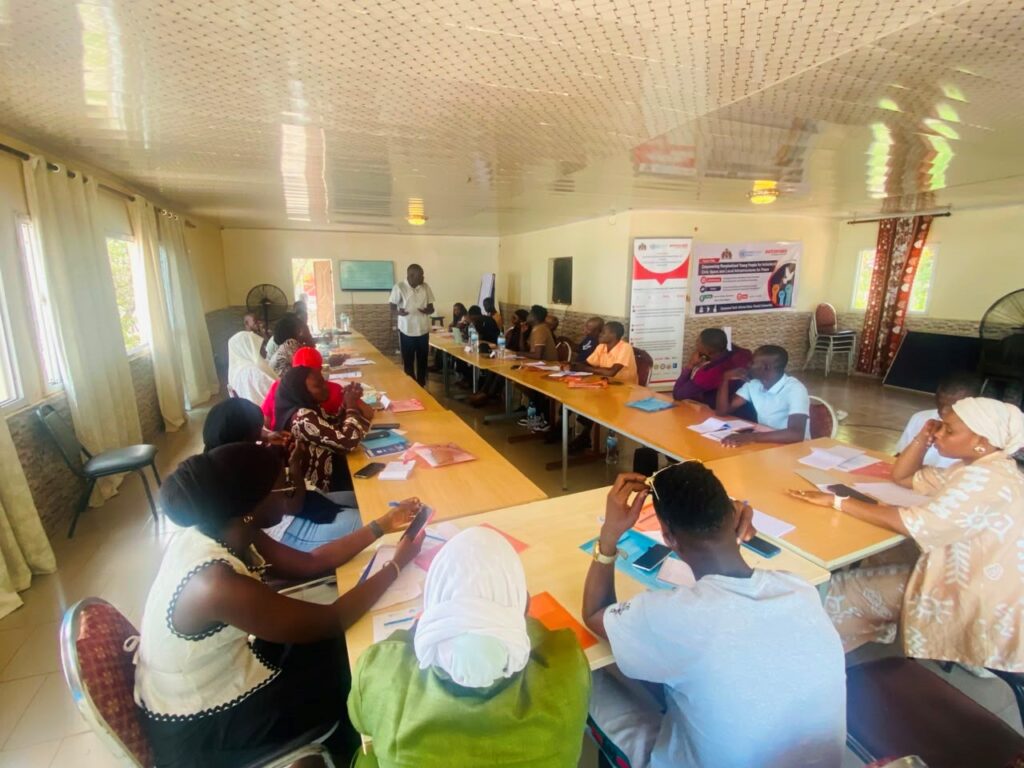
ActionAid International The Gambia Monday commenced a three-day training program for journalists and digital influencers on election reporting ahead of the 2026 presidential polls.
Participants are being lectured on non-partisan, youth-focused civic education among other thematic issues.
The training held in Sitanunku in the North Bank Region, is supported by the United Nations Peacebuilding Fund (UNPBF) and aims to strengthen participants’ capacity to provide ethical, accurate, balanced and conflict-sensitive election coverage while promoting meaningful youth participation in the democratic process.
The initiative forms part of efforts to promote responsible journalism, combat misinformation and contribute to peaceful, credible and inclusive elections as The Gambia prepares for the next electoral cycle.
Addressing participants, Mustapha Ceesay, a journalism trainer at the Media Academy for Journalism and Communication (MAJaC), said the training was largely based on the Reporters Without Borders (RSF) handbook on election reporting.
He describes RSF as an internationally recognised organisation that promotes press freedom, defends journalists’ rights and monitors media safety worldwide.
Ceesay also referred to the ECOWAS Handbook and the International Institute for Democracy and Electoral Assistance (International IDEA), which define election reporting as the systematic gathering of information on the electoral process and the presentation of informed judgments based on verified facts.
He stressed the importance of journalists understanding the legal framework governing elections, including candidate eligibility requirements and electoral boundary demarcation.
According to him, journalists should closely monitor voter registration exercises to ensure transparency, verify the accuracy of voter registers and assess whether registration procedures comply with electoral laws.
He further urged reporters to examine whether electoral management bodies operate within their legal mandates and whether all political parties and candidates are treated fairly throughout the electoral process.
Ceesay emphasized that candidates and their supporters should be allowed to campaign freely without threats, harassment or intimidation, while security agencies have a responsibility to provide equal protection to all political actors.
Also speaking at the training, regional civic education officer Mohammed Kanuten highlighted the complementary roles of civic education, journalism and social media influencing in promoting informed citizenship and democratic participation.
He said journalists and digital influencers play a critical role in translating civic education messages into accessible information through radio, television, online platforms and social media, enabling citizens to better understand governance issues, electoral processes and their civic responsibilities.
Kanuten added that accurate reporting and responsible digital content creation were essential in combating misinformation, promoting accountability and encouraging peaceful participation in democratic processes.