


By Binta Jaiteh
ActionAid International The Gambia in collaboration with civil society organizations, has held its second annual Agroecology Forum, focusing on the role of agroecology in building resilient and sustainable food systems.
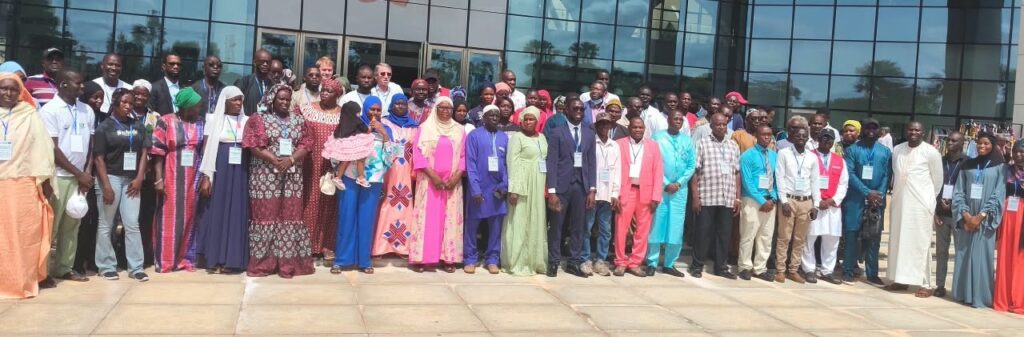
The forum, held under the theme “Action and Impact: Transforming Agriculture Through Agroecology and Equitable Fertiliser Access,” brought together farmers, women and youth representatives, civil society organizations, government institutions, researchers, development partners and other stakeholders in the agricultural sector.
The forum was held at the Sir Dawda Kairaba Jawara International Conference Centre.
Speaking at the event, ActionAid International The Gambia’s Head of Finance, Fafa O. Cham, described the forum as an opportunity for reflection and to assess results, noting that agriculture remained crucial to the Gambian economy.
“Agriculture provides food for our families,” Cham said, citing soil degradation, rising input costs, post-harvest losses and increasing climate-related shocks among the challenges confronting farmers.
He said attempts to address these challenges had often focused on providing more fertiliser, pesticides and seeds, as well as mechanization through the provision of tractors.
“These solutions have helped in the short term,” he said, but added that they had also left the sector facing other challenges.
Cham said agroecology offered an alternative approach by promoting farming practices that regenerate rather than degrade the soil.
The representative of the Minister of Agriculture, Dr Saikou Sanyang, commended ActionAid and its partners for organising the forum and bringing together farmers and other stakeholders to share knowledge and strengthen collaboration on agroecology.
“Agroecology provides an important approach to addressing some of the challenges facing the agricultural sector, including climate change, biodiversity loss and food insecurity,” Sanyang said.
He stressed the need to improve the livelihoods of farmers and noted that the high cost or occasional scarcity of fertiliser posed challenges for agricultural production.
Sanyang said farmers could adopt ecological methods to produce their own fertilisers and restore soil fertility.
He reaffirmed the government’s commitment to strengthening sustainable and climate-resilient agriculture, noting that agroecology could contribute significantly to national economic development.
The SOS Children’s Villages The Gambia Country Director, Alieu S. Bojang, said the organisation worked to promote the wellbeing and development of children, particularly those who had lost parental care.
He said SOS Children’s Villages also sought to address the root causes of child-family separation by strengthening the livelihoods and economic conditions of vulnerable families.
“This is why we partnered with ActionAid,” Bojang said, explaining that strengthening family livelihoods was particularly important for vulnerable households, where women often faced greater economic challenges.
He called for greater empowerment of women to increase their income-generating opportunities, particularly through agriculture.
The forum also provided an opportunity for participants to share evidence, experiences and emerging approaches aimed at promoting more equitable and sustainable agricultural development in The Gambia.