


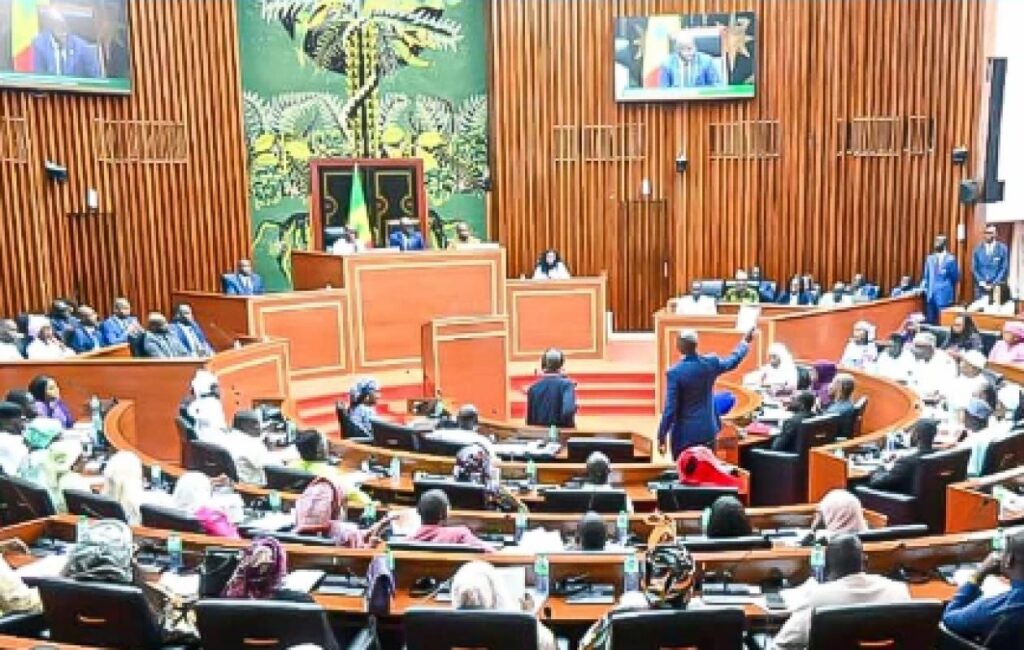
Senegal’s National Assembly has adopted a constitutional reform bill expanding parliamentary powers while reducing certain presidential prerogatives, amid heightened political tensions and protests outside the parliament building.
The reforms were passed by a large majority of lawmakers following heated debates in the chamber, where opposition members staged a walkout in protest.
Police also used tear gas to disperse demonstrators gathered outside the National Assembly during the debate.
The government has indicated that the constitutional changes will be submitted to a national referendum, although no date has been announced.
The vote highlights growing political tensions between President Bassirou Diomaye Faye and parliamentary Speaker Ousmane Sonko, formerly close allies who came to power together in 2024 on a reformist platform.
Their political alliance has since fractured, contributing to an increasingly polarised political environment.
The adopted reforms, introduced by the Pastef party, which holds a majority in parliament, seek to strengthen legislative oversight, including expanded powers for parliamentary committees and greater scrutiny of government agreements, particularly in the natural resources sector.
The bill also provides for the establishment of a Constitutional Court to replace the current Constitutional Council, with an expanded membership.
Other provisions include a prohibition on a sitting president serving as head of a political party, a measure seen by critics as politically targeted, as well as restrictions on presidential powers during the transition period between election and inauguration.
During parliamentary debate, Justice Minister Moussa Sarr said the president intended to submit the reforms to a referendum.
However, parliamentary Speaker Ousmane Sonko questioned the president’s authority to do so, arguing that the bill had already been validly adopted by lawmakers.
Opposition parties and civil society groups have criticised the reforms, calling for the withdrawal of the bill and warning that it could alter the balance of power between the executive and legislative branches.
Supporters of the reform argue that the changes are intended to strengthen the separation of powers across Senegal’s political institutions.
The political rift between President Faye and Speaker Sonko has deepened in recent months, including a dispute over governance direction and economic management, further fuelling uncertainty in the country’s political landscape.