


By: Fatou Krubally
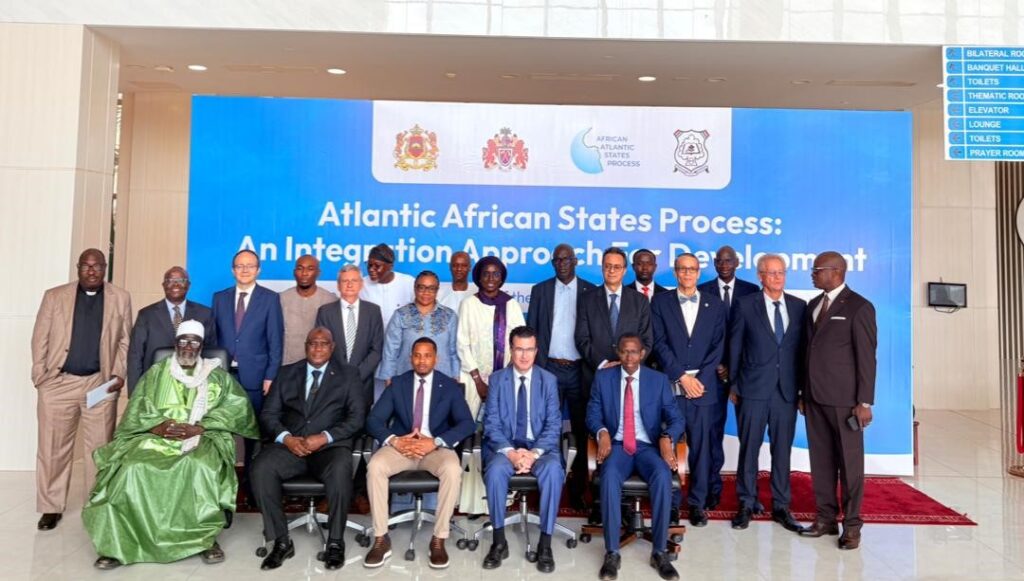
The Embassy of Kingdom of Morocco in The Gambia Wednesday organized a conference on Atlantic African States Process (AASP) held at Sir Dawda Kairaba Jawara International Conference Centre.
The event which was held in partnership with the University of The Gambia, under the theme “an Integration Approach to African Development,” brought together senior government officials, diplomats and academics.
The Atlantic African States Process (AASP) has been described as a strategic platform capable of accelerating economic growth, strengthening regional integration and unlocking new opportunities for trade, energy and infrastructure development across the continent.
Opening the conference, Mr. Ahmed Belhadj, Chargé d’Affaires of the Embassy of the Kingdom of Morocco to The Gambia, said the African Atlantic space is increasingly emerging as a strategic centre for the continent’s future. He noted that the initiative, launched in 2022 under the leadership of King Mohammed VI of Morocco, seeks to transform the shared Atlantic space into a zone of peace, stability and shared prosperity.
Belhadj said the process has brought together 23 Atlantic coastal states and established mechanisms aimed at strengthening cooperation in maritime security, fisheries and energy transition. He highlighted major projects linked to the initiative, including the Dakhla Atlantic Port and the Nigeria-Morocco Gas Pipeline, which he said would enhance connectivity, boost trade and create new economic opportunities for both coastal and landlocked African countries.
Speaking on behalf of Vice-Chancellor Professor Herbert Robinson, Deputy Vice-Chancellor Dr. William Jaiteh said African universities have a critical role to play in shaping development policy and promoting regional cooperation. He described the conference as a reflection of the University of The Gambia’s commitment to linking academic research with practical policy solutions.
Dr. Jaiteh stressed that Africa possesses enormous human and natural resources but continues to face challenges ranging from infrastructure deficits to limited intra-African trade. He said initiatives such as the Atlantic African States Process provide an important framework for addressing these challenges through cooperation, investment and policy coordination.
Minister of Information, Media and Broadcasting Services Dr. Ismaila Ceesay said regional integration remains both an economic necessity and a development imperative for The Gambia. He noted that stronger connectivity, improved infrastructure, enhanced energy security and increased trade are essential to achieving sustainable growth across the region.
He further underscored the importance of information and communication in fostering integration, arguing that physical infrastructure alone cannot unite nations without shared understanding, knowledge exchange and stronger people-to-people connections.
For his part, Minister of Foreign Affairs, International Cooperation and Gambians Abroad, Sering Modou Njie, described the Atlantic African States Process as a practical vehicle for regional transformation. He said The Gambia stands to benefit significantly from planned investments in maritime infrastructure and regional energy projects.
Njie pointed to the expected impact of the Nigeria-Morocco Gas Pipeline and Morocco’s Dakhla Atlantic Port project, saying both initiatives could improve energy security, facilitate trade and strengthen The Gambia’s position within emerging regional trade corridors.
He urged African countries to seize the opportunities presented by the initiative and work collectively towards building a more integrated, resilient and prosperous Atlantic African region.
The conference brought together ministers, diplomats, development partners, private sector representatives, academics and students to examine how the Atlantic African States Process can contribute to regional integration and sustainable development across the continent.