


By: Fatou Krubally
The government has explained to lawmakers the reason why Gambia’s Anti-Corruption Commission did not start operations, saying concerns were raised against one of the three nominees approved by the National Assembly.
According to the Vice President, that has forced the executive to begin the process of finding a replacement for the nominee.
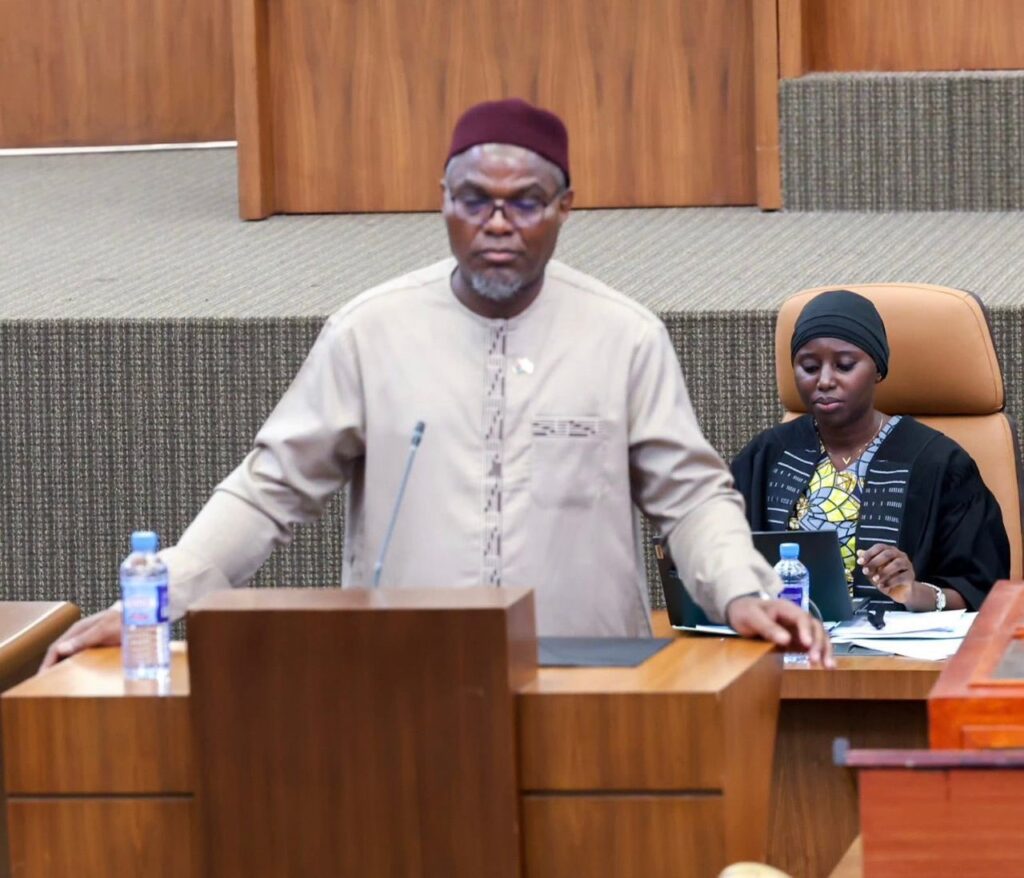
Vice President Mohammed B.S. Jallow made the revelation on Wednesday while responding to a question from Brikama North NAM and Minority Leader Alhagie S. Darboe, who sought an explanation for the delay in appointing commissioners despite parliamentary approval of the nominees in December 2025.
Addressing lawmakers, the Vice President said the appointment process had stalled because the government deemed it necessary to replace one of the approved nominees in line with the integrity and suitability requirements of the Anti-Corruption Commission Act.
“The process of identifying a suitable replacement is well advanced and is expected to be finalised shortly,” Jallow told the Assembly.
Pressed further by Darboe to identify the nominee in question, the Vice President said the individual was a police officer among the three approved candidates and that allegations of corruption had subsequently been raised against him.
Jallow explained that the matter was brought to the attention of the Executive through the Ministry of Justice before being discussed by cabinet, which decided that the nominee should be replaced.
However, he stressed that no wrongdoing had been established against the individual.
“I didn’t say that there was any adverse finding. I said there were some questions raised. There are some accusations of corruption, and it is fair that because it’s an Anti-Corruption Commission, and if there is a spectre of doubt on one of the commissioners, that is why it’s necessary to replace that person,” he remarked.
The Vice President further informed lawmakers that preparations for the commission’s launch are continuing, including renovations to its future office premises and the allocation of funds in the 2026 national budget.
The disclosure marks the first detailed explanation from the government on why the Anti-Corruption Commission, one of the country’s most anticipated accountability institutions, remains unconstituted months after the National Assembly approved its commissioners.