


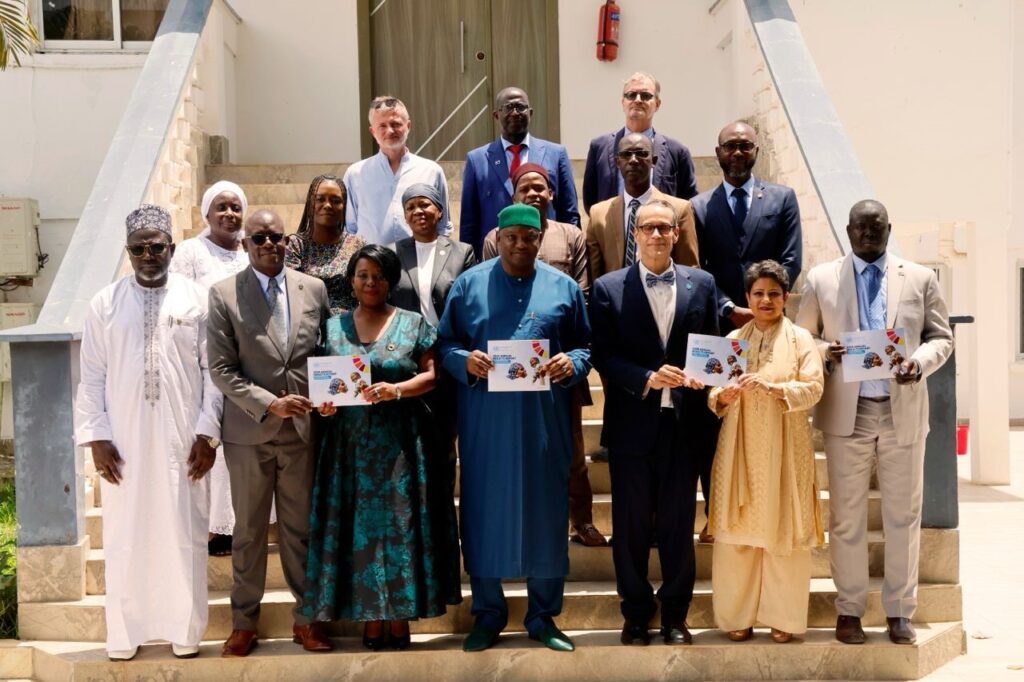
President Adama Barrow Tuesday met with the United Nations (UN) Country Team to discuss national development priorities and strategies for accelerating the implementation of Gambia’s National Development Plan (NDP).
The delegation was led by the UN Resident Coordinator, Karl Frederick Paul, at a meeting held at State House in Banjul.
According to officials, discussions focused on aligning UN support with the government’s development agenda and enhancing coordination to address the country’s key socio-economic challenges.
President Barrow outlined his government’s priorities in line with the UN Sustainable Development Goals (SDGs) 2030 agenda, highlighting climate change resilience, food security, migration management and transitional justice.
The president expressed concern about the impact of climate change on agriculture and food production, stressing the need for greater resilience measures to protect livelihoods and strengthen food security.
He also cited the effects of global economic disruptions, including rising commodity prices linked to international conflicts and changes in global transportation and supply chains.
Barrow further appealed for UN support to the country’s civic education program ahead of the 2026 presidential election.
The UN Country Team briefed the president on three flagship programs currently being developed in collaboration with government ministries and local authorities.
These include initiatives aimed at strengthening climate resilience and food security, improving access to quality healthcare with a focus on maternal and child health, and enhancing the quality of education to improve learning outcomes.
The team also presented the UN’s 2025 Annual Report, which outlines support provided towards the implementation of the National Development Plan.
UN representatives reaffirmed their commitment to supporting The Gambia’s development efforts and advancing the country’s sustainable development objectives.
In response, President Barrow reiterated The Gambia’s support for the United Nations and reaffirmed his government’s commitment to promoting social cohesion, democratic governance and transitional justice.