


By: Fatou Krubally
The Gambia Revenue Authority (GRA) Tuesday intensified efforts to modernise tax administration by organizing a workshop for financial sector on new digital tax system.
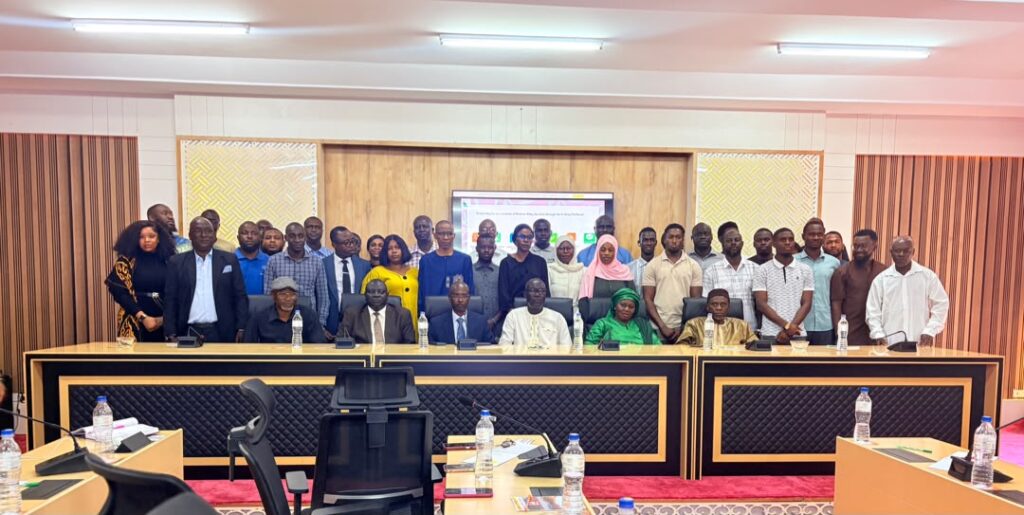
The sensitisation workshop held at Bakadaji Hotel, brought together representatives of insurance companies, microfinance institutions and foreign exchange bureaus who delved on the Integrated Tax Administration System (ITAS).
The workshop forms part of GRA’s on-going drive to introduce a digital tax administration platform aimed at simplifying tax processes, improving efficiency and reducing the cost of compliance for taxpayers.
In his welcoming remarks, ITAS Project Manager Samba Sallah says the new system is being implemented to modernise tax administration and make tax compliance easier and more cost-effective. He notes that the project is financed by the World Bank through the Ministry of Finance, with GRA serving as the implementing agency.
Sallah emphasizes that taxpayers are key stakeholders in the process and that their views are crucial to ensuring the system meets the needs of both tax administrators and the business community.
“We want your inputs and your understanding to be embedded in the system from the start so that once the system is completed, it will not only be a GRA system, but a tax administration system for the whole country,” he said.
Delivering the opening remarks on behalf of the Commissioner General, Deputy Commissioner General Essa Jallow underscored the importance of stakeholder participation in the development of the system.
He says GRA does not want to design and implement projects in isolation, particularly when taxpayers are among the primary users of the system.
According to him, the reforms being undertaken by the authority are increasingly anchored on technology to improve efficiency and enhance taxpayer services.
Jallow explains that the ITAS platform is expected to transform interactions between taxpayers and the revenue authority by enabling a wide range of services to be accessed electronically.
“Everything that you do with GRA will be on the keyboard and on the screen. Taxpayers will be able to interact with GRA from wherever they are without the need to be physically present at our offices,” he said.
He added that the system is intended to reduce the burden and costs associated with tax compliance, including travel to GRA offices for registration, tax filing, payments and the collection of tax clearance certificates.
The Deputy Commissioner General encouraged participants to actively contribute during the workshop by sharing their experiences, concerns and expectations.
He said the feedback gathered would help shape a system that is practical, user-friendly and widely accepted by taxpayers.
The workshop continued with presentations on the functionalities of the Integrated Tax Administration System and discussions on how stakeholders can contribute to its successful implementation.