


By Binta Jaiteh
The Food Safety and Quality Authority (FSQA) has launched a National Sanitary and Phytosanitary (SPS) Committee aimed at strengthening coordination among stakeholders in food safety and agricultural production in The Gambia.
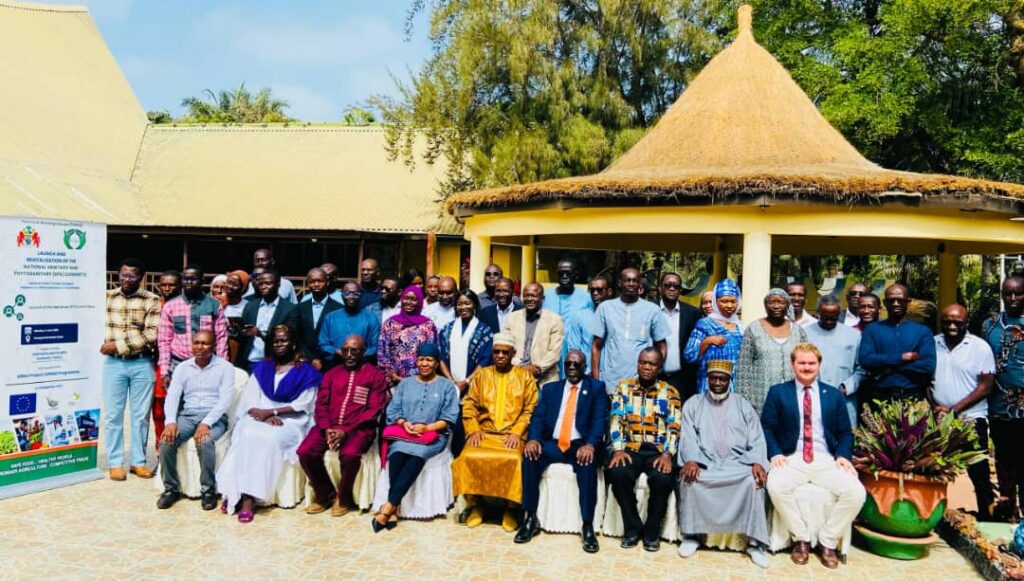
The launching ceremony was held at Senegambia Beach Hotel and brought together stakeholders from government institutions and development partners. The committee is expected to enhance policy coordination, international engagement, monitoring and reporting, transparency, capacity building, and a science-based approach to food safety management.
Speaking at the event, the Minister of Trade, Industry, Regional Integration and Employment, Mod K. Ceesay, described the initiative as a key step in improving food safety and strengthening the country’s food production chain, including animal health systems.
He said the ongoing efforts are intended to fulfil The Gambia’s obligations to the World Trade Organization (WTO), regional bodies, farmers, and processors.
“The launching of this instrument signals that The Gambia is committed to meeting the highest standards of food safety, plant and animal health, and ensuring market access for the safety and well-being of citizens,” he said.
According to him, the protection of plant life has become one of the most important factors in international agricultural trade. He added that in today’s global marketplace, market access is no longer determined only by price, product, or geography, but also by a country’s ability to demonstrate credible, science-based systems to protect human, animal, and plant health.
Minister Ceesay noted that as a member of the World Trade Organization and a signatory to the WTO Sanitary and Phytosanitary (SPS) Agreement, The Gambia is committed to notifying WTO members of its measures and ensuring that regulations are grounded in science.
He said the SPS Committee brings together technical expertise from institutions such as the Food Safety and Quality Authority and the Department of Plant Protection, among other government agencies.
“The SPS Committee, working alongside FSQA and other relevant agencies, will be instrumental in building the infrastructure that unlocks premium market access,” he added.
FAO Country Representative, Ms. Moshibudi Rompedi, reaffirmed the Food and Agriculture Organization’s commitment to supporting the government in strengthening food safety, animal health, and plant health systems.
She highlighted FAO’s support in food safety governance, capacity development, policy dialogue, and institutional strengthening, aimed at aligning national systems with international standards and improving participation in agricultural trade.
The Chairperson of FSQA, Mr. Amadou Sowe, said the establishment and operationalisation of the committee is the result of efforts by government institutions, development partners, and technical experts who share the belief that food safety, plant, and animal health are not merely bureaucratic obligations but foundations of public health and trade competitiveness.
He said SPS responsibilities have previously been dispersed across different agencies, sometimes resulting in coordination gaps, duplication of efforts, and missed opportunities.
“The ambition is that the SPS Committee will serve as the institutional backbone linking trade ambitions to the technical standards required by global markets,” he said.
Mr. Sowe also thanked development partners for their technical guidance and institutional support in the implementation of the initiative.