


By: Cecilia E. L. Mendy
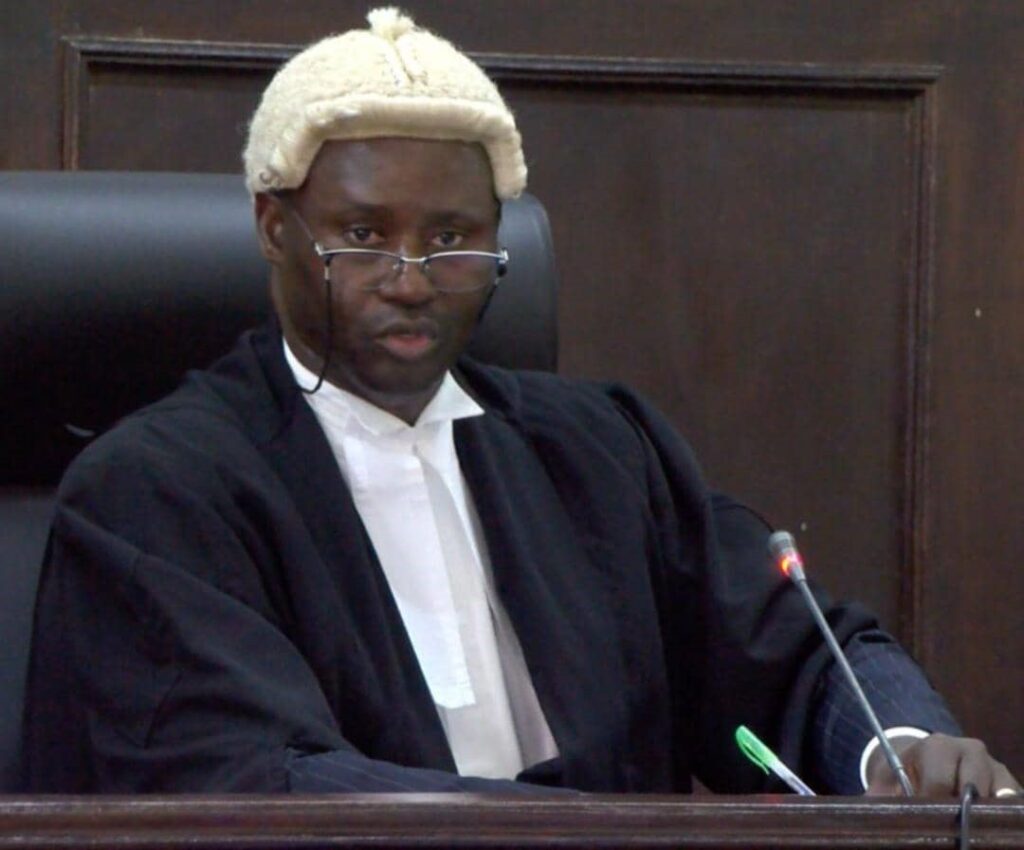
Defence counsel on Monday objected to the prosecution’s attempt to tender a witness’s prior statement as an exhibit in an ongoing criminal trial before Justice Ebrima Jaiteh at the Banjul High Court.
The accused, Salieu Bah, appeared in court as prosecution witness Landing Bah, a teacher at Bijilo Upper Basic School, continued his testimony regarding events of 14 April 2025.
The witness told the court that around 3:00 a.m. he received a call from a maid reporting a suspected intruder behaving aggressively in a compound. He said he alerted colleagues and proceeded to the scene, but was informed upon arrival that the suspect had fled.
He further testified that during a subsequent search, they encountered an individual suspected of attempting another robbery, whom they pursued and later identified as the accused. The suspect was taken to the complainant’s compound for identification, where Sainabou Sarr allegedly confirmed him as the person involved.
Landing Bah told the court he observed what appeared to be blood stains on the accused and that items including an iPad, tablets and wigs were later handed over to the police.
The witness confirmed that he could identify his written statement through his signature, name, address and telephone number.
The prosecution then applied to tender the witness’s prior statement as an exhibit, but defence counsel objected, arguing that it amounted to improper self-corroboration under Section 179 of the Evidence Act, 1994.
The defence maintained that such statements may only be used to refresh memory and not admitted as independent evidence. It also cited foreign case law in support of its position.
Prosecuting counsel argued that the witness had confirmed making the statement and identified it in court, stating that it was intended to assist in clarifying details of the testimony.
In his ruling, Justice Jaiteh held that corroboration must come from an independent source and that a witness’s prior statement cannot serve as corroborative evidence.
The court, however, distinguished between using a statement as evidence and using it to refresh memory, noting that the latter is permissible under the law.
It therefore upheld the defence objection in part, ruling that the statement could not be admitted as substantive evidence for corroboration. The court allowed it to be used solely to refresh the witness’s memory and marked it for identification only.
The case was adjourned to 29 June 2026.