


By Kemo Kanyi
Gambia has reaffirmed its commitment to the protection and promotion of human rights across Africa as the African Commission on Human and Peoples’ Rights (ACHPR) concluded its 87th Ordinary Session in Banjul on Wednesday.
The session brought together representatives of member states, commissioners, civil society actors and legal experts under the theme “justice, accountability and democratic governance”.
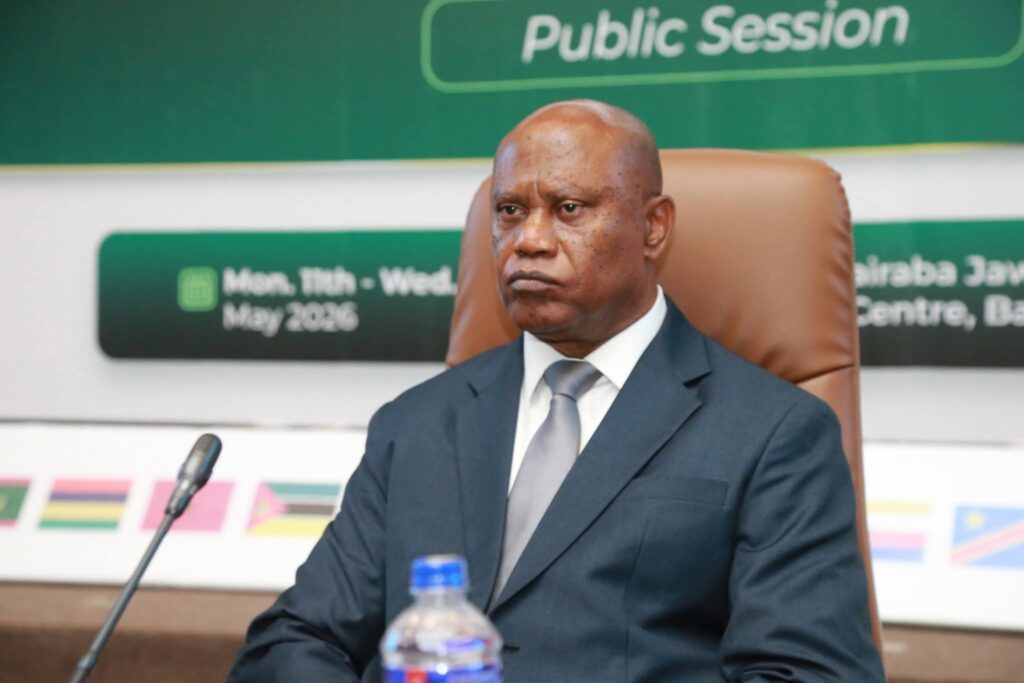
Speaking on behalf of the Attorney General and Minister of Justice of Gambia, Dawda A. Jallow, Solicitor General Hussein Thomasi described the meeting as a key platform for dialogue and cooperation on Africa’s evolving human rights challenges.
He said the deliberations reflected a shared aspiration among African states for a peaceful, democratic and prosperous continent grounded in human dignity, justice, equality and the rule of law.
Thomasi commended the African Commission for its role in strengthening human rights systems across the continent, noting that the Banjul session provided space to assess progress and ongoing challenges.
He said discussions, reports and testimonies presented during the session highlighted the complexity of human rights protection in Africa, particularly where states are balancing governance reforms, security concerns and socio-economic pressures.
According to him, such engagements remain essential to ensuring that human rights remain central to governance and policy development.
The Solicitor General noted that several African Union member states, including The Gambia, have taken steps to strengthen legal and institutional frameworks to safeguard fundamental rights and freedoms.
He cited efforts to address violence against women and children, improve access to justice and enhance accountability mechanisms as evidence of growing continental commitment to the African Charter on Human and Peoples’ Rights.
He added that human rights protection is both a legal obligation and a foundation for sustainable development and political stability.
Thomasi also acknowledged states that have fulfilled their reporting obligations to the African Commission by submitting periodic human rights reports.
He says such compliance demonstrates transparency and accountability within the African human rights system and enables states to assess progress and address gaps.
He stressed that reporting processes are important tools for improving governance and the lived experiences of citizens.
He further emphasised that human rights protection requires collaboration between governments, regional institutions and civil society actors.
The ACHPR, he says, continues to serve as a key mechanism for dialogue between states and for placing human rights at the centre of Africa’s governance framework.
The discussions in Banjul, he added, underscored the importance of sustained communication, engagement and mutual accountability among African nations.
As host of the commission’s headquarters, The Gambia holds a symbolic position within the African human rights system and has increasingly positioned itself as a supporter of regional accountability mechanisms.
Government officials have pointed to legal reforms, institutional restructuring and engagement with international human rights bodies as evidence of renewed commitment to democratic governance and the rule of law.
The session also placed The Gambia at the centre of continental human rights discussions, reinforcing its role as a hub for legal and policy dialogue in Africa.
However, human rights observers continue to highlight challenges across the continent, including judicial independence, freedom of expression, political participation and protection of vulnerable groups.
They note that gaps often remain between constitutional guarantees and enforcement in practice.
The ACHPR has repeatedly urged member states to move beyond formal commitments and focus on practical improvements in governance, accountability and service delivery.
As the 87th Ordinary Session concluded in Banjul, participants reaffirmed the importance of sustained political will to strengthen Africa’s human rights architecture.
The meeting underscored that while progress has been made, continued commitment is required to translate human rights principles into tangible outcomes for citizens across the continent.