


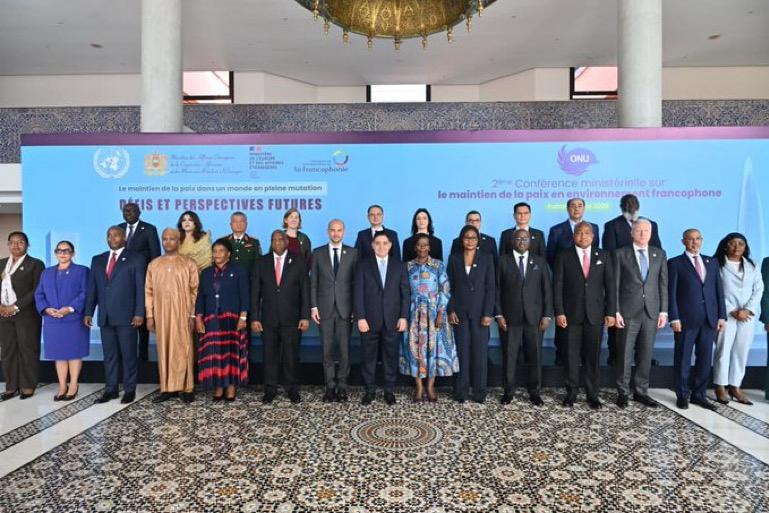
Rabat hosted the Second Ministerial Conference on Peacekeeping in a Francophone Environment on Wednesday, bringing together representatives from across the Francophone world to discuss the future of United Nations peacekeeping operations.
The conference was co-chaired by Nasser Bourita, Morocco’s Minister of Foreign Affairs, African Cooperation and Moroccan Expatriates, and Jean-Noël Barrot, France’s Minister for Europe and Foreign Affairs.
Organised in partnership with the United Nations and the Organisation internationale de la Francophonie, the conference brought together 62 delegations, including 26 represented at ministerial level, alongside senior UN and OIF officials, regional organisations, and civilian and military experts involved in peacekeeping operations.
Held against the backdrop of evolving challenges facing UN peacekeeping missions and ongoing reforms to peacekeeping and peacebuilding structures, the conference aimed to provide Francophone countries with a platform to strengthen a common understanding of current peacekeeping issues. The meeting followed the first Ministerial Conference on Peacekeeping in a Francophone Environment held in Paris in 2016.
According to a statement released by Morocco’s Ministry of Foreign Affairs, the high-level segment of the conference adopted the Rabat Declaration, which commended Morocco’s role in promoting international peace and security. The declaration also praised the country’s efforts in mediation, preventive diplomacy and the promotion of dialogue for the peaceful settlement of disputes.
The participating ministers expressed concern over the increasing use of weapons and technological tools by non-state actors and armed groups targeting peacekeeping operations. They reaffirmed that the safety and security of peacekeepers remain a top priority and strongly condemned attacks against peacekeeping missions, warning that such acts could constitute war crimes.
The ministers also stressed the importance of guaranteeing freedom of movement for peacekeepers and removing obstacles that hinder the implementation of their mandates.
Through the Rabat Declaration, participating delegations expressed support for clearer and more realistic peacekeeping mandates, with a stronger focus on political solutions, crisis-exit strategies and adapting operations to evolving conflicts in order to achieve lasting peace and stability.
The declaration further highlighted the importance of respecting and implementing United Nations resolutions related to peacekeeping while reaffirming support for multilateral efforts aimed at improving the effectiveness of peacekeeping operations.
Participants agreed to continue strategic discussions on the future of peacekeeping in Francophone environments and recognised the important role played by countries contributing troops and expertise to international peacekeeping missions.
The conference also placed strong emphasis on training, describing it as essential to the safety, effectiveness and performance of peacekeeping operations. Ministers encouraged greater interoperability in training programmes to ensure peacekeepers operate according to common standards.
Delegations further agreed to strengthen multilingualism within UN peacekeeping missions to combat disinformation and hate speech, which continue to threaten the safety of personnel deployed in conflict zones.
Hosting the conference in Morocco was widely seen as recognition of the country’s longstanding contribution to United Nations peacekeeping operations and its growing influence as a trusted actor in international diplomacy and multilateral cooperation