


By: Fatou Krubally
Air pollution in The Gambia is reaching alarming levels, with experts revealing that pollution levels are about seven times higher than the recommended average, raising concerns over growing respiratory and cardiovascular diseases in the country.
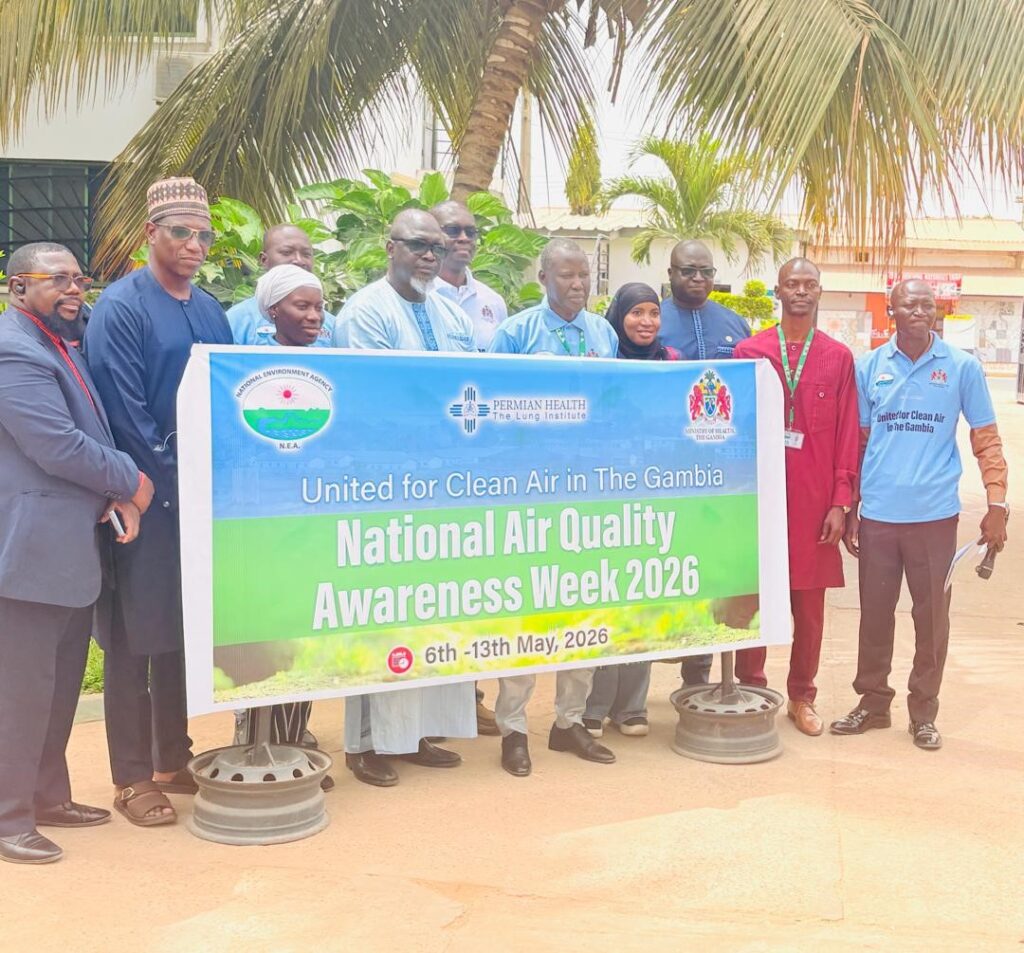
The warning was issued on Wednesday during the commemoration of Air Quality Day organized by the National Environment Agency (NEA) in partnership with the Permian Health Lung Institute (PHLI) and the Ministry of Health.
Speaking at the event, the Executive Director of the NEA, Dr. Dawda Badgie, said clean air remains essential for healthy living and sustainable development, stressing that protecting the atmosphere from pollution is a collective responsibility.
“This year’s theme, ‘United for Clean Air in The Gambia,’ reflects the importance of collective action and shared responsibility in addressing air pollution and protecting public health,” Dr. Badgie said.
He disclosed that the NEA officially launched the National Air Quality Monitoring Programme in 2023 as part of efforts to strengthen environmental monitoring systems in the country.
According to him, thirty air quality monitoring stations have already been installed nationwide, including a reference hybrid monitor at the NEA headquarters in Kanifing. The monitoring exercise is being carried out jointly by the NEA, PHLI and the Ministry of Health.
Dr. Badgie said the initiative goes beyond awareness creation, noting that it also seeks to encourage proper waste management practices and reduce harmful environmental pollutants.
He further revealed that a dedicated technical team comprising experts from the NEA, PHLI and the Ministry of Health has been established to monitor and maintain the air quality sensors across all seven regions.
Meanwhile, the Chief Executive Officer and Co-Founder of PHLI, Dr. Sunkary Touray, described air pollution as one of the leading causes of death globally.
“Every year over seven million people die from air pollution and half of those deaths are linked to cardiovascular and respiratory diseases,” he said.
Dr. Touray noted that findings from the country’s ongoing monitoring system are “very concerning,” warning that poor air quality could be contributing to the rising cases of hypertension and respiratory illnesses in The Gambia.
“The levels of pollution is about seven times higher than the recommended average levels for air pollution,” he said.
He called on National Assembly Members to expedite the passage of the National Environment Management Act, saying the legislation would provide the legal framework needed to develop policies to tackle air pollution.
Also speaking at the event on behalf of the Health Minister, Permanent Secretary at the Ministry of Health, Yusupha Touray, said environmental sustainability requires the collective participation of government institutions, communities and citizens.
He commended the NEA for its continued efforts in promoting environmental protection and public awareness, while reaffirming government support towards cleaner air and healthier communities.
Delivering the keynote address on behalf of the Minister of Environment, Climate Change and Natural Resources, Permanent Secretary Ebrima Jawara described clean air as one of humanity’s most valuable natural resources, stressing that environmental sustainability requires collective responsibility.
Mr. Jawara noted that air quality continues to face increasing threats from open waste burning, smoke from household activities, vehicle emissions, traffic congestion, industrial pollution and forest degradation.
“Today’s celebration reflects the Government’s continued commitment to environmental protection and the wellbeing of the Gambian people,” he stated, while calling on institutions, communities, schools, civil society organizations and citizens to work together towards cleaner air and healthier communities.