


By: Binta Jaiteh
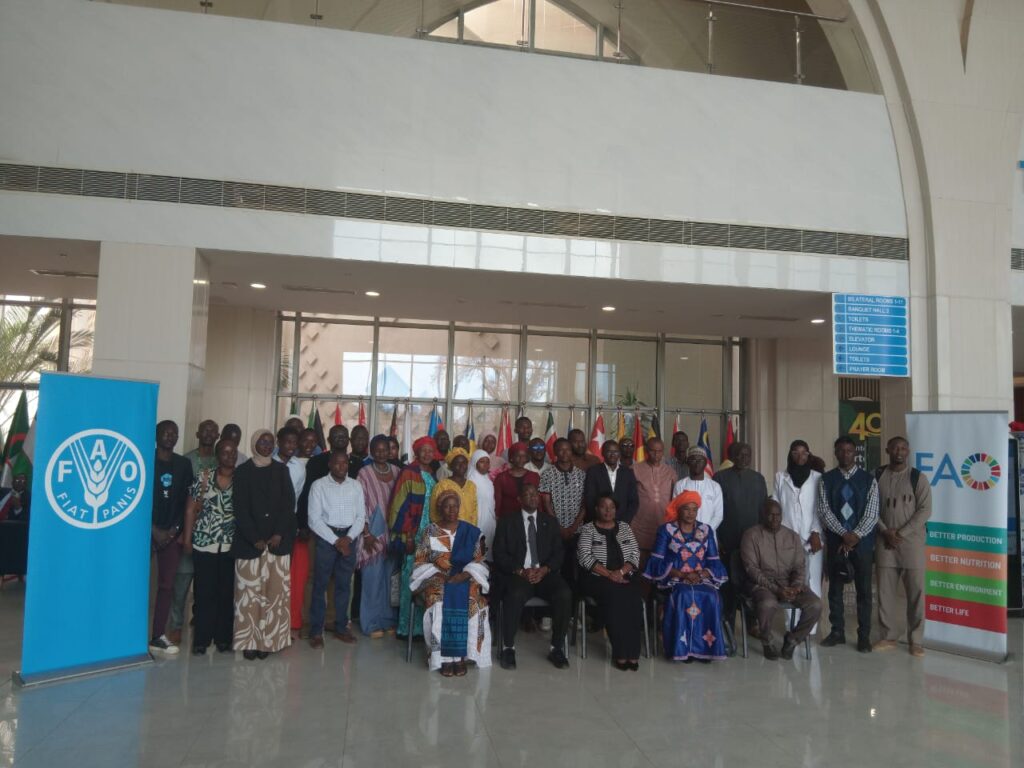
The Food and Agriculture Organization (FAO) Monday organized a forum under the theme: “Transforming Food Systems through Youth, Science, and Collaboration.”
The meeting which attracted government officials, development partners and civil society actors revolved around youth participation, science-based policymaking and enhanced collaboration to transform The Gambia’s food systems amid climate change and growing food security challenges.
Speaking at the event, the representative of the Minister of Agriculture, Francis Mendy, says that while The Gambia has made progress in shaping its food systems agenda, significant gaps remain in translating policy into practical outcomes.
“We are aware that gaps still exist. There are challenges in ensuring that research and scientific evidence effectively inform policy decisions,” he said, adding that youth inclusion in the sector must be strengthened.
He notes that several government initiatives are already supporting young people in agriculture, including the ROOTS Youth-Based Matching Grant Programme, which he says is currently benefiting about 240 youth-led enterprises across the country.
“These initiatives have lowered the barriers to entry for young entrepreneurs and support the transition from ideas to implementation,” he said.
Mendy also called for increased investment in irrigation, mechanization, storage facilities and climate-smart agriculture to reduce dependence on food imports, particularly rice and onions.
Ndey Sireng Bakurin, Executive Director of TANGO, says climate change continues to threaten agricultural productivity and livelihoods, especially in vulnerable communities.
“Communities are increasingly experiencing irregular rainfall patterns, prolonged dry spells, flooding and declining agricultural productivity,” she says, noting that these challenges have direct consequences for food security and resilience.
She added that civil society organizations played a key role in connecting policy to grassroots realities through climate action, advocacy and youth empowerment initiatives.
FAO Assistant Representative Dr Mustapha Ceesay underscored that the convergence was timely stressing that sustainable transformation of food systems could not be achieved without meaningful youth participation.
“We firmly believe that meaningful change to agri-food systems cannot happen without the active participation of young people,” he said, adding that science, technology and innovation remained key tools for improving productivity and resilience.
The engagement ended with renewed commitments from stakeholders to strengthen partnerships, support youth-led innovation and promote evidence-based approaches to improving food security and sustainable agriculture in The Gambia.