


By Dawda M. Jallow
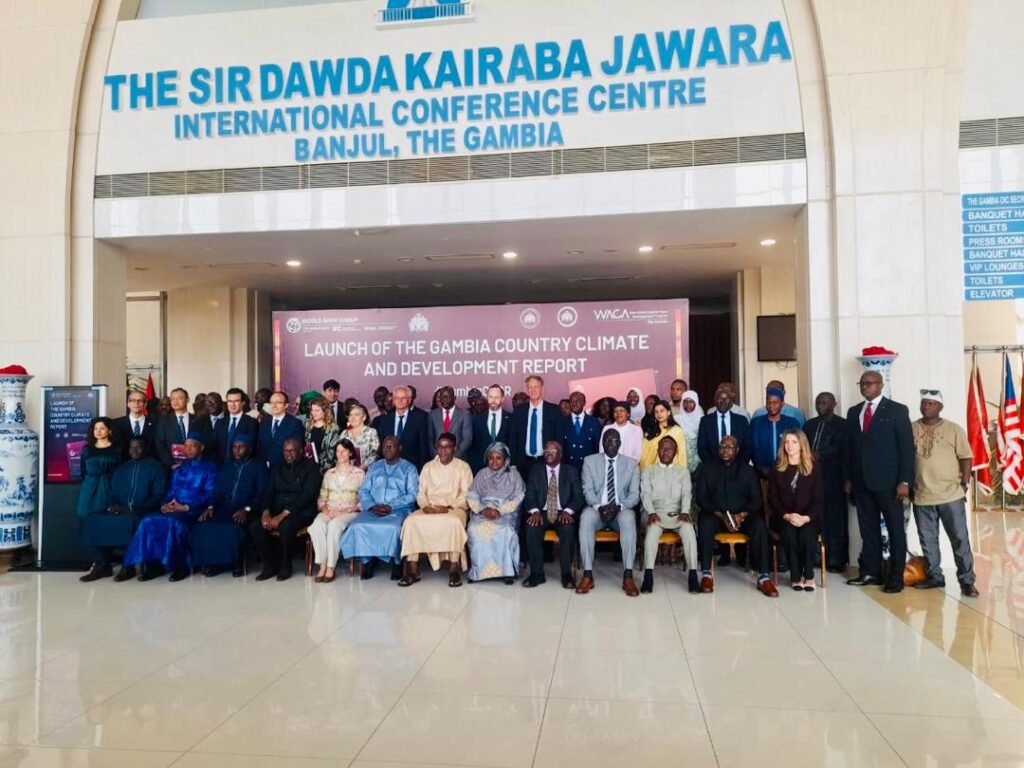
The West Africa Coastal Areas (WACA) programme in The Gambia on Tuesday launched the Country Climate and Development Report (CCDR) at the Sir Dawda Kairaba Jawara International Conference Centre, warning that climate change is increasingly constraining the country’s development trajectory.
World Bank Group Resident Representative for The Gambia, Franklin Mutahakana, said environmental changes are no longer distant risks but are already affecting economic performance, spatial planning, fiscal stability and job creation.
He said that under a business-as-usual scenario, climate-related shocks could reduce The Gambia’s GDP by up to 9.3 percent by 2050, adding that urban and coastal areas, particularly Banjul, remain highly exposed. He noted that assets worth over 90 percent of GDP could be at risk under severe sea-level rise scenarios.
Mutahakana said the report marks a shift from diagnosis to action, calling for urgent investments and stronger partnerships. He stressed that climate considerations must be integrated into national development planning.
World Bank Group Practice Manager Ellysar Baroudy said the country is already experiencing frequent flooding, irregular rainfall and coastal erosion affecting livelihoods and infrastructure. She noted that despite contributing minimally to global emissions, The Gambia remains highly vulnerable due to its geography and economic structure.
Baroudy identified agriculture, energy and coastal protection as priority sectors, saying targeted investments could reduce future losses while supporting growth and job creation.
IFC official Dr Zineb Benkirane said Banjul is particularly exposed to rising sea levels, with coastal populations and key national assets at risk. She said climate action is necessary to protect development gains and long-term economic stability.
Finance Minister Seedy Keita described climate change as both an environmental and macroeconomic risk, citing its impact on agriculture, infrastructure and tourism. He said government is increasing climate-related investments, with funding expected to rise significantly by 2030, 2040 and 2050.
The CCDR concludes that while climate risks are significant, timely reforms and investments could more than halve projected economic losses and strengthen The Gambia’s long-term resilience.